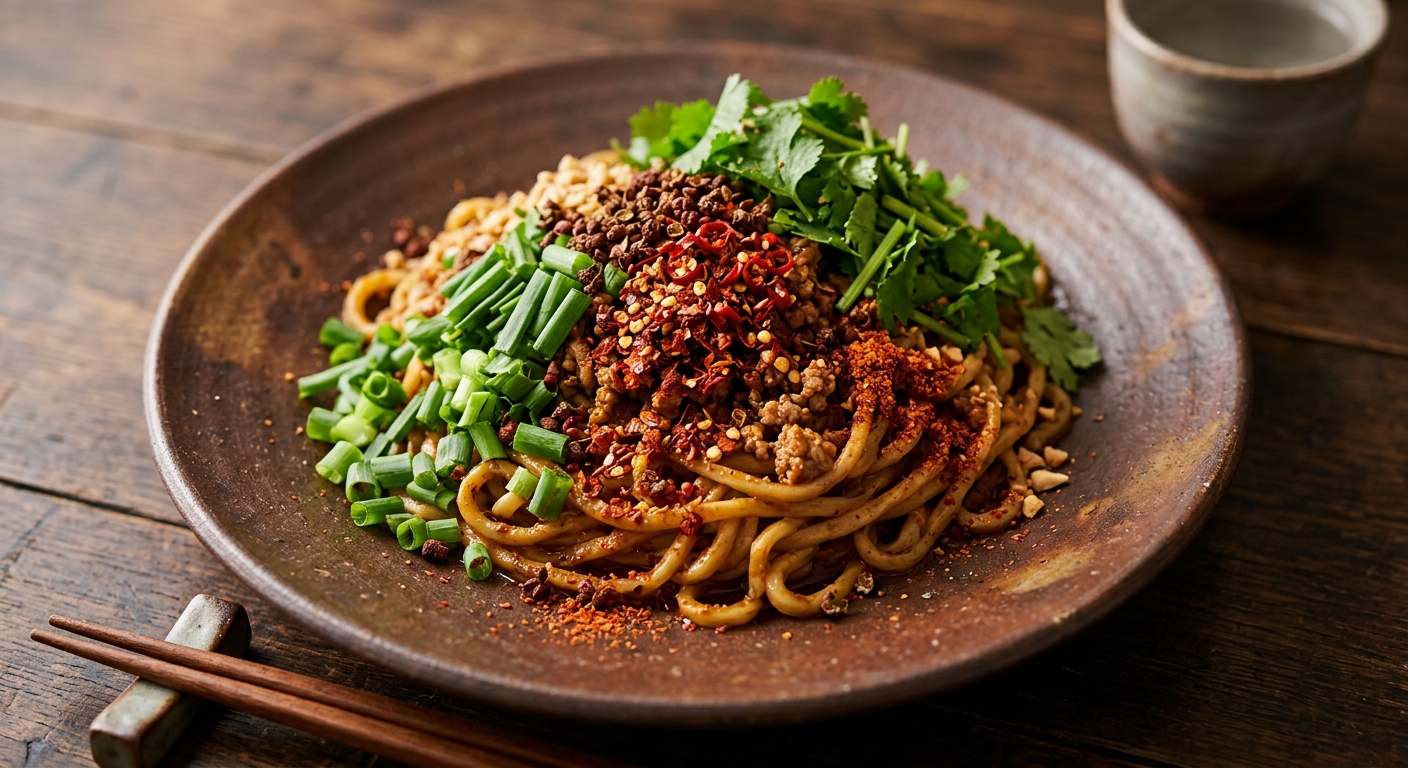
When international food lovers think of Tokyo’s noodle scene, Ramen, Udon, and Soba dominate the conversation. But over the past decade, a quiet revolution took over the streets of Tokyo, creating a dish that rivaled traditional ramen in popularity: Shirunashi Tantanmen (汁なし担担麺 / Soupless Dandan Noodles).
While originally adapted from Sichuan classics, Tokyo noodle artisans elevated this into a high-octane urban staple. Stripping away the heavy soup broth, Tokyo-style Shirunashi Tantanmen focuses on a thick, emulsified coat of aromatics, numbing peppers, and savory seasoned minced pork.
In Tokyo, this intense balance of spice, numbing sensation (Mala), and rich umami isn’t just a meal—it is a deeply satisfying stress-relief comfort food.
1. A Fresh Experience for Western Palates & The Japanese “Okazu” Tradition
For many Western home cooks, both the cooking style and the specific seasoning layering in this recipe will feel like a completely new culinary experience. Rather than relying on dairy, tomato, or long-simmered animal fats for richness, this dish builds deep, complex flavor through fermented bean pastes, aromatic oils, and botanical peppers in just a few minutes.
Chinese-Origin Dishes in the Japanese Home (Chuka Okazu)
It is worth noting that while Dandan noodles originated in China, Chinese-style dishes arranged through a Japanese lens are an essential part of everyday dining in Japan.
Dishes like Mapo Tofu, Gyoza, Ebi Chili, and Shirunashi Tantanmen are deeply woven into Japanese home food culture. They represent a major pillar of Japanese Okazu (おかず)—bold, highly flavorful side dishes and mains specifically designed to pair perfectly with steamed white rice.
Unlocking the Power of Sichuan (四川) Seasonings
Mastering the core Sichuan seasonings used in this recipe—Tobanjiang (fermented chili paste), Tianmianjiang (sweet bean sauce), Sichuan peppercorns, and Sansho—is a game-changer for your cooking repertoire.
Once you get comfortable using these pastes and peppers in this noodle dish, you can apply them to dozens of other Japanese-Chinese Okazu dishes (like stir-fried pork, eggplant, or tofu). It infinitely expands your flavor variation ideas at home!
2. Sourcing Ingredients: The Asian Grocer Checklist
While the cooking steps take under 10 minutes, getting these key items at a local Asian supermarket (H Mart, Mitsuwa, 99 Ranch, or local grocers) makes all the difference:
- Main Base: Minced Pork & Thick Fresh Chinese Noodles (Chuka-men)—thick noodles are currently the massive trend in Tokyo for maximum sauce grip.
- The Seasonings: Mirin, Japanese Sake, Soy Sauce (Shoyu), and Chinese Pork/Chicken Stock Powder.
- The Sichuan Pastes & Oils: Tobanjiang, Tianmianjiang, Scallion Oil (Mayu or fried onion/scallion oil), Chili Oil (Rayu), and fresh Garlic.
- The Peppers & Tops: Sichuan Peppercorns, Sansho Pepper (Japanese Pepper / 山椒), Scallions, fresh Coriander (optional), and an Egg Yolk.
- The Pro-Secret (Optional): A pinch of Niboshi (Dried Anchovy) Powder on top for a subtle seafood umami surge common in modern Tokyo ramen shops!
3. Watch the Full Video Guide
See the exact meat-reduction sequence, noodle chilling technique, and assembly in action:
4. Step-by-Step Professional Cooking Sequence
Step 1: Sear & Build the Minced Pork (Niku-Miso)
- Garlic Base: Chop 2 cloves of garlic. Sauté in a hot pan with a little oil—be careful not to burn it!
- Add Minced Pork: Drop in the minced pork and break it apart as it sears over high heat.
- Build the Base: Add Chinese pork/chicken stock base, Mirin (for rounded natural sweetness), Sake, and a splash of Soy Sauce (Note: taste your stock base first to gauge saltiness!).
- Incorporate Sichuan Pastes & Peppers: Add 1 tbsp Tobanjiang and 1 tbsp Tianmianjiang. Toss in your ground Sichuan peppercorns and Sansho pepper.
- Simmer Down: Let the liquid simmer until the sauce fully evaporates and coats the crispy pork meat in a glossy glaze. Turn off heat and do a final taste test.
Step 2: Noodle Prep & Bowl Setup
- Chop Aromatics: Finely chop about 30g of scallions (and fresh coriander if using).
- Boil & Shock Noodles: Boil thick fresh Chinese noodles al dente. Drain in a colander and rinse briefly under cold water to shock the temperature down and set the chewy texture (koshi).
- Dress the Bowl: In your serving bowl, add a drizzle of Scallion Oil, a small splash of Soy Sauce (adjusted based on your meat’s saltiness), and Chili Oil.
Step 3: Assembly & The Native Ritual
- Plate: Place the chilled, firm noodles over the oil base in the bowl.
- Layer Toppings: Spoon the warm simmered pork over the noodles, then add the chopped scallions, coriander, and place a raw egg yolk right in the center.
- Optional Tokyo Touch: Dust with extra chili oil, a pinch of extra Sichuan pepper, and a dash of Niboshi powder.
- The Mandatory 30-Second Mix: Before eating, vigorously mix the entire bowl 20 to 30 times until the egg yolk, oils, seasonings, and meat form a rich, thick emulsion around every thick noodle strand!
5. Summary: A Tokyo Noodle Masterclass at Home
Tokyo Soupless Dandan Noodles offers a thrilling culinary bridge between Chinese technique and Japanese Okazu sensibilities. It introduces a bold, aromatic flavor profile that might be entirely new to your kitchen, but will quickly become a favorite staple.
Grab these Sichuan pastes on your next Asian grocer run, and bring genuine Tokyo street-food culture to your table!
Leave a Reply