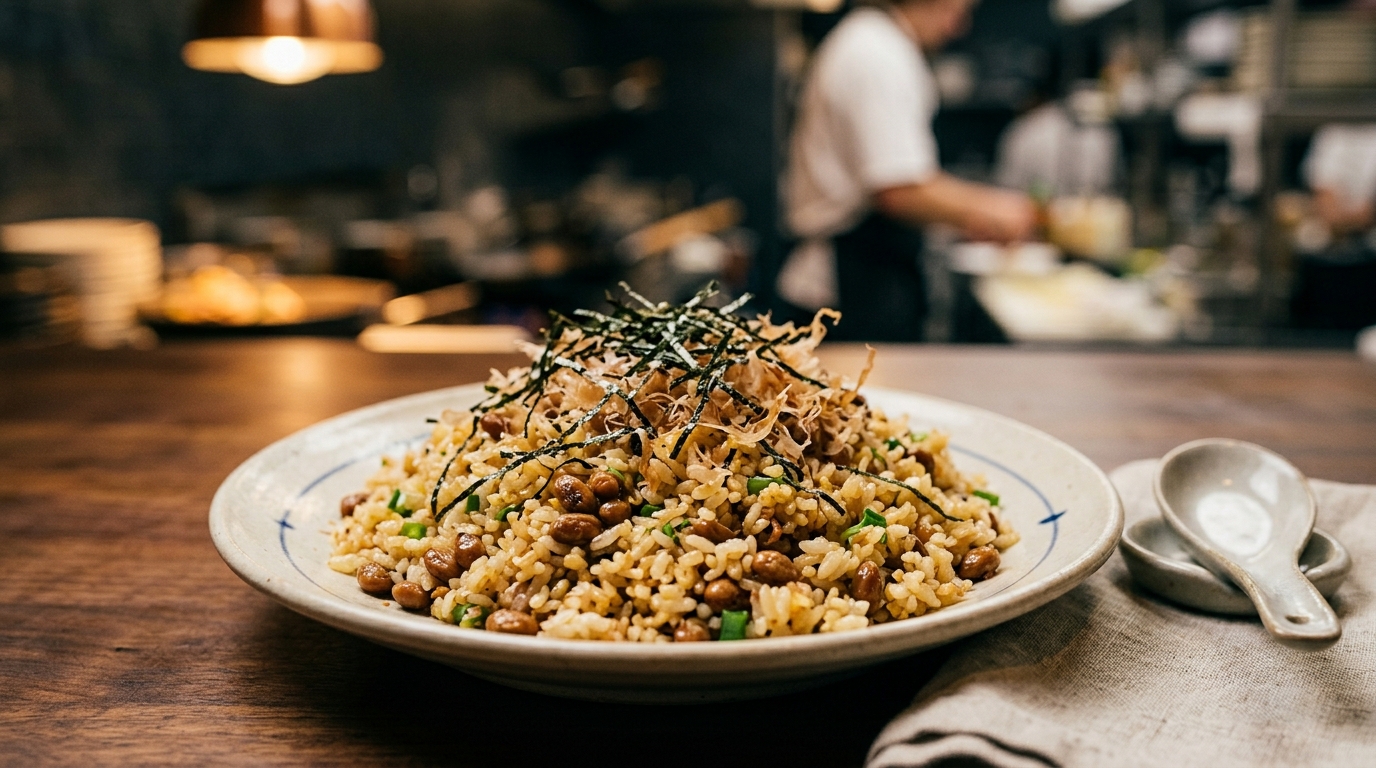
Before we dive into this recipe, I want to be entirely transparent with you: this post is a bit more personal and technical than usual for this blog.
The pan-tossing and wok control shown in the video below goes beyond standard, everyday home cooking. You do not need to master high-level wok techniques to enjoy Japanese food at home. If you aren’t interested in practicing advanced pan skills and simply want straightforward natto tips, feel free to skip the technical wok training!
However, if someone were to come to me in person and ask, “What is the single best ‘Gateway Dish’ you would cook for me to help me overcome natto?”—this exact water-rinsed Natto Chahan is what I would make for them on the spot.
That is why I wanted to share this dish. It stands as a practical, highly popular, and satisfying idea for incorporating natto into your cooking repertoire.
1. The Personal Stance: Why This Is My Go-To “Gateway” Dish
While our [Natto Gateway #1 Guide] focused on low-effort daily eating logic and native tips, this recipe represents a cooked, highly practical approach to taming natto’s strong characteristics.
The Water-Rinsing Prep Technique
- Removes the Slime (Neba-neba): Rinsing raw natto in a fine-mesh strainer under cold running water washes away the surface stringiness—the #1 obstacle for beginners.
- Mellows the Aroma: Flash-frying rinsed natto in high-heat fried rice rounds out the pungent fermentation smell, leaving behind a rich, toasted, nutty soy flavor.
- Creates a Crowd-Pleaser: When cooked into Chahan, the beans blend into the loose rice grains naturally, making it an approachable, delicious meal even for skeptical eaters.
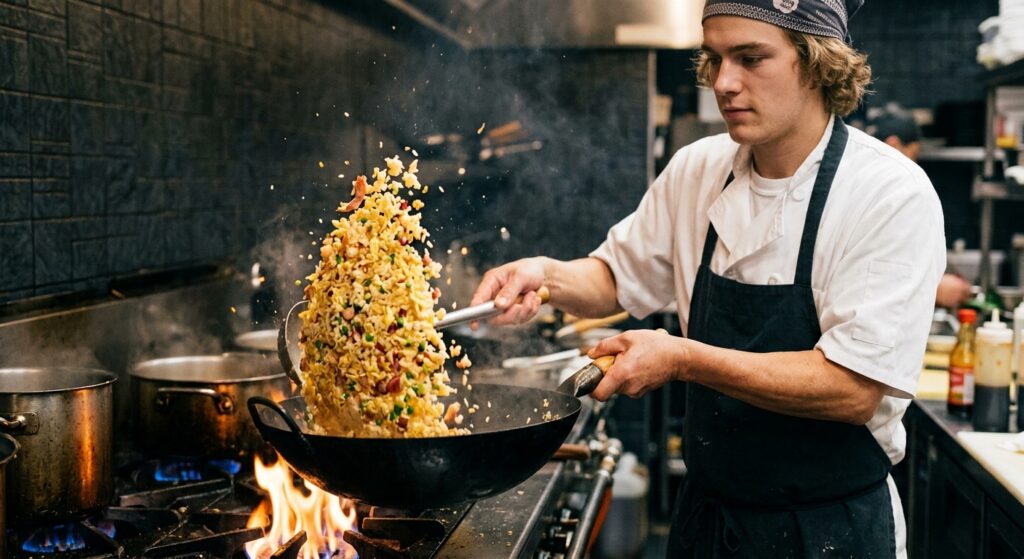
2. The Wok/Pan Skill: For Those Who Want the Challenge
If you do want to elevate your pan skills, the video below demonstrates the motion of agitating, tossing, and separating cooked rice over high heat.
- Heat & Motion Control: Keeps the rice grains individual (para-para) rather than steaming into a mushy clump.
- Even Moisture Evaporation: Allows added ingredients—even washed natto—to sear quickly without making the pan sticky.
Again, if you don’t care about practicing this specific technique, don’t worry! You can easily make a simpler version in a standard skillet.
3. Watch the Video Guide (Advanced Pan Technique in Action)
See the exact pan agitation, rice separation, and frying timing in action here:
4. Step-by-Step Cooking Guide: The Natto Insertion Sequence
Once you have reviewed the pan techniques in the video, follow this precise sequence when adding the rinsed natto so you don’t spoil the dry, light texture of your Chahan:
- Start the Base: Fry your egg first, immediately add the rice, and toss over high heat until the grains begin to separate.
2. Create Space for Natto: Before adding the scallions (green onions), clear a small empty space directly on the hot pan surface.
3. Searing the Natto: Drop the rinsed natto into that empty space and fry it on its own for a few seconds. This cooks off any lingering surface water from the rinse step.
⚠️ Crucial Tip: Do not mix the wet natto directly into the rice immediately! Searing it on the bare metal surface first burns off the moisture so it won’t steam or soggy your rice grains.
4. The “Flight Test”: Fold the seared natto into the rice and test your wok toss. Once you confirm the rice can easily “fly” in the pan without sticky natto residue dragging it down, you are in the clear!
5. The Fragrant Finish: Add your chopped scallions, drizzle a small splash of sesame oil around the hot rim of the pan, toss vigorously for about 10 seconds, and serve immediately.
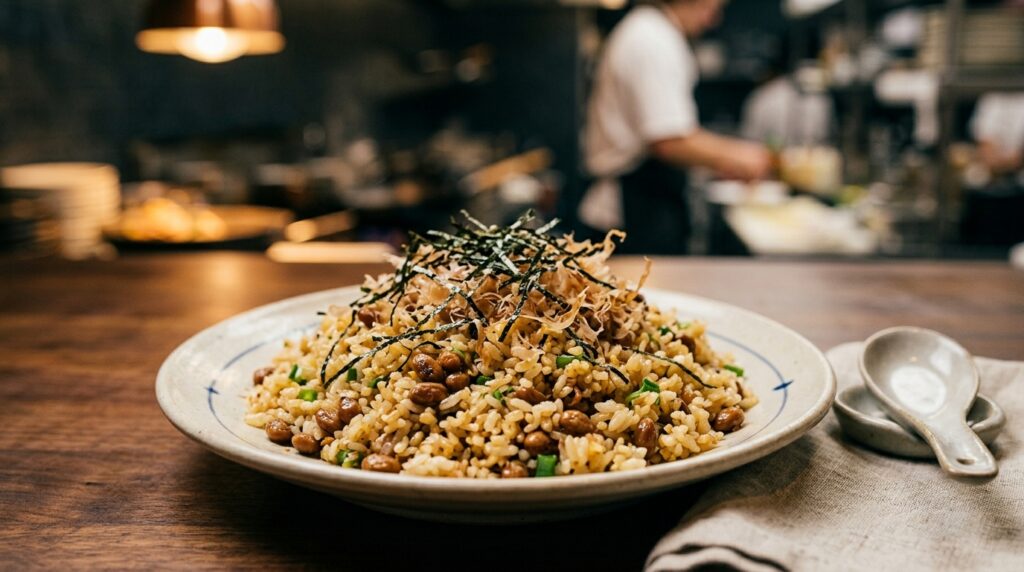
6. Plating & Final Garnishing: Transfer the fried rice onto a plate. To finish, top with kizami nori (刻みのり / shredded seaweed) and katsuobushi (かつお節 / bonito flakes). This final touch gives the dish an authentic Japanese profile while accentuating and complementing the rich, savory presence of the natto.
5. Summary: A Worthy Addition to Your Repertoire
Whether you treat this as a personal cooking challenge or simply keep the water-rinsing natto trick in your mental cookbook, this recipe is one of the most effective and satisfying ways to bridge the gap into enjoying natto.
If you love Chahan, love natto, or want to help a friend try natto for the first time without the sticky mess, give this method a try!
Leave a Reply