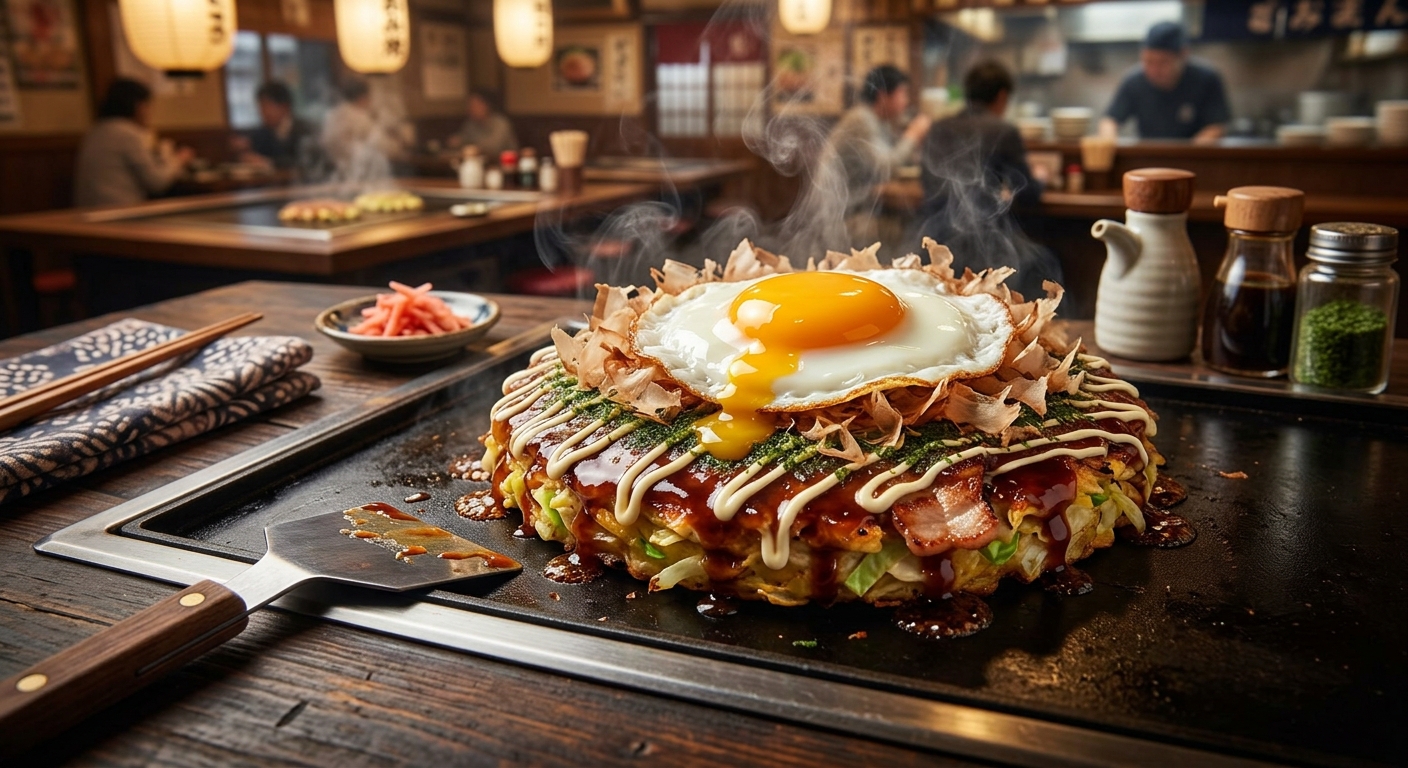
When it comes to Japanese street food and soul-soothing home meals, Okonomiyaki (お好み焼き) sits right at the very top. Often described in the West as a “savory Japanese cabbage pancake,” a true, native-style Okonomiyaki is actually something completely different: it is a vibrant vegetable dish where a delicate, yam-infused batter simply coats and binds fresh cabbage, pork, and aromatics.
With over 800 views and high watch time on our featured video guide, this recipe breaks down the standard Osaka-style technique—focusing on fluffy batter logic, essential Japanese supermarket toppings, and a secret flipping trick that guarantees 100% success every single time.
1. The Native Sourcing Advice: Don’t Make Sauces From Scratch!
One of the most practical tips for making authentic Okonomiyaki at home is knowing where to spend your energy. Do not attempt to make Okonomiyaki sauce or Japanese mayonnaise from scratch.
Japanese manufacturers have spent decades perfecting the exact balance of fruit purées, umami, and spices in these bottled condiments. If you have access to a local Japanese or Asian supermarket (like Mitsuwa, H Mart, or 99 Ranch), simply pick up these authentic staples:
[Essential Condiment Checklist]
- Otafuku Okonomiyaki Sauce (おたふくソース) — Rich, sweet-savory fruit & spice sauce
- Kewpie Japanese Mayonnaise — Creamy, egg-yolk-based mayo
- Aonori (青のり) — Dried green seaweed powder for signature aroma
- Beni Shoga (紅生姜) — Red pickled ginger (Indispensable for cutting richness)
- Katsuobushi (かつお節) — Thinly shaved bonito flakes that “dance” in the heat
2. The Health & Texture Secret: Japanese Yam (Yamaimo)
The single biggest mistake Western recipes make is treating Okonomiyaki like a thick flour pancake. In authentic Japanese cooking, flour is minimized, and Japanese Yam (Yamaimo / 山芋 or Yamato-imo) is the star binder.
- Why Use Yam? Grated Japanese yam creates a natural, viscous, airy matrix. When heated, it transforms the batter into a pillow-soft, melt-in-your-mouth texture rather than a dense, gummy cake.
- The Health Factor: Yamaimo is prized in health-minded Japanese cuisine for its digestive enzymes, dietary fiber, and restorative properties.
- The Optimal Ratio: For every 100g of flour, use approximately 20g of grated Yamato-imo combined with water until it forms a loose, pourable coating liquid.
💡 Cabbage & Scallion Cut Logic: Cut your cabbage and scallions into medium-sized pieces—not paper-thin shreds! You want to feel the crisp, firm presence and natural sweetness of the cabbage in every bite.
3. Advanced Practitioner Techniques (What Sets This Recipe Apart)
1. Searing Pork Minced Meat in Advance
Instead of placing raw pork belly slices directly onto the batter in the pan, fry your pork meat in advance until it reaches about 70% to 80% doneness. Pre-searing renders out delicious pork fats and develops a deeply fragrant crust that elevates the flavor profile when combined with the batter.
2. The Secret Two-Pan Flip Trick (100% Success Rate)
Flipping a large, delicate, highly-loaded Okonomiyaki in a single frying pan can be intimidating and often leads to the cake breaking apart.
The Practitioner Solution:
- While the bottom side cooks on low heat, gently shake the pan to perform a “sticking prevention effort” (making sure the cake slides freely).
- Heat a second frying pan with a fresh, light coating of oil.
- Invert the second pan directly over the first pan, and swiftly flip them together!
- Your Okonomiyaki lands perfectly centered on a fresh, hot, oiled surface without any mess.
3. The Sunny-Side Soft Egg Topping
Standard recipes mix raw eggs directly into the raw flour batter. However, keeping the egg separate and frying it sunny-side up to a 70% soft-yolk stage as a final top layer creates a luxurious, rich yolk sauce that flows over the cabbage when cut!
4. Watch the Video Guide
See the exact batter consistency, the scallion oil secret, and the Two-Pan Flip Trick in action:
5. Step-by-Step Cooking Sequence
- Prep Veggies & Pickles: Chop cabbage into medium bite-sized pieces, chop scallions, and gather your red pickled ginger (Beni Shoga).
- Mix the Yam Batter: Whisk flour with water until smooth, add grated Yamaimo, a splash of Mentsuyu (or dashi base), and a dash of scallion oil for a secret aroma surge.
- Coat the Veggies: Fold the cabbage, scallions, and pickled ginger into the batter. The vegetables should be lightly coated in batter—not drowning in liquid.
- Pre-Fry the Pork: Quickly sear your pork slices in a pan to 70-80% doneness to render the fats.
- Pan-Fry the Cake: Combine rendered pork with the batter, pour into a medium-heated oiled pan, shape into a thick round disc, test for slide-sticking, then drop heat to low and cover.
- Execute the Two-Pan Flip: Once the bottom is golden brown, flip into a second hot, oiled pan using the two-pan inversion technique. Cook through until steaming and firm.
- Assemble & Serve: Fry an egg on the side to a soft-yolk stage. Brush the top of your Okonomiyaki generously with Otafuku sauce, squeeze on Japanese mayonnaise, dust with Aonori, top with the soft fried egg, and shower with dancing Katsuobushi bonito flakes.
6. Summary: Bring Osaka Soul Food to Your Table
Making authentic Okonomiyaki at home isn’t about complicated cooking—it’s about having the right native ingredients and smart techniques. By leveraging bottled Japanese condiments, grated yam for fluffiness, and the two-pan flipping technique, you can enjoy restaurant-quality Osaka soul food anytime!
Leave a Reply