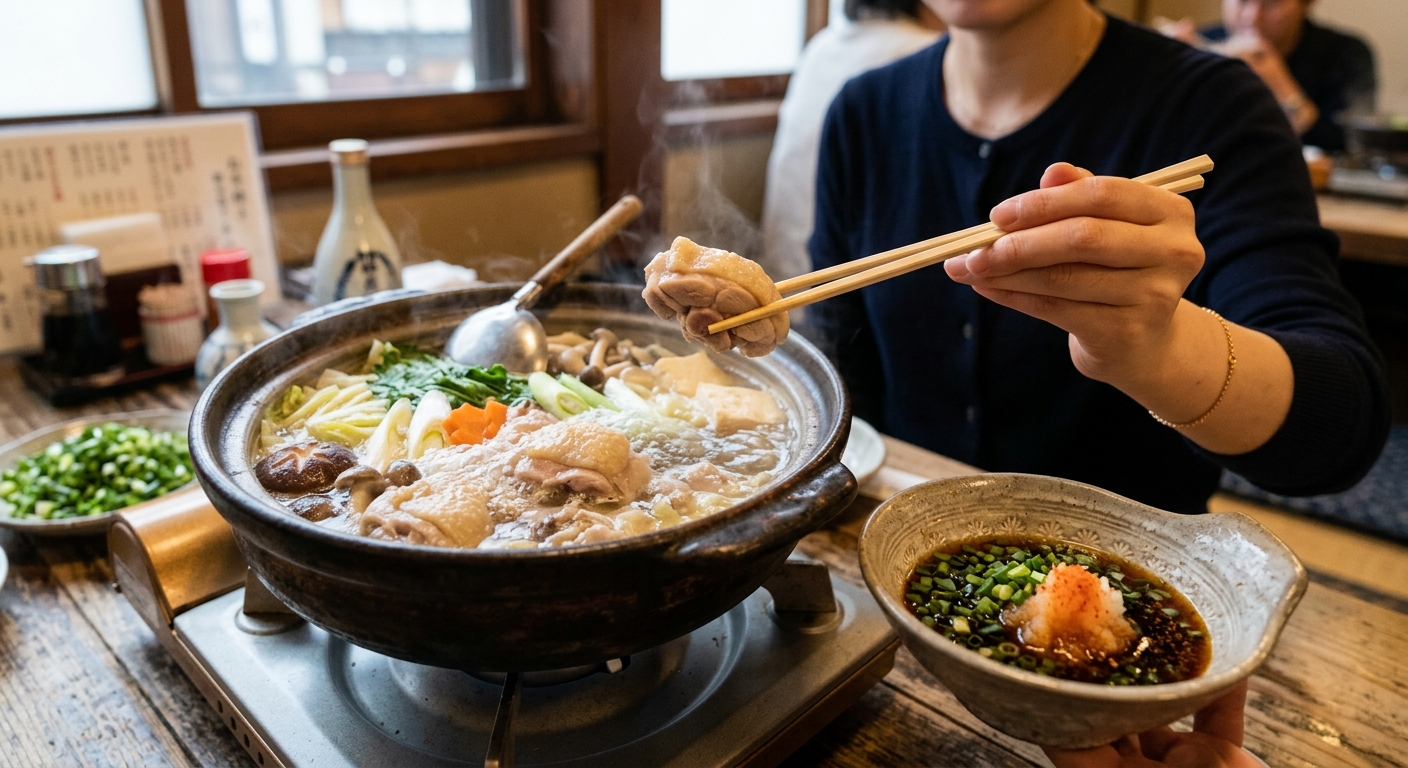
If you loved the idea of Shabu-Shabu from my previous post but hit a wall trying to find paper-thin beef—or choked at the $100/lb price tag of imported Wagyu—I have good news: you do not need expensive beef to experience authentic Japanese hot pot.
In fact, as part of this Shabu-Shabu masterclass series, I want to share what I consider the true native approach to Japanese pot cuisine: Mizutaki (水炊き)—a classic chicken hot pot.
I’ll admit right upfront: this post is going to get a bit maniacal. Most people in Japan just eat hot pot because it’s easy and comforting—they don’t sit around analyzing condiment mechanics! But this level of detail comes from genuine passion. In my opinion, if you want to fully understand and enjoy Shabu-Shabu at its deepest level, learning how to master a simple broth hot pot paired with Ponzu and meticulously prepared garnishes (Yakumi) is the absolute right place to start.
Here is my personal blueprint for using “intentional simplicity” and zero-oil Ponzu to build an ultra-healthy, high-flavor meal anywhere in the world.
1. My Two Pillars: Intention & Practicality
To get the most out of this dining style, I recommend looking at it through two lenses:
Pillar A: Intention (The Power of Subtraction)
In modern Western cooking, flavor is usually built through addition—layering heavy oils, butter, cheese, or rich sauce reductions.
My recommendation is to try the opposite: subtraction and extraction. Poaching ingredients in a clean broth (pure water simmered with a single sheet of Kombu) isn’t lazy cooking; it’s an intentional choice to reset your palate. When you strip away heavy fats, you rediscover how incredible plain, simple ingredients taste when supported rather than buried.
Pillar B: Practicality (The Science of Ponzu, Negi & Daikon-Oroshi)
Why do I insist on pairing meat with zero-fat dipping sauces? The combination of Ponzu, finely sliced green onions (negi), and grated daikon radish (daikon-oroshi) isn’t just tradition—it’s digestive chemistry:
- Protease Enzymes in Daikon: Freshly grated daikon (daikon-oroshi) contains active enzymes like protease (which breaks down protein) and amylase (which breaks down starches). When you dip meat into it, it chemically lightens the dense sensation in your stomach, making meat feel remarkably light and easy to digest.
- Allicin in Negi: Finely sliced scallions bring allicin, which stimulates digestive juices and cuts through any gameiness in chicken or fat in beef.
- Citric Acid & Umami: Ponzu supplies zero-fat citrus acidity alongside natural glutamates from kombu and katsuobushi. The acid contracts the muscle proteins on your tongue slightly, making every bite feel crisp rather than heavy.
2. Proper Prep: Negi (Non-Negotiable) vs. Daikon-Oroshi (Optional)
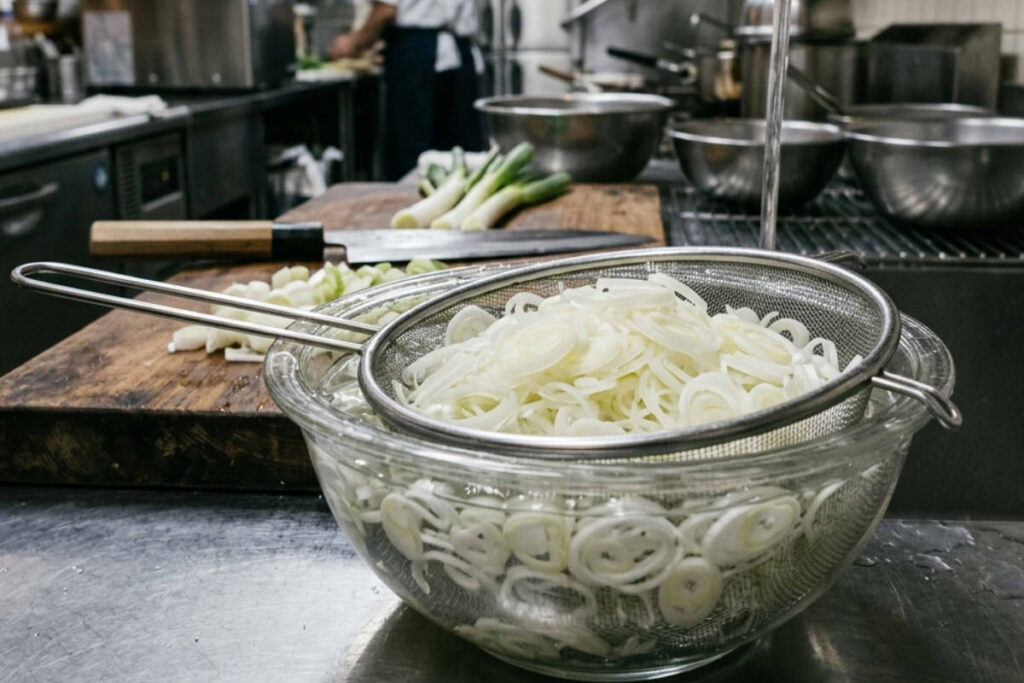
While both garnishes play a functional role, in my opinion, negi (green onions) is non-negotiable—it must be on the table. Daikon-oroshi is a wonderful optional bonus if you have fresh daikon radish available, but missing negi strips away essential sharpness.
Proper prep for both condiments is critical so they don’t water down your dipping bowl:
- Negi (Green Onion) Prep: Negi (Green Onion) Prep: Slice the scallions ultra-thin crosswise, then wrap them in a paper towel or clean kitchen cloth to squeeze firmly and remove excess moisture and sticky sap. This keeps the negi crisp, fluffy, and aromatic without dulling your Ponzu. (For a deep dive into mastering this technique and understanding why moisture control changes everything, see my detailed guide: [Uchi‑Negi: a small detail that changes everything]).
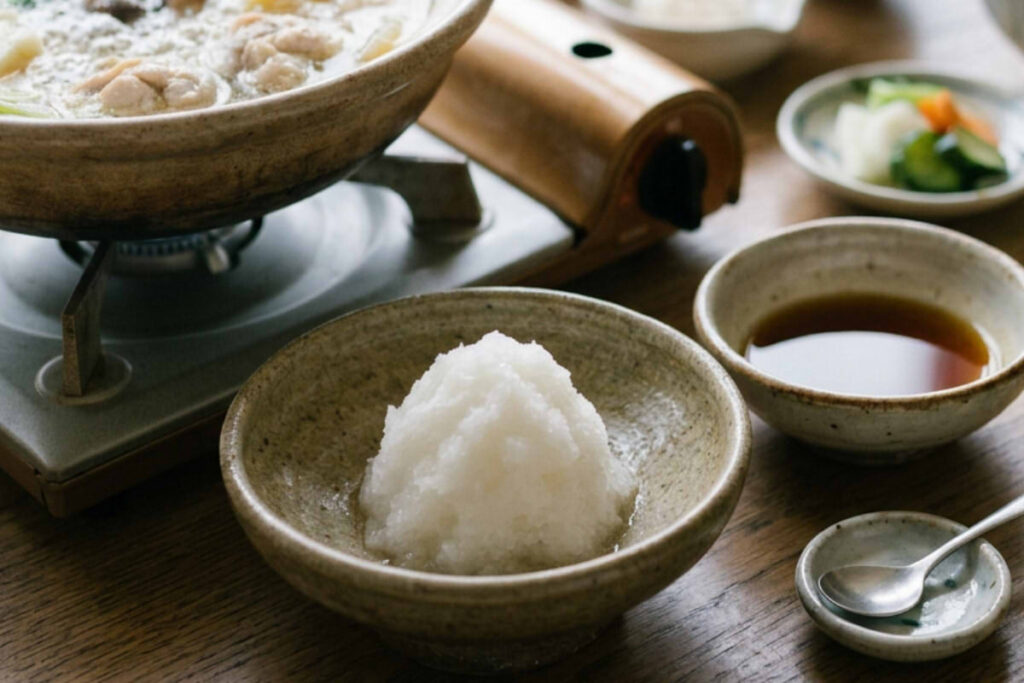
Grated daikon radish (daikon-oroshi) in Japanese cuisine
1. Selecting the Section (Choosing by Use)
- Top section near the leaves (Sweetest & highest moisture): Best for side servings with grilled fish, unheated side dishes, and general condiments.
- Middle section (Balanced sweetness & spiciness): Best for mizore-ni (simmered dishes with grated daikon), oroshi-ni, and cooked dishes.
- Bottom tip (Spiciest & lowest moisture): Best for sharp, pungent condiments (such as karami-oroshi for buckwheat noodles).
2. Peeling (Peel Thickly)
- The outer layer contains tough, fibrous strands.
- To achieve a smooth texture, peel the skin relatively thick (about 3–4 mm / 1/8 inch) using either a katsuramuki technique or a sharp knife.
3. Grating (Gently in a Circular Motion)
- Grip & Pressure: Grating aggressively in a straight line crushes the cell structure, releasing excessive moisture and pungency (allyl isothiocyanate).
- Technique: Hold the daikon perpendicular to the grater and grate gently in a circular motion to produce a soft, fine texture.
4. Adjusting Moisture (The Most Critical Step)
Freshly grated daikon holds an immense amount of water, which will dilute the dish if left unadjusted:
- Transfer to a Strainer: Place the grated daikon in a fine strainer, cheesecloth, or paper towel.
- Lightly Squeeze: Do not wring it completely dry, or it will become tough and lose its natural flavor and umami. The fundamental Japanese culinary technique is to lightly strain or gently press it, leaving a fluffy, moist texture.
5. Plating & Timing
- • Shaping: When serving as a condiment, lightly press it into a small round mound or conical shape before placing it on the dish. • Grate Just Before Serving: Grated daikon loses flavor over time and develops unpleasant odors or harsh bitterness. For peak flavor, always grate it immediately before serving.
3. How I Recommend Structuring Your Meal (The Vegetable-First Sequence)
I don’t use negi and daikon-oroshi to “lighten” vegetables—vegetables are naturally light! Instead, here is the exact order I recommend eating your hot pot to maximize flavor and build stock depth:
- Vegetables First: Poach your cabbage, mushrooms, or tofu in the dashi bath first and dip them into plain Ponzu. This lets you enjoy the pure, natural sweetness of the greens while building a rich vegetable-dashi base in the pot.
- Chicken Second (The Ultimate Okazu): When you move to the chicken, add your squeezed negi (and daikon-oroshi if using) into your Ponzu bowl. The sharp, cooling condiment cuts right through the meat’s density.
- The Gohan Loop: In my view, this clean, savory-tart bite of chicken isn’t meant to be eaten as an isolated entree—it is designed as Okazu (a side dish) to be eaten alongside hot steamed white rice (Gohan). The contrast between acidic, umami-rich chicken and warm, sweet rice is the ultimate comfort food experience.
4. My Table-Side Secret: The “Little-by-Little” Ponzu Maintenance Routine
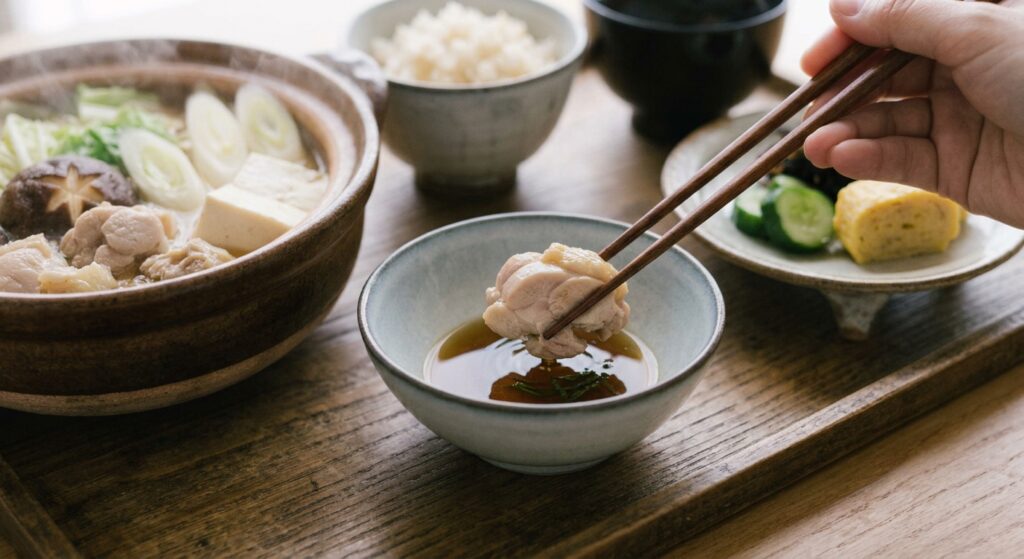
Here is a practical tip that almost no Western recipe guides talk about: Never fill your dipping bowl to the brim with Ponzu at the start.
Because you are lifting wet, poached ingredients straight out of the dashi bath into your dipping bowl, hot water clings to the food and rapidly dilutes your sauce. If you pour a large pool of Ponzu right away, after 3 or 4 bites your sauce becomes lukewarm, watery, and dull.
Here is how I recommend managing your Ponzu at the table:
- Pour Small Amounts: Pour just a shallow splash of Ponzu into your bowl—enough for 2 to 3 bites of vegetables or chicken. This ensures every single bite hits a concentrated, cold, punchy citrus-soy bath.
- Refresh Frequently: Top off your bowl with a fresh splash of Ponzu and a pinch of prepped negi as needed throughout the meal to maintain ideal salinity and temperature.
- The Dashi Soup Reset: Once your Ponzu is slightly diluted near the end of your meal, do not throw it away! Ladle hot, chicken-enriched dashi soup straight from the pot into your leftover Ponzu bowl. Because Ponzu is part of the soy sauce (shoyu) family, combining it with hot dashi instantly creates a light, perfectly seasoned, citrus-kissed soup to wrap up your meal.
Why Ponzu Beats Creamy Sauces Here: While sesame sauce (Goma-dare) is also hugely popular for hot pot, you cannot adjust or reset it like this. Once Goma-dare dilutes, it just turns into a lukewarm, murky emulsion. Ponzu is unique because its soy-sauce base lets it transition seamlessly from a sharp dipping condiment into a soothing dashi soup on the fly. Once you master this table-side care, you honestly might never go back to heavy hot-pot sauces again.
5. My Go-To Scratch-Made Ponzu Recipe
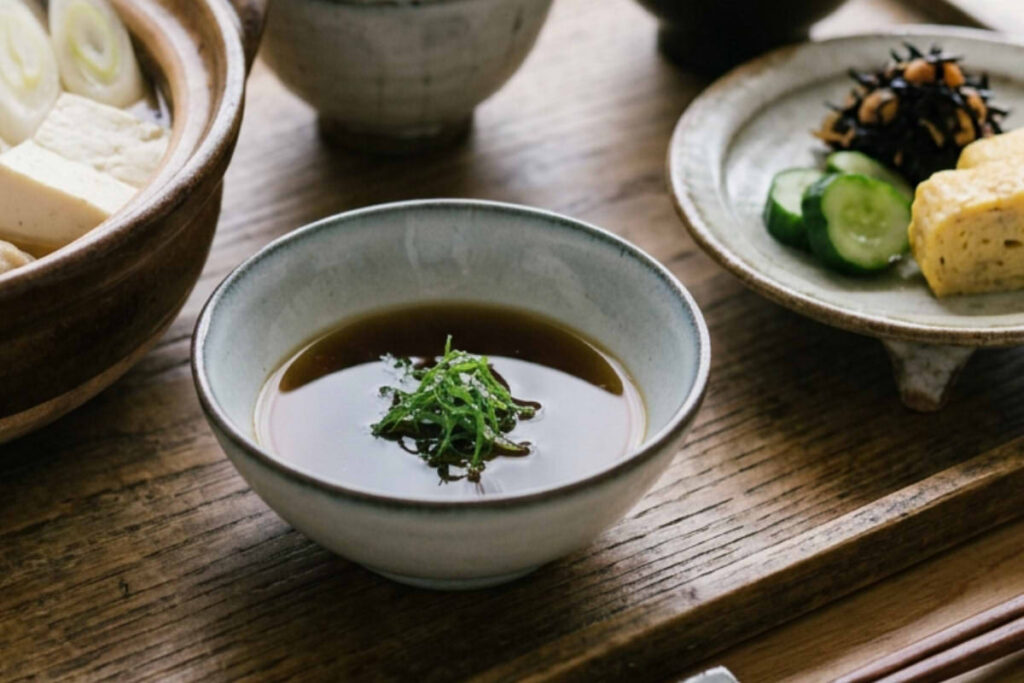
Commercial store-bought Ponzu sold overseas often relies on cheap distilled vinegar and artificial flavorings. Making your own cold-steeped Ponzu takes 5 minutes of prep and produces a bright, deeply aromatic sauce that completely ruins store-bought versions for life.
My Ingredients Ratio
- Soy Sauce: 100ml (Japanese dark soy sauce or light Usukuchi)
- Fresh Citrus Juice: 80ml (Fresh Yuzu juice, or a 50/50 mix of fresh lemon and lime/grapefruit juice)
- Mirin: 30ml (Flash-boiled for 20 seconds to burn off raw alcohol)
- Kombu: 1 piece (approx. $5\text{cm} \times 5\text{cm}$)
- Katsuobushi (Bonito Flakes): 5g (1 small handful)
Instructions
- Combine: In a clean glass jar, combine the soy sauce, fresh citrus juice, and cooled mirin.
- Steep: Submerge the Kombu and Katsuobushi directly into the liquid.
- Age: Seal the jar and refrigerate for at least 24 hours (48 hours is my sweet spot). The cold steep extracts natural glutamates without any heat-extraction bitterness.
- Strain: Strain through a fine-mesh sieve. Store in a sealed bottle in the fridge for up to 1 month.
6. Mizutaki (Japanese Chicken Hot Pot) Recipe
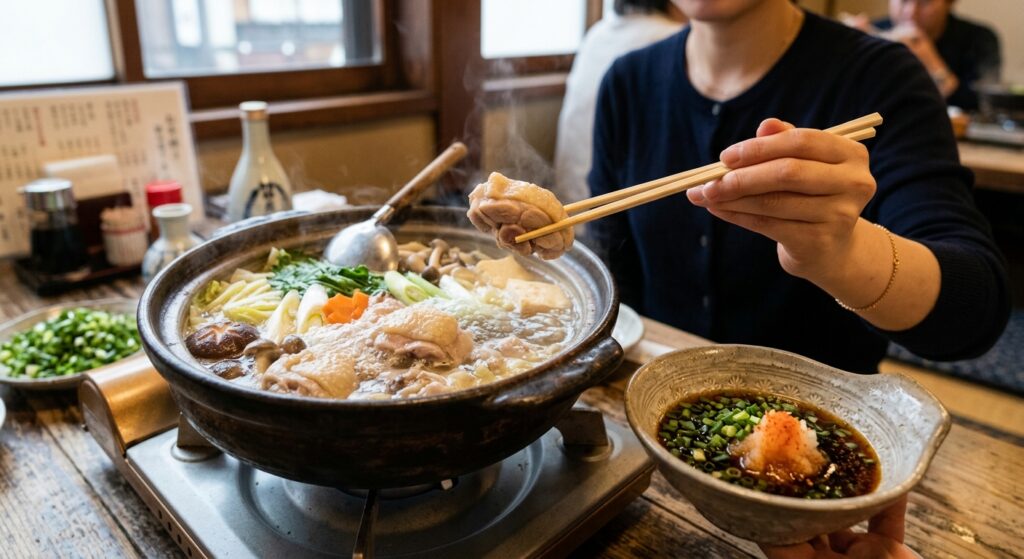
Mizutaki is a classic Japanese hot pot (nabemono) originating from Hakata (Fukuoka). It features bone-in chicken simmered over low heat to draw out a rich, savory broth, served simply with citrusy ponzu dipping sauce and fresh condiments.
Ingredients (Serves 2–3)
Chicken & Broth:
- Bone-in chicken thighs (chopped into bite-sized pieces): 400–500 g / 1–1.1 lbs
- Boneless chicken thigh (cut into bite-sized pieces): 200 g / 0.44 lbs
- Water: 1.2–1.5 L / 5–6 cups
- Dried kombu (kelp): 1 sheet (approx. $5\times 10\text{ cm}$ / $2\times 4\text{ inches}$)
- Sake (Japanese rice wine): 100 ml / 6 tbsp
- Fresh ginger (thinly sliced): 3–4 slices
Pot Ingredients:
- Napa cabbage: ¼ head
- Tokyo negi / Japanese long onion: 1–2 stalks
- Tofu: 1 block (medium-firm or silken)
- Mushrooms (Enoki, Shimeji, or Shiitake): 1 pack
- Shungiku (Garland chrysanthemum) or Mizuna: ½ bunch
Dipping Sauce & Condiments:
- Ponzu sauce
- Grated daikon radish (daikon-oroshi), finely chopped scallions (uchinegi), Yuzu Kosho (Japanese citrus chili paste)
Step-by-Step Instructions
1. Prep the Chicken (Blanching / Shimofuri)
- Remove excess skin, fat, and any blood spots from the bone-in chicken pieces.
- Bring a pot of water to a boil, submerge the bone-in chicken for 10–15 seconds until the outer surface turns white, then immediately transfer to ice water.
- Gently wash off any remaining blood or impurities under cold running water. This essential step ensures a clean, clear, and odor-free broth.
2. Simmer the Broth
- In a hot pot (donabe or heavy pot), combine water, kombu, drained bone-in chicken, ginger slices, and sake. Set over medium heat.
- Remove the kombu just before the water reaches a rolling boil.
- Skim off any scum from the surface. Reduce the heat to low and simmer gently for 40–60 minutes to extract the deep umami flavor. (Note: For a richer, milky-white broth, keep the broth at a steady, medium-high boil).
3. Add the Ingredients
- Once the base broth is rich and fragrant, add the boneless chicken thigh pieces and firmer vegetables (like the dense stems of the Napa cabbage).
- Sequentially add the tofu, mushrooms, long onions, Napa cabbage leaves, and green leafy vegetables (shungiku or mizuna). Simmer until cooked through.
How to Serve & Enjoy
- Savor the Broth First: Before diving into the meat and vegetables, ladle a small amount of pure broth into a small cup. Add a pinch of salt and chopped scallions to taste its unadulterated depth.
- Dip in Ponzu: Dip the poached chicken and vegetables into individual bowls of ponzu sauce mixed with fresh grated daikon radish or yuzu kosho.
- The Final Course (Shime): Save the nutrient-rich broth at the end! Add cooked rice and beaten egg (or udon noodles), season lightly with salt, and enjoy a fragrant finishing porridge (zousui).
7. The Two Deep Insights: Re-thinking Salad & The “Point Zero” Okazu
If you have made it this far through this super-long post, you now possess a truly native, practitioner-level awareness of how Japanese pot cuisine actually functions. To wrap it all up, I want to leave you with two core takeaways:
1. Vegetable First: Upgrading Your Salad to Non-Oil Boiled Greens
Because all ingredients simmer together in Mizutaki, the vegetables absorb a gentle, seasoned chicken flavor from the broth. This makes Mizutaki a great “gateway experience” for enjoying clean, simple-broth hot pot.
In classic Shabu-Shabu, my recommendation to eat vegetables first is even more stripped-down: because greens are poached before any meat hits the pot, they cook in pure, unadulterated dashi water and are dipped straight into oil-free Ponzu. Once your palate adapts to Ponzu, you’ll realize an incredible health life-hack: you can swap out cold, raw salads drizzled in heavy oil dressings for warm, dashi-boiled vegetables paired with zero-oil Ponzu. This is why I passionately insist on starting your meal with vegetables.
2. Meat as the Ultimate “Point Zero” Okazu
When it comes to pairing with hot white rice (Gohan), meat alone takes center stage as the Okazu.
Even in the simplest pot setup imaginable, poached chicken dipped in crisp Ponzu retains plenty of savory weight to deliver total satisfaction alongside a bowl of rice. In fact, simple poached chicken with Ponzu is probably the purest, most “Point Zero” meat Okazu I can conceive of (for a deeper dive into this concept, check out my [Rethinking Simplicity: What the Idea of Ichiju Issai Might Teach Us About Mindful Eating] post).
This is exactly why I meticulously break down how important Yakumi are. Freshly prepped negi and daikon-oroshi act as raw seasonings straight from nature; when added to simple Ponzu, they transform a plain dipping sauce into a well-calculated, super-light, and sophisticated seasoning base.
Having worked as a professional cook, I know an unfortunate reality of the industry: there is no guarantee a restaurant will serve you truly fresh yakumi. Especially at reasonably priced hot pot spots today—even in Japan—pre-cut yakumi is often sitting around losing its aroma and accumulating excess moisture, failing to do its real job.
Taking control at home and preparing decent, homemade yakumi using ingredients bought fresh that very day is the single biggest secret to practically elevating your Japanese hot pot experience far beyond what most casual restaurants serve.
Once you practice eating white rice alongside minimally processed, low-oil Okazu like this, you aren’t just following a recipe—you are actively practicing the time-tested, sustainable healthy eating habits of Japan.
Leave a Reply