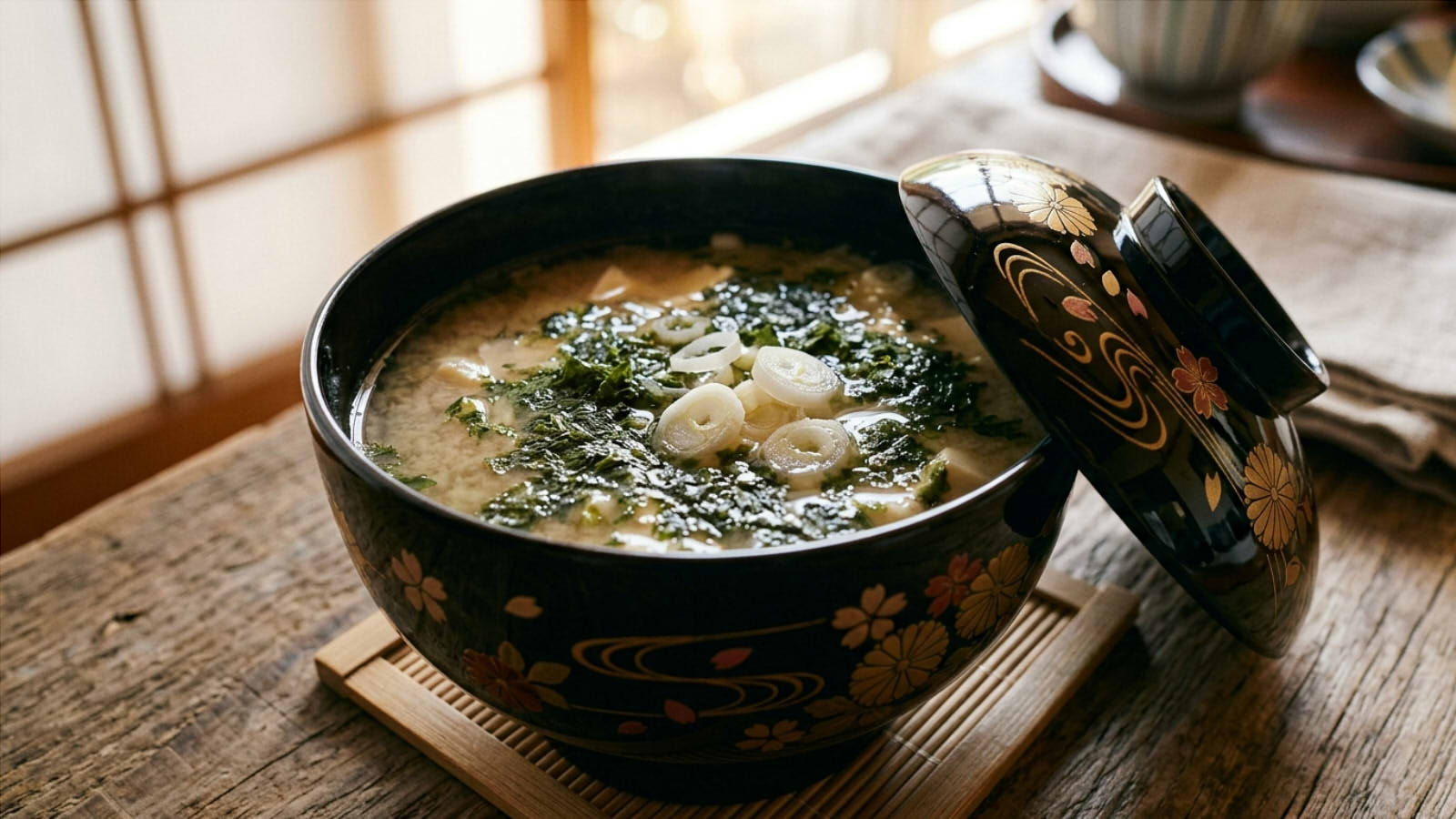
Introduction: This is simply my personal starting point for miso
Before trying miso as a seasoning, I personally feel it helps to know one very simple bowl of miso soup. Not the “best” miso soup, not the “correct” one — just a bowl that teaches the baseline flavor of miso in a very natural way.
For me, that bowl is miso soup made with dashi, aonori, and properly prepared uchi‑negi.
This is simply my own perspective as someone who grew up with Japanese food. If you already have your own favorite miso soup, that’s wonderful. This post is just one native viewpoint you can use as a reference.
Why dashi matters (and why Ajinomoto Hondashi is perfectly fine)
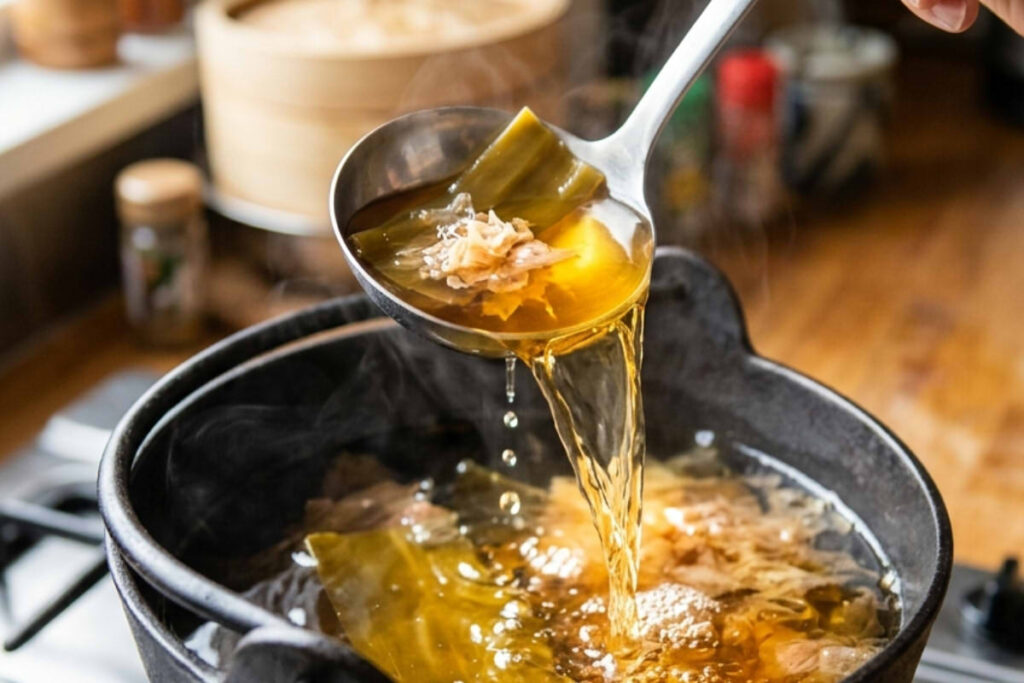
In Japan, miso soup almost always starts with dashi. Dashi gives miso a place to settle — it softens the saltiness, lifts the aroma, and creates a gentle background that makes miso feel balanced.
Ideally, dashi is made from:
- kombu
- katsuobushi (bonito flakes)
But realistically, many readers outside Japan may not have easy access to these ingredients.
If you have a Japanese grocery store nearby, Ajinomoto Hondashi is a very practical option. It’s affordable, easy to use, and gives a gentle dashi flavor that works surprisingly well for this simple miso soup.
Of course, if you prefer another brand or already have your own way of making dashi, please follow what feels right to you. This is simply one suggestion based on my own experience.
Even with hondashi, the soup becomes:
- aromatic
- balanced
- gently umami
- unmistakably Japanese
And that’s more than enough for this step in your miso journey.
Uchi‑Negi: a small detail that changes everything
Negi (scallion) is not just a topping — it’s what we call uchi‑mono, something added at the end to complete the bowl.
Here, I want to share a small detail from my own cooking habit. It’s not a rule — just something I personally value.
1. Choose scallions similar to Japanese ones
If possible, choose scallions with long white stems, and ideally use only the white part for uchi‑negi. The white part has:
- cleaner aroma
- softer sweetness
- less grassy bitterness
It blends with miso beautifully.
2. Cut as thin as possible
Thin slices release aroma gently and mix into the soup without feeling sharp.
3. Soak in water for at least 10 minutes
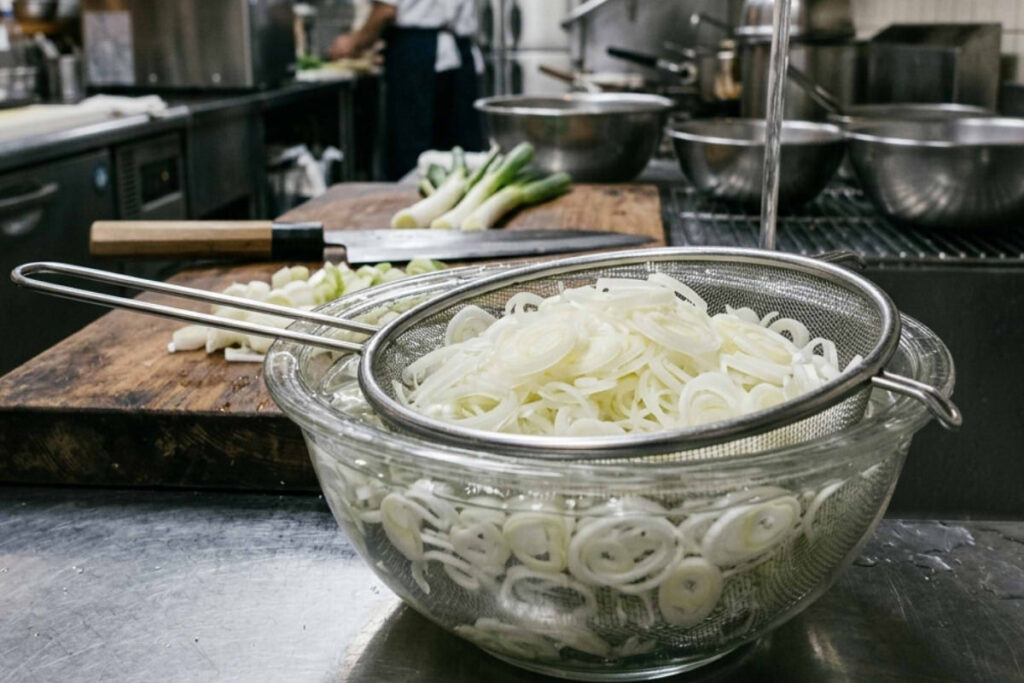
This step removes unnecessary bitterness and makes the negi:
- milder
- cleaner
- more refreshing
4. Squeeze lightly and store properly
After soaking, gently squeeze out excess water. Place the negi on a piece of cooking paper on a small plate. You can pick the amount you need each time.
This small preparation makes the negi feel “alive” in the soup — a very Japanese sensation.
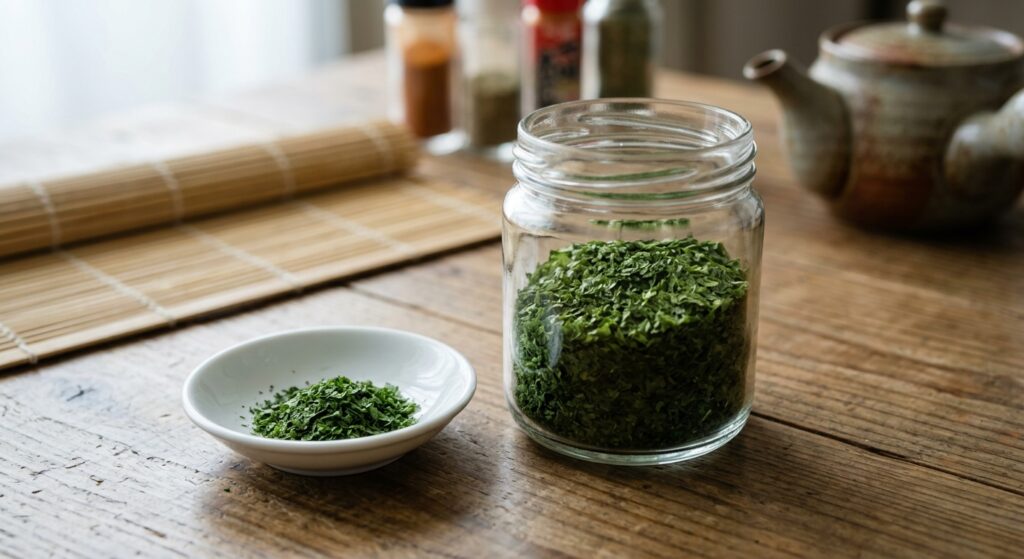
Aonori: the simplest way to feel the soup itself
I recommend aonori for a very specific reason.
Aonori creates the simplest possible miso soup, where you can feel the taste of the soup itself without any noise. Because it doesn’t include any gu (ingredients) other than aonori, the miso flavor stays clean and honest.
In my experience:
- aonori lifts miso’s aroma gently
- it adds a soft ocean fragrance
- it doesn’t compete with miso
- it keeps the soup extremely simple
- it lets you focus on the miso + dashi + uchi‑negi harmony
And because it’s so simple, this miso soup goes well with almost any okazu — especially fish dishes. This is a very native Japanese feeling.
Why this bowl comes before using miso as seasoning
This part is important, and it’s something I want to share honestly.
Knowing this simple miso soup first makes your miso seasoning choices feel more native-like. Because once you understand miso’s baseline flavor, you naturally start to sense:
- how strong miso seasoning should be
- how much sweetness or saltiness feels balanced
- how miso interacts with shoyu and mirin
- how miso fits into a Japanese meal rhythm
In other words:
This miso soup becomes your steady “reference point.” And seasoning with miso becomes the next step.
Using miso for seasoning and also serving miso soup is totally fine — many people do that. But if I were to choose, I personally prefer pairing miso-seasoned okazu with sumashi‑jiru (a clear soup without miso). It keeps the meal lighter and avoids repeating the same flavor twice.
This is not a rule. It’s just a very natural Japanese habit.
And I don’t think I need to make this sound like a “blog differentiation trick.” It’s simply one native perspective that might feel helpful.
Enjoying the subtle differences — a quiet key to Japanese food
There is one more small intention behind this post.
I hope you can enjoy the subtle differences:
- softness of properly prepared uchi‑negi
- the harmony between dashi and miso
- the gentle ocean aroma from aonori
- the clean simplicity of a miso soup without extra ingredients
Trying to notice these tiny shifts — this subtleness — is, in my opinion, one of the quiet keys to enjoying Japanese food.
And if you find joy in these small details, you will discover countless ideas throughout this blog. I write with a lot of passion, but I try not to push anything strongly. I simply hope these gentle experiences feel meaningful to you.
A simple recipe you can try
This is not strict — just a guide.
Ingredients
- miso (any type you like)
- dashi (Ajinomoto Hondashi is perfectly fine)
- aonori (dry type is OK)
- properly prepared uchi‑negi
Method
- Warm the dashi.
- Dissolve the miso gently.
- Add a small pinch of aonori.
- Finish with freshly prepared uchi‑negi.
That’s all.
The point is not the recipe — it’s the experience.
A humble note
This is simply my personal recommendation. You may find your own favorite miso soup, and that’s perfectly fine. Food culture is not about rules — it’s about discovering what feels good to you.
If this bowl helps you understand miso a little more deeply, I’m happy.
Next in the series
In the next post, I’ll talk about how Japanese condiments work together — miso, shoyu, and mirin — and why they feel like a team inside a meal.
Leave a Reply