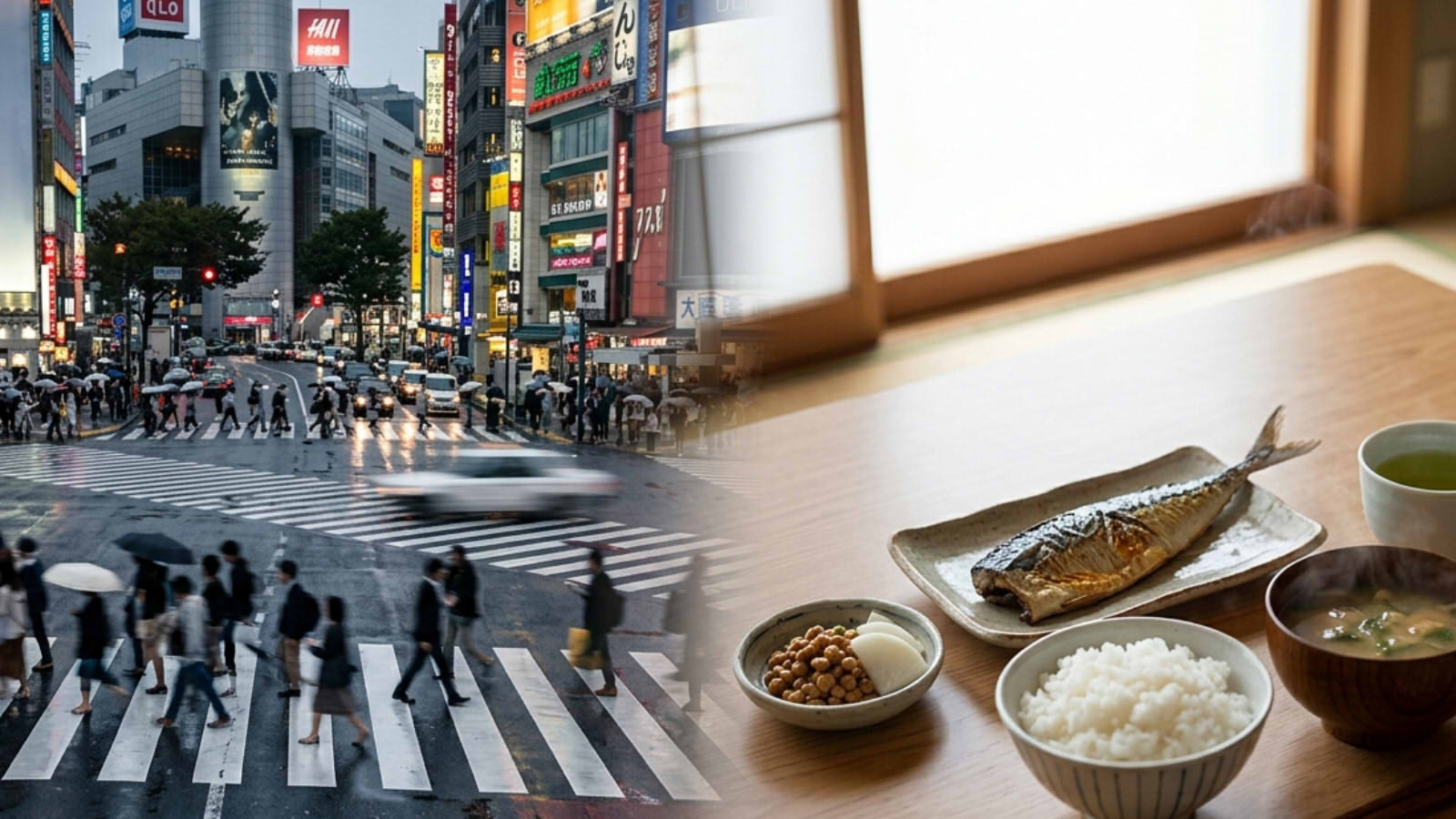
Tokyo is one of the most exciting cities in the world — but also one of the most mentally demanding. Every morning, millions of people squeeze into packed trains, navigate rigid workplace hierarchies, and move through environments where psychological safety can feel limited. The pressure is constant, and the pace rarely slows down.
Yet despite this intense daily stress, many people in Japan continue functioning with a surprising level of emotional steadiness. Visitors often wonder: How do people manage this pace?
Over time, I’ve come to feel that Japanese food culture may play a quiet role in supporting mental resilience, even though most people don’t consciously think about it.
This post begins a series exploring that possibility — not as a medical claim, but as a cultural observation supported by emerging research.
The Subtle Support System in Everyday Japanese Meals
When we think about Japanese food, we often focus on taste, tradition, or presentation. But beneath the surface, there is a deeper structure — a way of cooking and eating that might naturally help the body handle stress.
Everyday foods like:
- miso soup
- grilled fish
- seaweed
- tofu
- vegetables
- rice
- green tea
…form a pattern that many researchers now suggest may support mental stability.
These foods tend to:
- reduce inflammatory load
- stabilize blood sugar
- support gut health
- provide steady energy
None of this is guaranteed, of course. But when you look at the overall pattern, it’s easy to see why Japanese meals often leave people feeling calm, grounded, and satisfied.
Low-Oil Cooking: The Quiet Advantage
One of the most overlooked aspects of Japanese cuisine is its low‑oil cooking style.
Instead of relying on heavy oils, Japanese cooking often uses:
- grilling
- steaming
- simmering
- dashi
- umami‑rich ingredients
This approach may naturally reduce the inflammatory stress that modern nutrition often associates with high‑oil diets.
It’s not that Japanese food is “healthier” in a strict sense — but the cooking style tends to be lighter, cleaner, and easier on the body. Many people simply feel better after eating it.
Rice: The Satisfaction Engine That Makes Low-Oil Meals Work
Here’s something many Western readers don’t realize:
Low-oil meals can feel unsatisfying — unless you have rice.
Rice provides steady energy and emotional grounding.
It absorbs flavors, balances the meal, and creates a sense of completeness that allows lighter dishes to feel satisfying.
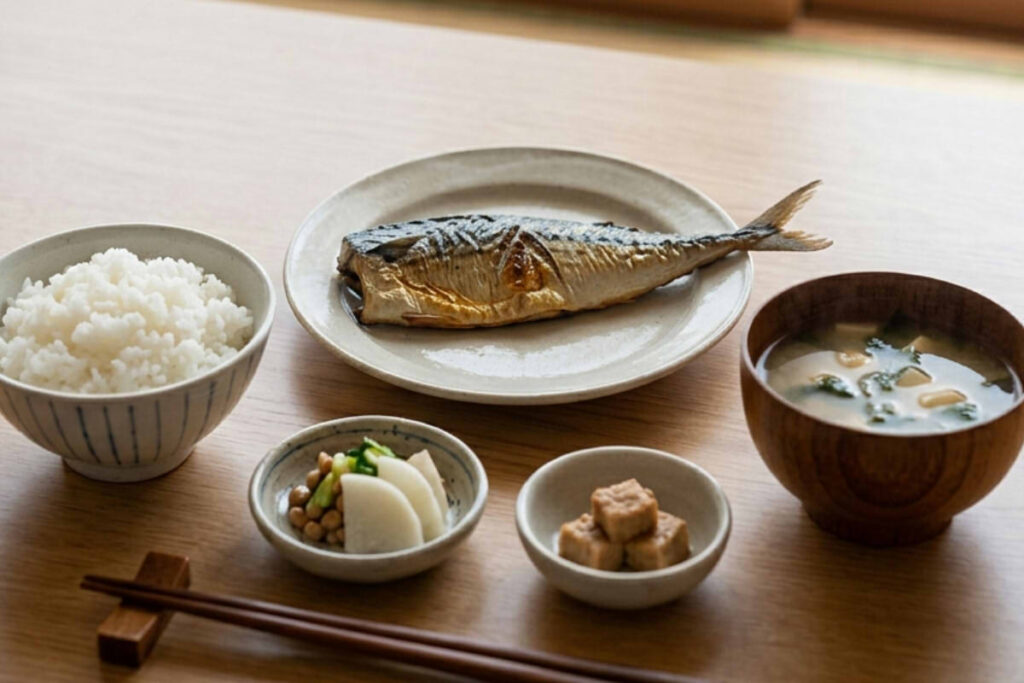
This is why the teishoku structure works so well:
- rice
- miso soup
- fish or tofu
- vegetables
- pickles
It’s balanced, calming, and deeply grounding — without relying on heavy oils or fats.
This structure wasn’t designed as a “health system.” It simply evolved culturally, yet it aligns surprisingly well with what modern nutrition suggests may support emotional stability.
A Philosophy of Minimal Modification
Japanese cooking often expresses a quiet philosophy: less modification, more respect.
Simple dishes like grilled fish or sashimi show an attitude of honoring ingredients as they are — not forcing them into heavy sauces or complex transformations. This reflects a deeper cultural value: appreciation for nature’s original form.
In many ways, it resembles the practice of humbleness taught in religion — the idea that humans should cooperate with nature, not dominate it.
Interestingly, modern research now suggests that minimally processed foods may support better mood, lower inflammation, and more stable energy. What began as cultural respect may align with what science is starting to understand.
Why This Topic Matters Today
Japan’s modern lifestyle is stressful. Tokyo’s pace is relentless. Workplaces can be emotionally demanding.
But traditional Japanese meals — especially home‑style cooking — often provide a sense of calmness and balance that people may not consciously notice.
This isn’t a “superfood claim.” It’s not a diet. It’s not a guarantee.
It’s simply a cultural pattern that might help people feel more grounded in daily life.
What This Series Will Explore
This introduction is the first part of a three‑post series:
- Post 1 — Introduction (this article) Why Japanese food culture naturally supports mental resilience.
- Post 2 — Core Logic The science behind low-oil cooking, omega‑3 fish, fermented foods, umami, and the teishoku structure. How these elements reduce inflammation, stabilize mood, and support the gut–brain axis.
- Post 3 — Practical Recipes Simple, familiar dishes that let readers experience Japanese-style satisfaction tonight. Western vs Japanese comparisons that reveal the difference immediately.
Why I’m Writing This Series
My intention is simple:
I want readers to explore why Japanese meals often feel good — not just in the stomach, but in the mind.
I’m not claiming certainty. I’m inviting curiosity.
Japanese food culture has a quiet wisdom. It teaches us how to eat in a way that supports calmness, balance, and appreciation for nature — without relying on heavy oils or complicated techniques.
If you’ve ever felt that Japanese meals leave you satisfied but not heavy, calm but not sleepy, full but not overwhelmed — this series may help explain why.
And if you’re new to Japanese cooking, this series will show you how to begin.
Ready for the next part?
Continue to Post 2 to learn the core logic behind Japanese food’s stress‑reducing power.
Or jump directly to the practical recipes in Post 3 to experience Japanese low‑oil satisfaction tonight.
Leave a Reply