
When looking at my blog’s analytics recently, I ran a small experiment using AI that yielded a surprisingly fascinating result. I typed in a very relatable, everyday health question: “I’ve been drinking late at night recently, my stomach feels bloated, and my belly feels like it’s growing. What should I do to recover?”
When I asked this question in English, the AI gave very modern, western-centric advice: take probiotic supplements, drink kombucha, cut back on carbs, or try intermittent fasting.
However, when I asked the exact same question in Japanese, the AI’s immediate response was completely different. Instead of supplements, it recommended specific everyday foods: Natto (fermented soybeans) and Yamaimo (Japanese mountain yam).
Here is the Tip: Food as Daily Medicine (Yakuzen Logic)
This subtle difference in AI answers reflects a deep cultural truth. In Japanese culture, we rarely jump straight to pills or specialized supplements for mild digestive sluggishness. Instead, our first instinct is to turn to gentle, functional whole foods that naturally support gut health and digestion.
- Natto (Fermented Soybeans): Packed with Bacillus subtilis (a hardy probiotic strain), dietary fiber, and Nattokinase (a unique enzyme that supports circulation and digestion).
- Yamaimo / Nagaimo (Mountain Yam): Rich in amylase (a digestive enzyme that breaks down starches) and natural mucin, which gently coats and soothes the stomach lining after a night of heavy food or alcohol.
To me, this is one of the quiet powers of traditional Japanese home cooking (Katei Ryori). It doesn’t require buying expensive trendy drinks or health supplements—it simply relies on small, humble side dishes (Okazu) that naturally restore balance to your body.
My Personal Struggle with Natto (And How I Changed)
If you feel hesitant or turned off by Natto’s sticky texture (neba-neba) or pungent aroma, I want to share a confession: even as a Japanese native, I used to completely hate Natto. Growing up, I couldn’t stand being anywhere near it.
My turning point began when I was younger and worked as a line cook at a local Izakaya (Japanese pub). The restaurant had a popular dish called Natto Fried Rice (納豆チャーハン). Because I was cooking and serving it, I had no choice—I had to taste-test my own dishes!
To prepare the ingredients for fried rice, we had to wash the Natto under cold running water first to rinse away the outer sliminess so the rice grains wouldn’t turn sticky in the wok. That gentle, washed-down version of Natto served as my very first “training wheel.”
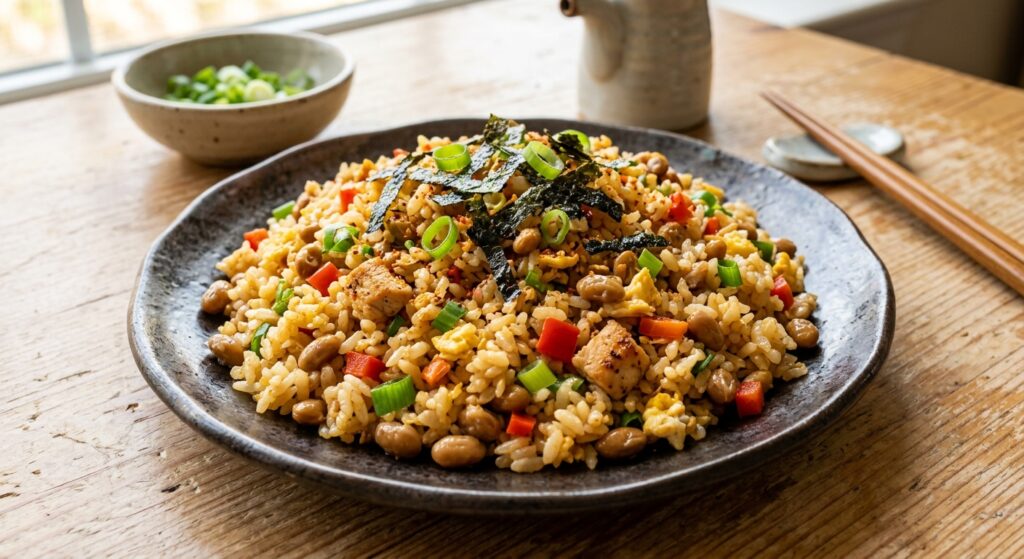
Over time, as I learned more about its incredible health benefits, I decided to give traditional Natto another chance. In fact, some of my American friends living in Japan—who had grown used to eating it with their Japanese spouses—even started recommending it back to me!
By combining professional kitchen tricks (like rinsing or pairing with rich toppings) with everyday meals, my resistance completely melted away. Today, I eat Natto the conventional way over white rice just like any other Japanese person, and I genuinely love having it at my table.
Welcome to the “Gateway to Natto” Series
Because I personally know what it feels like to go from hating Natto to loving it, I want to offer a gentle, practical proposal for anyone who wants to unlock its health benefits without forcing themselves through a bad experience.
This post marks the beginning of a new series I am calling “Gateway to Natto.” Over the next few articles, I will share the exact topping combinations and preparation techniques that helped me overcome the barrier:
- Texture & Smell Neutralizers: Simple additions (like Kimchi, olive oil, or egg yolk) that soften the stringiness and balance the fermented aroma.
- Warm & Mild Preparations: How gentle heat and savory pairings (like Natto Fried Rice or Natto Toast) transform the texture into something deeply comforting.
- My Personal Favorite Topping Combinations: The go-to recipes that turned Natto into an effortless, delicious daily Okazu.
You don’t have to force yourself to love Natto in a single day. But if you’re curious about discovering natural Japanese gut-health habits, I hope this humble gateway guide helps you find your own way to enjoy it!
Leave a Reply