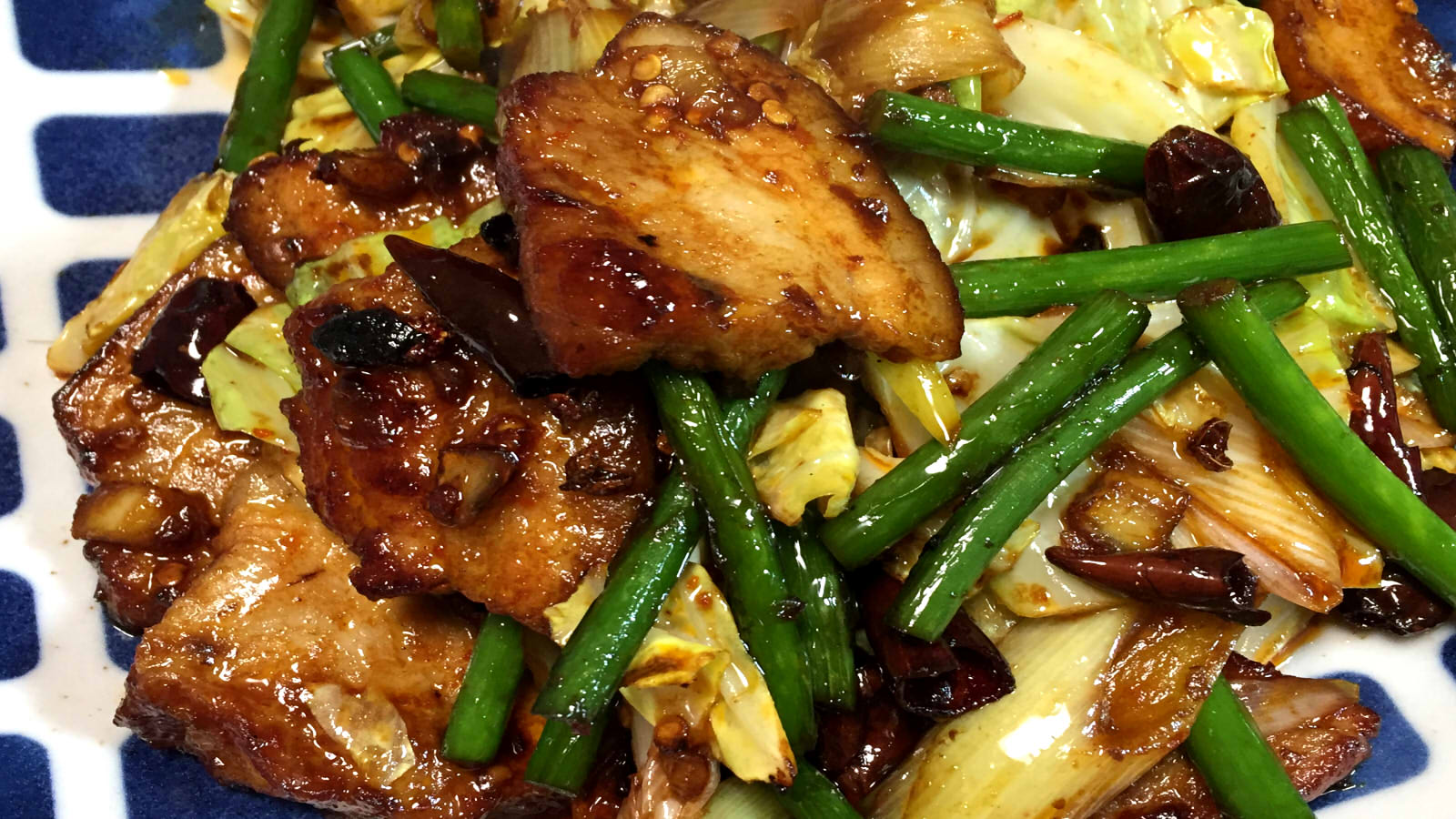
Twice-Cooked Pork (回鍋肉 – Hui Guo Rou) is one of the undisputed kings of Sichuan cuisine, widely celebrated in Japan as a staple of Japanese-Chinese (Chūka) diner culture. Literally meaning “returned to the pot pork,” this dish gets its rich, complex flavor profile from pork belly cooked through two distinct heating stages, paired with aromatic fermented black beans (douchi), Sichuan chili bean paste (doubanjiang), and fragrant garlic scapes.
While quick household versions use thin pre-sliced pork belly, achieving true restaurant-grade Hui Guo Rou requires a practitioner technique: poaching the pork belly block in seasoned broth first, allowing you to slice generous, thick 6–7mm pork slabs that remain tender while absorbing the spicy, blooming aromatic oils.
1. The Native Culinary Logic: Why Poaching First Changes Everything
To bridge the gap between simple everyday stir-fries and authentic Sichuan cooking, you must understand the dual-heating process and oil-blooming mechanics.
The Three Golden Hui Guo Rou Principles:
- The Seasoned Poach (Texture & Thickness): Poaching whole pork belly for 60 to 90 minutes with soy sauce, sake, and mirin tenderizes the meat fibers and infuses subtle umami. This allows you to cut thick 6–7mm slices (instead of wafer-thin 2mm slices) that won’t turn rubbery or dry when seared.
- Rendering Lard & Low-Heat Spice Blooming: Searing the poached pork slices renders rich, natural pork fat into the pan. Removing the meat and blooming Doubanjiang, Douchi, and whole Szechuan peppercorns in this rendered pork fat over low heat unlocks vibrant, oil-soluble aromatics without burning the fermented pastes.
- High-Heat Flash Stir-Fry: Garlic scapes, scallions, and cabbage are added at the very last moment over high heat. This brief sear preserves their crisp crunch (wok hei feel) and prevents the vegetables from weeping moisture into the concentrated chili oil.
2. Sourcing Ingredients & Essential Aromatics
- The Protein: 400g Whole Pork Belly block.
- Poaching Aromatics: Soy sauce, Japanese sake, and mirin (added to the boiling water).
- Core Sichuan Spices & Seasonings:
- Doubanjiang (Sichuan Spicy Chili Bean Paste)
- Douchi (Fermented Black Soybeans)
- Tianmianjiang (Sweet Bean Sauce – optional, adds sweet depth)
- Whole Szechuan peppercorns & dried red chili peppers
- Garlic (sliced)
- Vegetables & Finishers: Garlic scapes (cut into 3–4cm lengths), scallions, cabbage (coarsely chopped), soy sauce, mirin, sesame oil, and chili oil (Rayu).
3. Watch the Step-by-Step Video Guide
See the pork belly poaching test, lard rendering, and spice-blooming sequence in action:
4. Step-by-Step Cooking Sequence
Step 1: Poaching & Slicing the Pork Belly
- Submerge a whole pork belly block in a pot of water with soy sauce, sake, and mirin.
- Bring to a gentle boil, cover, and simmer over low heat for 60 to 90 minutes (90 minutes creates ultra-tender pork).
- Test doneness by piercing the thickest part with a skewer; if the juices run clear, it is done.
- Allow the pork to cool slightly, then slice into thick 6–7mm slabs. (Save the seasoned poaching liquid—it makes an incredible base for Udon or soup broth!)
Step 2: Sear Pork & Render Lard
- Heat a pan over medium heat with a touch of oil. Add the pork slices in a single layer and sear until both sides develop a light golden crust.
- Remove the pork slices and set aside. Leave the rich, rendered pork fat in the pan.
Step 3: Low-Heat Spice Blooming
Turn the heat down to low. Add dried red chilis, garlic slices, whole Szechuan peppercorns, and douchi. Stir gently until fragrant.
Add Doubanjiang and Tianmianjiang directly into the hot pork oil. Stir-fry for 1–2 minutes over low heat to bloom the chili oils and deepen their color.
Splash in a bit of mirin to balance the spice and simmer until the liquid reduces into a glossy paste.
Step 4: High-Heat Final Flash Fry
- Add the garlic scapes and scallions to the pan and toss briefly.
- Increase heat to high. Return the seared pork slices and chopped cabbage to the pan.
- Flash-fry everything together rapidly for 1–2 minutes so the cabbage stays crisp.
- Drizzle a splash of soy sauce around the perimeter of the pan, toss to combine, and turn off the heat.
- Finish with a drizzle of sesame oil and spicy chili oil. Serve immediately alongside bowls of steaming white rice!
5. Summary: Master Authentic Sichuan Flavor at Home
By taking the time to poach your pork belly and blooming fermented black beans and chili paste in rendered lard, you elevate basic stir-fried pork into an authentic, deeply satisfying Sichuan masterpiece.
Leave a Reply