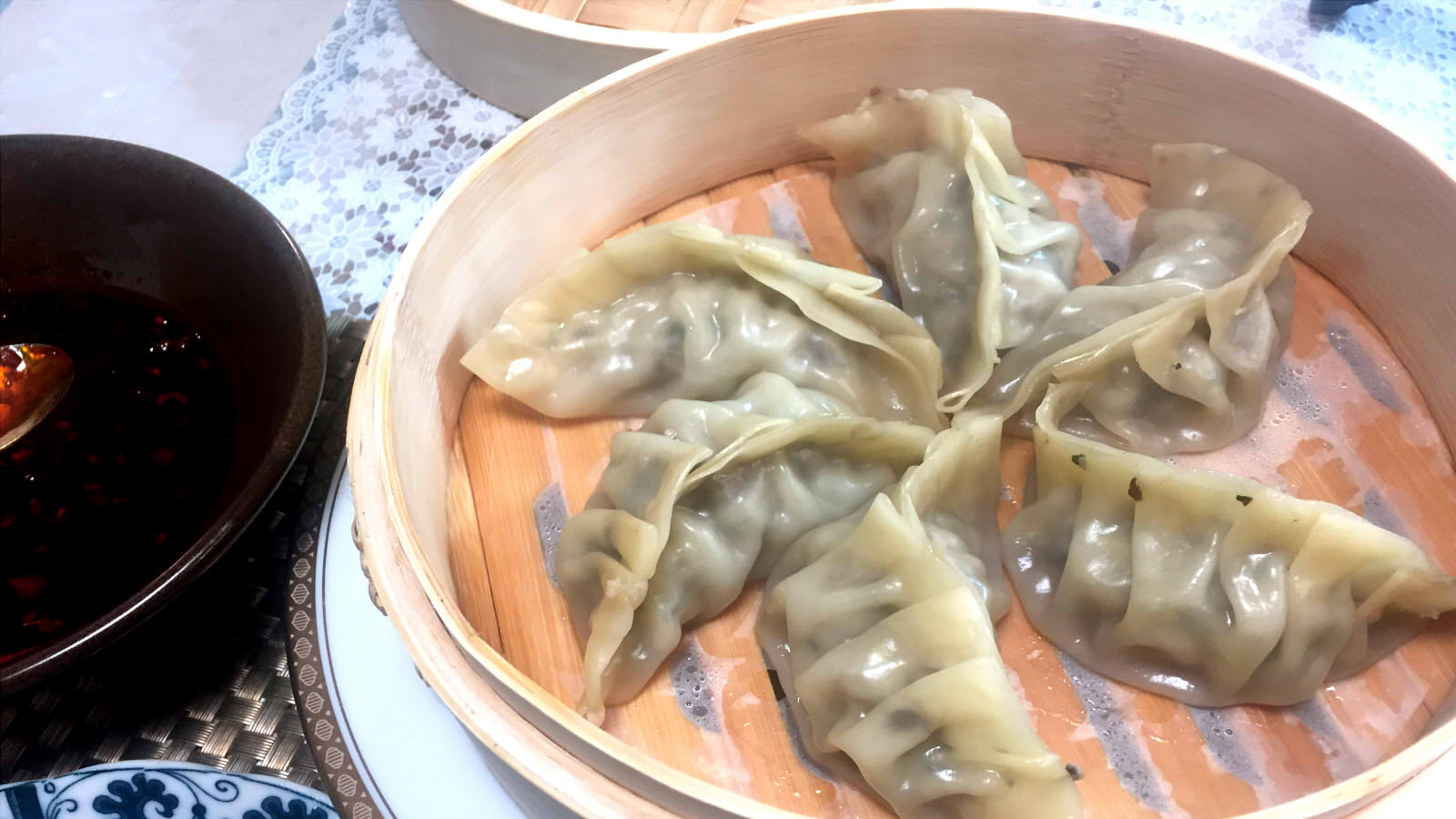
While pan-fried Yaki-Gyoza dominates everyday Japanese home cooking, Steamed Pork Gyoza (蒸し餃子) crowned with a complex, spicy-sour Szechuan red oil sauce is the ultimate Izakaya luxury.
Most homemade gyoza recipes fail due to three core mistakes: lean pork that turns rubbery, watery vegetable filling that ruins the wrapper seal, and flat, one-dimensional chili sauce. In this practitioner masterclass, Jei reveals how to engineer juicy, restaurant-grade steamed gyoza using a dual-meat pork belly mix, a caramelized mushroom duxelles umami paste, and a zero-water wrapper sealing technique.
1. The Native Culinary Logic: Why Standard Home Gyoza Falls Short
To make gyoza that rivals top-tier Tokyo specialty shops, we apply fundamental culinary physics across four key steps:
The Four Golden Gyoza Secrets:
- The Dual-Meat Fatty Ratio: Standard pre-packaged ground pork is too lean (deep red), leading to dry dumplings. By combining ground pork with hand-chopped pork belly, you increase the fat ratio (aiming for a light pink color) and create a rich, chewy texture contrast.
- Pre-Knitting Meat Proteins: Kneading the meat alone before adding any vegetables or spices releases myosin, creating a sticky, emulsion-like matrix. This traps added chicken soup base broth inside the meat, creating an explosive “soup dumpling” effect when steamed.
- The Caramelized Mushroom “Duxelles” Paste: Water is the enemy of gyoza. Instead of adding raw mushrooms, dry-roast shiitake/white mushrooms to evaporate moisture, then saute them with garlic, ginger, scallions, sake, and mirin into a concentrated dark umami paste.
- Zero-Water Wrapper Sealing: If you squeeze cabbage dry (after salting for 10 minutes) and achieve the correct filling viscosity, you never need water to seal wrappers. Overfill slightly and scrape the excess over the wrapper edge—the natural sticky proteins act as glue while ensuring zero empty air pockets inside!
2. Sourcing & Essential Ingredients
- The Pork Base: 250g minced pork + 250g pork belly (hand-chopped into small pieces).
- The Vegetable Base: Chinese cabbage (salted, rested 10 mins, and squeezed completely dry), scallions, garlic, and ginger.
- The Umami Paste (Duxelles): Maitake & white button mushrooms, garlic, ginger, scallions, Japanese sake, mirin, and soy sauce.
- The Filling Seasonings: Chinese chicken soup base powder, soy sauce, and warm water/broth (added incrementally).
- Szechuan Spicy Sauce & Garnish: Doubanjiang, Tianmianjiang, Douchi (fermented black beans), minced garlic, ginger, balsamic vinegar (or black vinegar), chili oil, and crushed cashews for crunch.
3. Watch the Full Video Guide
Watch the mushroom umami paste caramelization and the zero-water wrapping technique step-by-step:
Step-by-Step Culinary Sequence
Step 1: Prep Cabbage & Build the Mushroom Umami Paste
- Mince Chinese cabbage, salt lightly, wait 10 minutes, then wring out all water through a cloth or firmly with your hands.
- Mince mushrooms finely. Dry-roast in a hot pan with zero oil until all moisture evaporates and mushrooms shrink.
- In a separate pan, saute minced garlic, ginger, and scallions in oil until fragrant. Add the dry-roasted mushrooms, season with sake, mirin, and soy sauce, and simmer until reduced to a thick, dark paste. Allow to cool completely.
Step 2: Knead Meat & Emulsify Broth
- Combine ground pork and hand-chopped pork belly in a bowl. Knead vigorously until the meat becomes sticky, pale pink, and cohesive.
- Add the cooled mushroom paste, squeezed cabbage, soy sauce, and chicken soup base powder.
- Gradually pour in warm chicken soup broth a little at a time while mixing continuously until the filling becomes soft, glossy, and pliable.
Step 3: Zero-Water Wrap Method
- Place a gyoza wrapper on your hand. Scoop a generous portion of filling into the center.
- Allow a tiny amount of filling to touch the top edge of the wrapper, then scrape off the excess. This leaves a thin layer of sticky protein on the rim.
- Fold and pleat the wrapper firmly. The natural protein acts as an airtight seal with zero need for water dipping!
Step 4: Steam & Serve with Szechuan Sauce
- Line a steamer with parchment paper or cabbage leaves. Arrange gyoza without touching.
- Steam over medium heat for 5 to 6 minutes.
- Build the Sauce: Saute garlic, ginger, Doubanjiang, Tianmianjiang, and Douchi in oil over low heat. Add sake, mirin, and finish with balsamic/black vinegar.
- Plate the hot steamed gyoza, spoon over generous amounts of spicy Szechuan sauce, and garnish with crushed cashews and fresh chili oil!
5. Summary: Elevate Your Gyoza Game
By replacing watery raw vegetables with a caramelized mushroom paste and dialing in the pork belly fat ratio, you transform ordinary dumplings into a decadent, juicy restaurant delicacy.
Leave a Reply