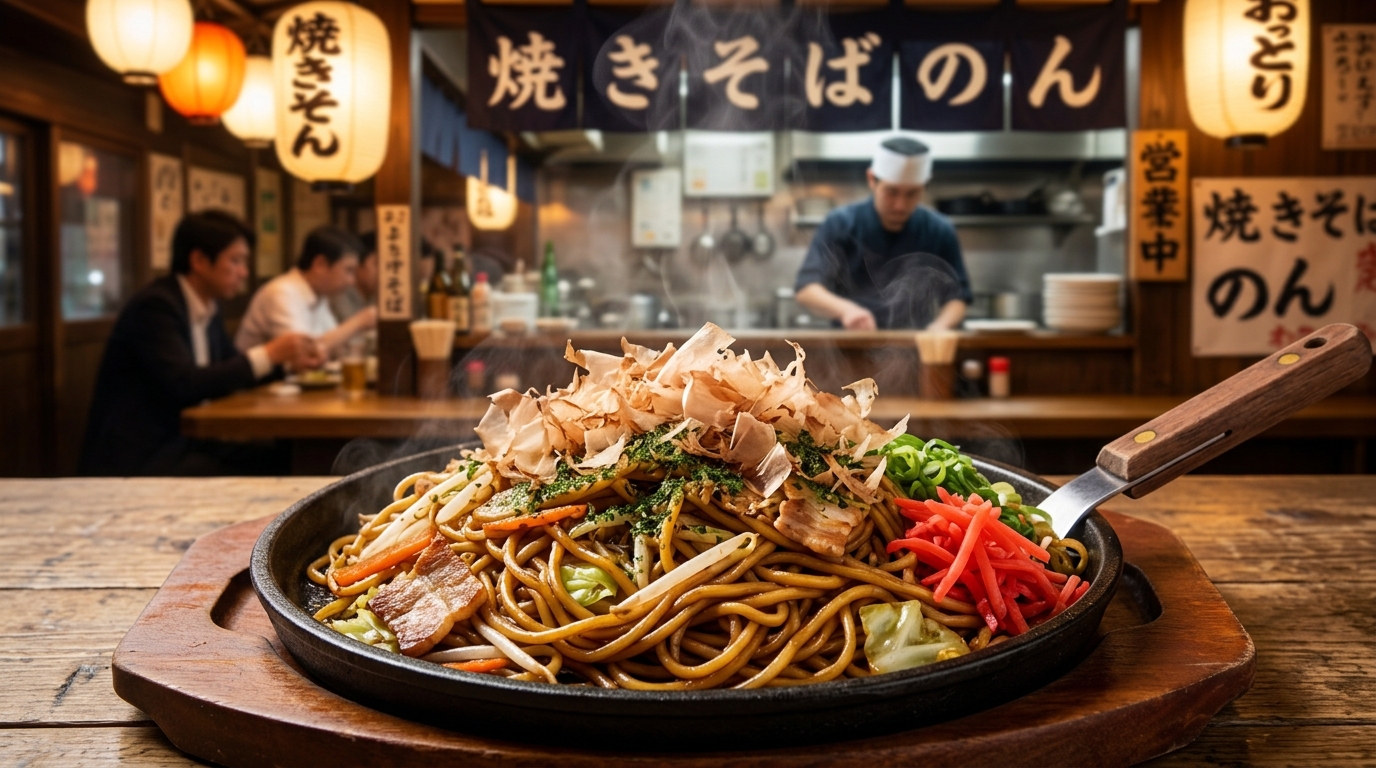
Yakisoba (焼きそば) is one of Japan’s most loved street foods, festival classics, and quick home-cooked Okazu meals. While it might seem like a simple stir-fry, reproducing a truly exceptional Yakisoba at home—one that matches or even exceeds what you would get at a good restaurant—comes down to a few precise culinary habits.
In this video guide, I share a slightly more advanced approach that leverages Chinese wok skills to their full advantage. Don’t worry if you don’t have a piping-hot commercial setup or a carbon steel wok; as long as you follow the vital principle of moisture balance for your noodles and vegetables, you can still make a tremendously delicious plate of Yakisoba right in your own kitchen.
1. The Native Culinary Logic: Wok Skills & Moisture Balance
In typical home kitchens, cooking Yakisoba can easily result in a soft or watery dish. When too many damp ingredients hit a pan all at once, the surface temperature drops quickly, turning a stir-fry into an accidental steaming process.
The Vital Anti-Soggy Principles:
- Rule #1: Strict Moisture Control: Thoroughly pat dry all washed vegetables—especially cabbage and bean sprouts—with paper towels before they reach the pan.
- Rule #2: The High-Heat Batch Method: Cook the noodles, pork, and vegetables in separate, quick high-heat batches rather than crowding the pan all at once.
- Rule #3: Protecting the Noodle Texture: By giving your noodles a quick pre-sear with a touch of oil, you create a lightly crispy outer coat that prevents them from absorbing excess moisture later.
💡 Note: If your home stove heat is modest, simply pause a moment between each step to let your pan heat back up until steam appears before adding the next batch!
2. Ingredients & Secret Flavor Boosters
- The Core Ingredients: Pork rib or belly slices (cut into ~3cm pieces), cabbage (medium bite-sized cuts), onions, bean sprouts, minced garlic, and pre-steamed Yakisoba Chinese noodles.
- The Mirin Hack for Noodles: A small splash of Mirin (sweet rice wine) added to the noodles while searing gives them a gentle sheen and a mild sweetness that rounds out the savory sauce.
- Garlic Timing: Add the minced garlic after the vegetables are already sizzled in the pan. This prevents it from scorching or turning bitter.
- Scallion Oil (Mayu): A subtle drizzle of homemade or store-bought scallion oil right near the end introduces a rich, aromatic depth common in ramen shops.
- Otafuku Yakisoba Sauce: While a basic Worcestershire blend works in a pinch, authentic Otafuku Yakisoba Sauce delivers the ideal Japanese sweet-and-savory balance.
- Essential Toppings: Finish with Beni Shoga (red pickled ginger) and Aonori (dried green seaweed powder).
3. Watch the 10-Minute Video Guide
Watch the step-by-step process with the real-time timer on screen:
4. Step-by-Step Cooking Sequence
Step 1: Prep & Moisture Removal
- Cut cabbage and onions into clean, medium-sized pieces.
- Carefully wipe away excess moisture from the cabbage and bean sprouts with paper towels.
- Slice pork into 3cm pieces and finely mince the garlic.
Step 2: Sear the Noodles (First Batch)
- Heat your pan or wok on high heat until steam rises.
- Add microwave-warmed Yakisoba noodles, coat lightly with oil, and let them sear until slightly golden.
- Drizzle a small splash of Mirin, toss briefly, and set the noodles aside on a plate.
Step 3: Sear the Pork (Second Batch)
- Re-heat the pan until hot.
- Add the pork slices, season lightly with salt and pepper, and stir-fry until cooked and fragrant.
- Transfer pork to the plate alongside the noodles.
Step 4: Flash-Fry Vegetables & Assemble
- Bring the pan back up to temperature until steam shows again.
- Toss in the dry cabbage, onions, and bean sprouts over high heat.
- Add minced garlic, season with salt and pepper, and stir-fry quickly so the vegetables retain their crunch.
- Return the seared noodles and pork to the pan.
- Drizzle over Otafuku Yakisoba Sauce and a touch of Scallion Oil. Toss vigorously over high heat to glaze everything evenly.
- Plate immediately and finish with Beni Shoga and Aonori.
5. Summary: Elevate Your Home Stir-Fry
Mastering Yakisoba isn’t about complicated ingredients; it’s simply about respecting temperature and keeping excess water out of your pan. By managing moisture and searing in clean stages, you can enjoy a crisp, deeply satisfying Yakisoba at home anytime.

Leave a Reply