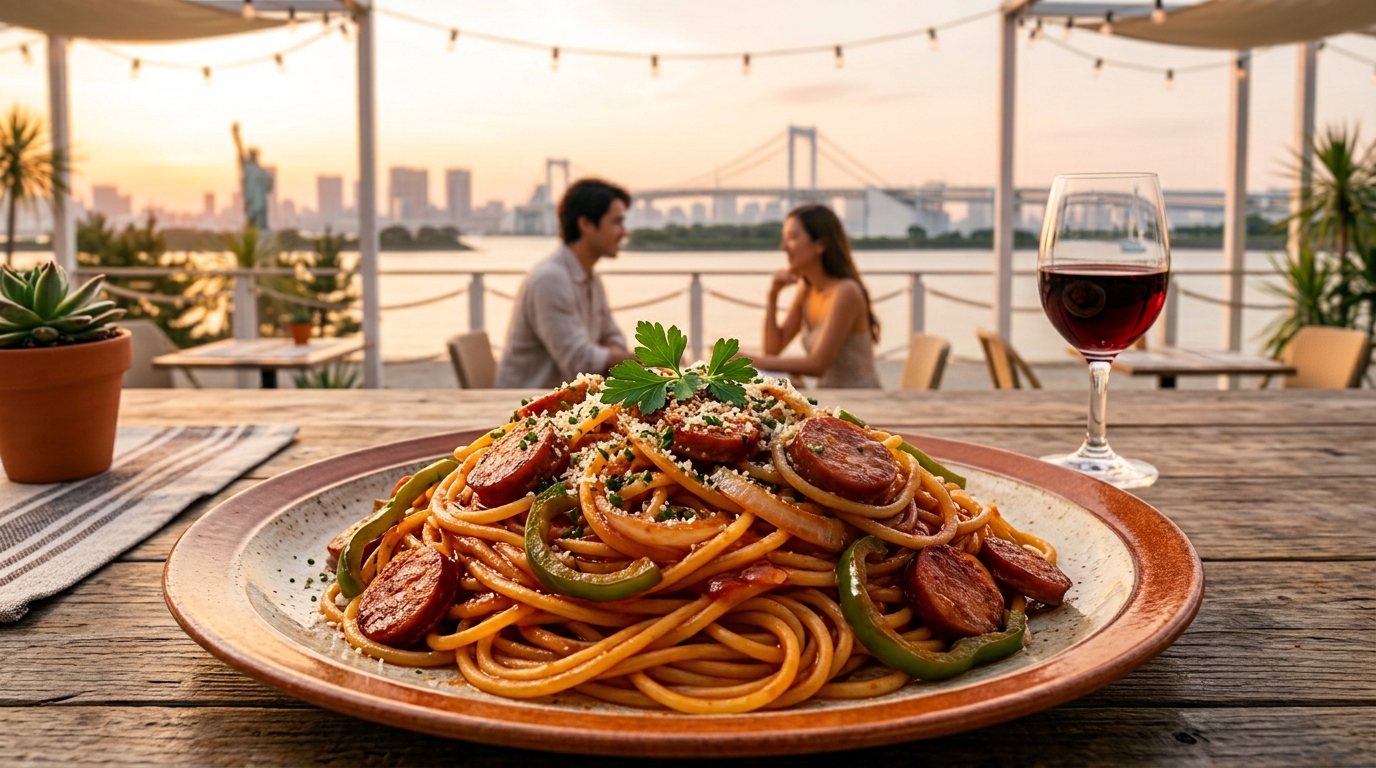
When Western travelers explore Tokyo’s historic Kissaten (retro Japanese coffee shops) or Yōshoku diners, they are often introduced to Spaghetti Naporitan (スパゲッティナポリタン). Created in post-WWII Yokohama, Naporitan was born as a unique Japanese adaptation of Western pasta, using ketchup as its primary seasoning pillar.
While standard Japanese cafe Naporitan is often served as a simple nostalgic meal, standard recipes can easily taste flat or overly sweet. Drawing from professional line-cook experience and Italian pasta logic, this recipe shares an advanced, far superior variation—using demiglace, fresh parsley layering, and precise sauce-absorption timing to create a truly world-class dish.
1. The Native Culinary Logic: Why This Advanced Method Outperforms Cafe Standards
In typical cafe cooking, cooked noodles are simply tossed with raw ketchup at the end. In this professional variation, we re-engineer the pasta workflow around sauce absorption and balanced salinity:
The Three Golden Secrets of Ultimate Naporitan:
- The Unsalted Pasta Water Principle: Standard Italian cooking requires heavy salt in the pasta water. However, because ketchup, cheese, and chicken soup base carry strong salinity, boil your spaghetti in plain, unsalted water. This prevents the dish from becoming overly salty later.
2. The Two-Step Undercook Method: Stop boiling your spaghetti two steps earlier than al dente. Transfer the firm noodles into the simmering pan sauce and cook them directly over heat for several minutes. This allows the core of the pasta to absorb the rich tomato-demiglace flavor deeply without losing structure.
The Dual-Parsley Effect: Do not use dried parsley flakes! Use fresh parsley in two distinct layers:
3. People often describe Japanese meals as “light but satisfying,” and this cooking style may be one quiet reason why.
- Layer 1 (Cooked): Added during stir-frying to infuse the oil with warm herbaceous notes.
- Layer 2 (Finisher): Freshly chopped parsley folded in right at the end with melted butter for a bright, professional “fresh taste layer.”
2. Sourcing & The Layered Sauce Base
- The Spaghetti: Standard thick spaghetti strands.
- The Aromatics & Proteins: Sliced bacon, thin-sliced onions, white mushrooms, green peppers (Piman), squashed garlic cloves, and fresh parsley.
- The Umami-Rich Sauce Matrix:
- Kagome Tomato Ketchup (added carefully in stages to balance saltiness).
- A splash of Canned Tomatoes.
- Pre-made Demiglace Sauce simmered with a splash of Red Wine.
- A cup of Chicken Soup Base.
- Pro Secret (Optional): A tiny drop of coffee or black tea to introduce a subtle, adult bitness that cuts sweetness.
- Toppings: A soft fried egg, freshly cracked black pepper, and plenty of Parmesan cheese.
3. Watch the Full Video Guide
See the exact sauce reduction, two-step undercooked pasta integration, and the dual-parsley technique in action
4. Step-by-Step Culinary Sequence
Step 1: Infuse Garlic & Boil Pasta (Unsalted)
- Squash 2–3 garlic cloves and gently sizzle in olive oil on low heat to infuse the oil. Remove garlic before it scorches.
- Boil spaghetti in unsalted water, pulling it out 2 steps before al dente (very firm core).
Step 2: Sear Ingredients & Build the Liquid Base
- Stir-fry sliced onions, bacon, green peppers, and mushrooms in the infused oil over medium heat.
- Fold in the first batch of fresh chopped parsley.
- Add chicken soup base, a spoonful of canned tomatoes, demiglace sauce, and a splash of red wine. Simmer for 1–2 minutes.
Step 3: Layer Ketchup & Secret Bitterness
- Slowly add ketchup in careful stages, tasting as you go to avoid over-salting (remember parmesan will be added at the end!).
- (Optional Pro Tip) Add a tiny drop of coffee for a subtle adult bitter undertone.
Step 4: The Pan-Simmer Absorption & Finish
- Drop the undercooked spaghetti directly into the simmering sauce.
- Stir-fry and reduce over medium-high heat for a few minutes, adjusting water/soup as needed, allowing the noodles to fully absorb the sauce.
- Turn off heat, melt in a knob of butter, and throw in the final batch of fresh parsley (the fresh finisher layer).
- Plate immediately, top with a soft fried egg, black pepper, and generous parmesan cheese!
5. Summary: Experience Real Japanese Yōshoku Skill
By treating ketchup not just as a cold sauce, but as a balanced liquid matrix infused with demiglace, fresh herbs, and simmered pasta, you turn a humble retro recipe into an extraordinary meal. Give this advanced method a try!
Leave a Reply