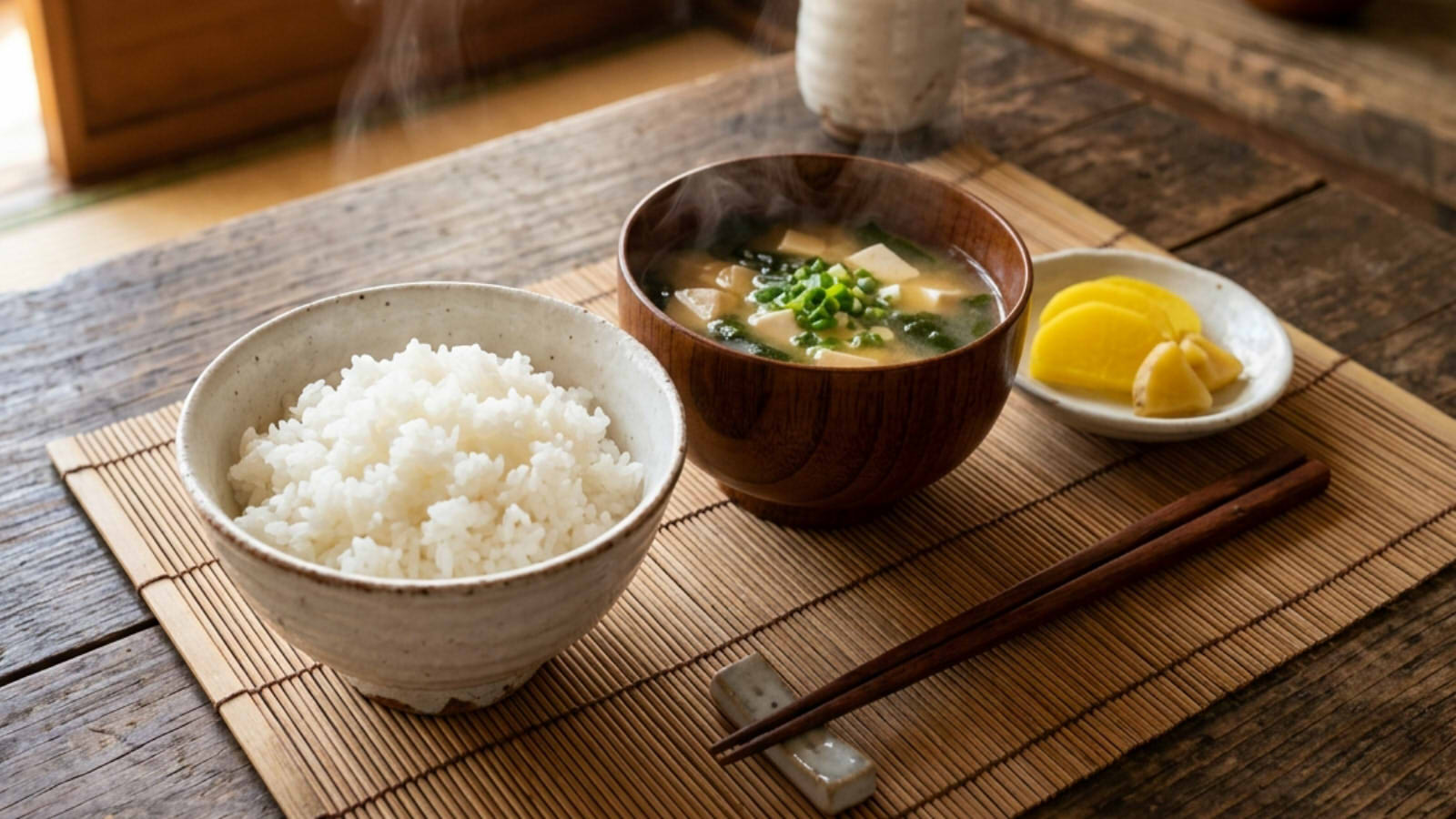
When many people think of Japanese cuisine, vibrant sushi platters or multi-dish Teishoku sets often come to mind. A typical Teishoku meal gently balances a table with a main dish, rice, soup, and small side pickles.
However, if we trace this eating style back to its quiet foundation, a meal can be stripped down to a traditional concept known as Ichiju Issai (一汁一菜)—literally translated as “one soup, one side dish.” At its most minimal, this means a simple bowl of warm rice (Gohan), a bowl of miso soup, and perhaps a single slice of Takuan (pickled radish).
I certainly don’t mean to suggest that eating only rice and pickles is an ideal daily diet. Rather, as a Japanese native, I just thought it might be an interesting point of view to share—how leaning into this foundational minimalist idea can softly shift the way we feel about meal satisfaction and bring practical ease into our weekly cooking.
The Hidden Nutritional Foundation of Gohan and Miso Soup
For many international readers, it is completely natural to feel that a meal needs a heavy meat protein or added fats to feel nourishing or balanced. Without that context, a bowl of rice and a light soup might seem incomplete.
However, in Japanese food history, Ichiju Issai has proven to be a surprisingly functional foundation for daily life, largely because of the synergy between its two core components:
- Rice (Gohan) as Clean Energy: Steamed rice provides clean, easy-to-digest carbohydrates that sustain daily energy without heavy oils.
- [Bullet Point] Miso Soup as Nutritive Balance: Miso is made from fermented soybeans, which naturally offer plant-based amino acids, minerals, and comforting warmth.
When paired together, rice and fermented soybean soup complement each other’s protein profiles while staying remarkably gentle on the body. Understanding this base helps us realize why an elaborate main protein isn’t strictly necessary for every single meal.
Real Comfort When Your Body Craves a Reset
In our daily lives, there are naturally times when our stomachs need a break. As a Japanese native, I often find that after an evening of drinking or when I am nursing a hangover, my body doesn’t want anything rich, heavy, or oily.
In those moments, a simple bowl of warm rice and a mild miso soup feel like exactly what my gut is asking for. It provides a gentle, soothing comfort that reminds me how restorative a minimalist plate can truly be when our digestive system needs a quiet rest.
The Practical Magic of Okazu and Limitless Variety
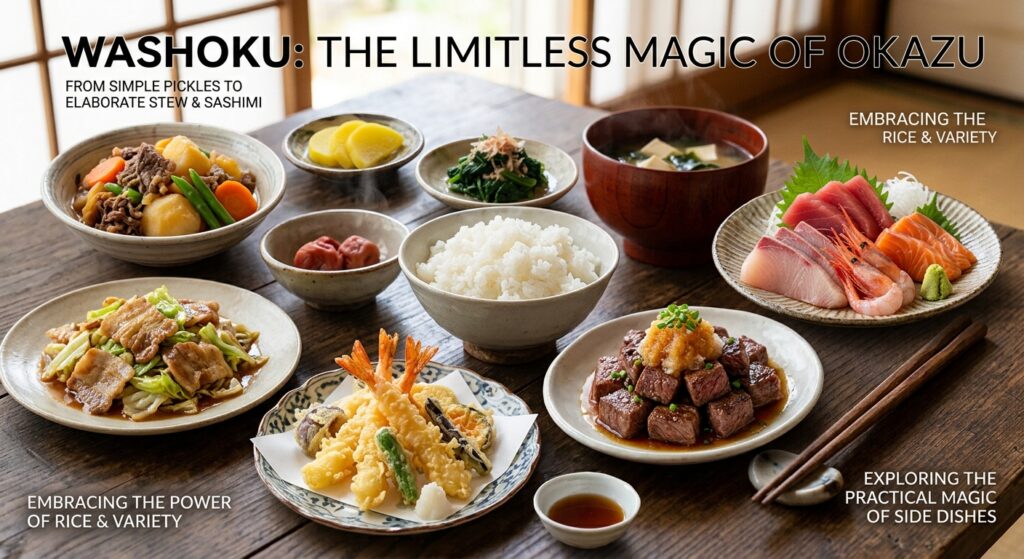
There is also a very practical, freeing side to this minimal approach. In Japanese food culture, side dishes designed to accompany rice are called Okazu.
When you realize that under Ichiju Issai, even a single slice of crisp Takuan or a small dish of fermented pickles counts as a fulfilling Okazu, the pressure of cooking completely changes:
- Lowering Kitchen Effort: You don’t always need to prepare an elaborate main protein or heavy sauce to enjoy a complete meal.
- Feeling the Contrast: Because rice is so neutral, even the smallest side dish—whether it is pickled radish, salted plum (Umeboshi), or a pinch of sesame seeds—creates a surprisingly strong contrast that feels deeply satisfying.
- Appreciating Limitless Simplicity: Once you embrace that simple items can serve as your Okazu, meal preparation feels far less overwhelming. It unlocks an almost limitless variety of quick, lightweight meals you can pull together in minutes.
A Subtle Practice of Humbleness at the Table
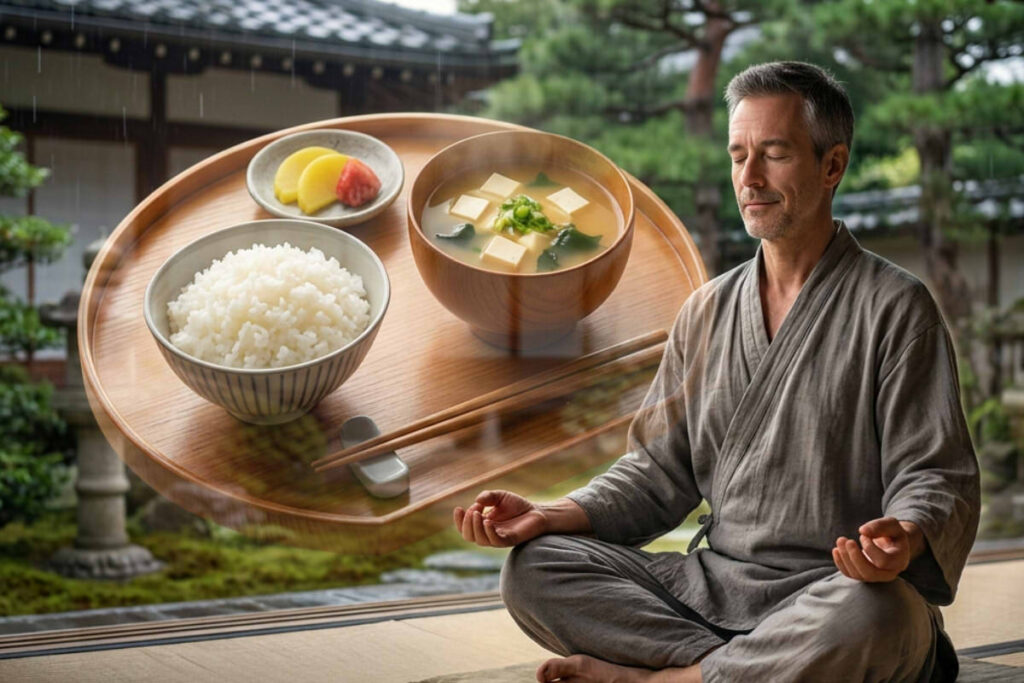
Beyond physical nourishment, I often wonder if there is a quiet philosophical layer to eating simply. In many spiritual traditions—including biblical teachings—practicing humbleness and gratitude is valued as a way to cultivate inner calm.
I’m not trying to draw a formal doctrine here, but I think occasionally sitting down to a very humble plate can serve as a simple, practical way to experience that sense of humbleness:
- Noticing the Basics: Preparing a simple meal can gently invite us to pause and feel genuine gratitude for basic ingredients we might otherwise take for granted.
- Exploring “Sufficiency”: I think it gives us a quiet moment to reflect on the difference between indulgence and simply having enough, perhaps reshaping what true contentment feels like.
- A Moment of Calm: With fewer dishes on the table, it feels a little easier to slow down, notice the warmth of the bowl in your hands, and enjoy a quiet pause in the day.
Small Thoughts for Your Own Table
Please don’t feel you need to abandon your usual favorite meals for a bowl of rice and pickles! I simply wanted to share this as a gentle perspective that you might keep in mind whenever your body or mind feels in need of a rest:
- Next time you feel tired or light-headed after a night out, try reaching for simple rice, broth, and a small pickle instead of heavy foods.
- Try exploring simple pickles or small bites as your Okazu under the lens of Ichiju Issai to make quick meal preparation feel easier and surprisingly satisfying.
By softly loosening the expectation that every single meal must be elaborate, I think we might discover that a humbler plate can sometimes bring a surprisingly deep sense of peace and physical comfort.
Leave a Reply