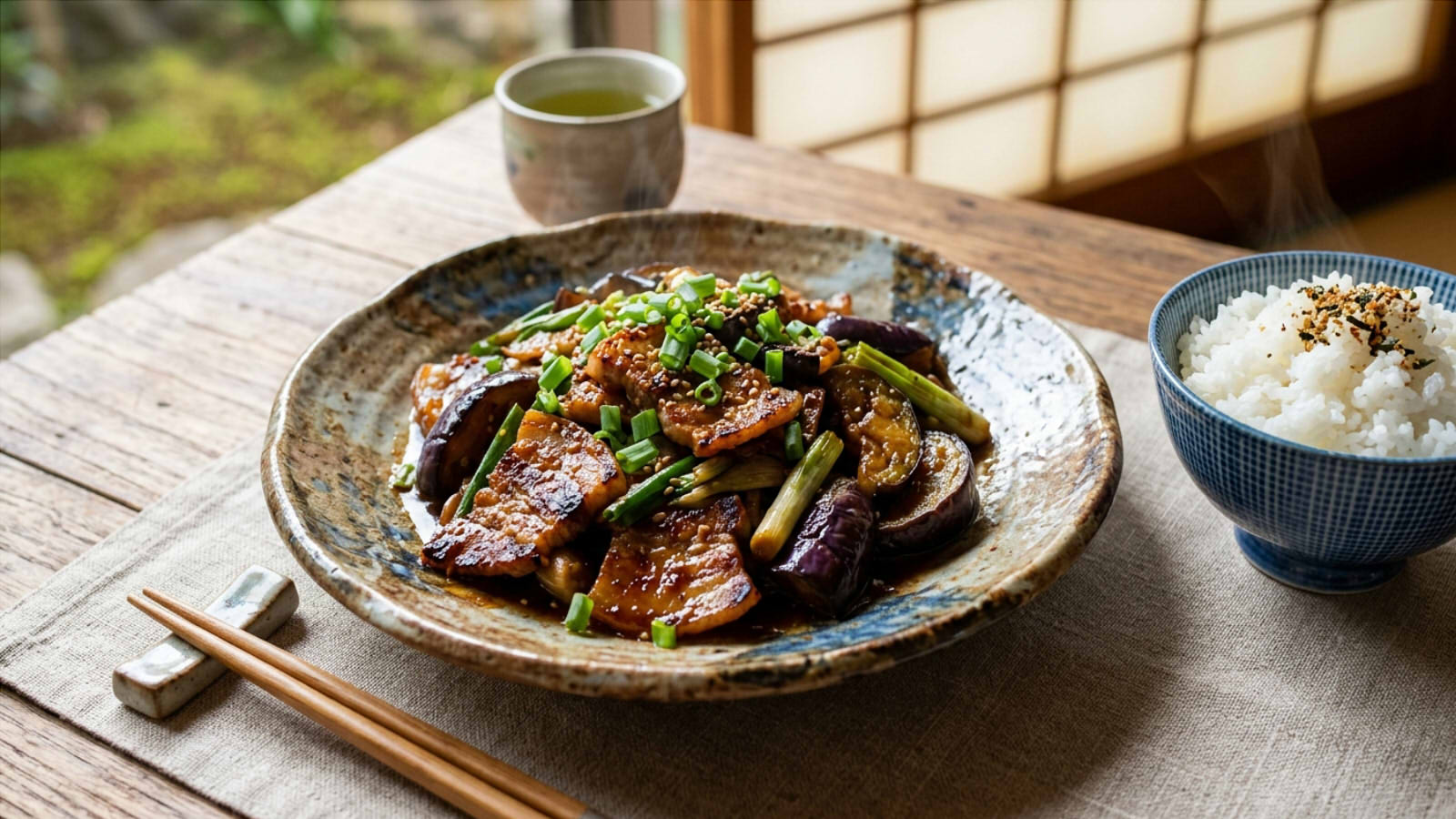
Introduction: The easiest way to start using miso as seasoning
Once you understand miso soup as the baseline flavor (Post2) and miso + rice as the foundation of Japanese meals (Post3), the next step is learning miso as seasoning.
There are many traditional techniques, but the most practical way to begin is to learn one simple miso sauce you can use for everyday stir‑fry. This sauce is not meant to be “perfect.” It’s meant to be reliable, easy, and usable on busy days.
Japanese home cooking often relies on small base sauces like this — they reduce decision fatigue and make everyday meals feel calm and predictable.
Why one base miso sauce is the best starting point
Miso seasoning can be complex, but it doesn’t need to be.
A single base sauce gives you:
- consistent flavor
- quick cooking
- flexibility with ingredients
- a gentle introduction to miso’s behavior under heat
- a practical way to enjoy Japanese okazu with rice
Once you get used to this sauce, miso becomes part of your everyday cooking rhythm.
A note about okazu and rice (important)
I want to mention one thing clearly, because this is a very Japanese perspective.
Okazu made with miso seasoning are meant to be eaten with white rice. Miso‑based stir‑fry tends to be salty and umami‑dense, and without rice, the flavor can feel too strong or even unbalanced. Rice is not a side dish — it is part of the design of the meal. The okazu provides intensity, and the rice provides calmness.
When you eat them together, the dish becomes gentle, complete, and deeply satisfying. This is why miso seasoning naturally belongs to okazu cuisine.
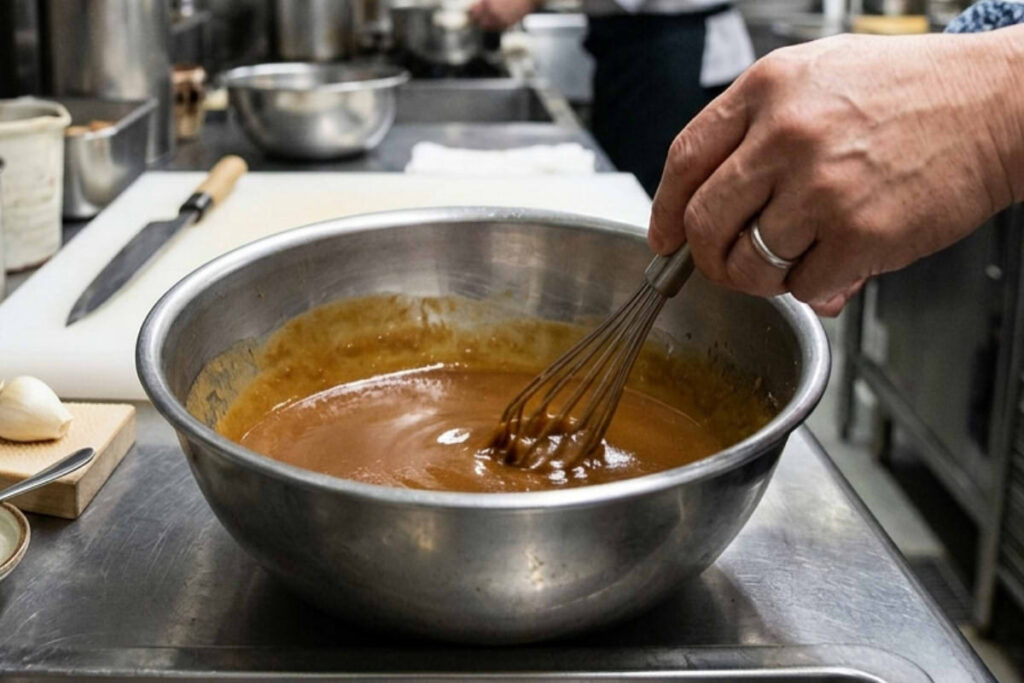
The Convenient Miso Stir‑Fry Sauce (万能味噌だれ)
This is a simple, balanced miso sauce you can use for stir‑fry, glaze, sauté, or even as a marinade.
Ingredients (base sauce)
- miso:shoyu:mirin = 1:1:1
- water — just enough to adjust thickness
- optional: 1 small clove of garlic or 4–5g grated ginger
- These aromatics should be small amount only.
- Too much will overpower miso’s subtleness.
How to make the sauce
Mix everything in a small bowl until smooth. Adjust thickness with water depending on your miso type. Sugar is optional — I personally don’t use it.
This sauce is intentionally simple. It’s designed to be used without thinking too much — just mix and cook.
How this sauce teaches miso seasoning
Using this sauce helps you understand:
- how miso behaves with heat
- how miso caramelizes
- how miso blends with shoyu and mirin
- how miso creates “Japanese flavor” instantly
- how miso seasoning differs from miso soup
It’s the most practical gateway to miso as a condiment.
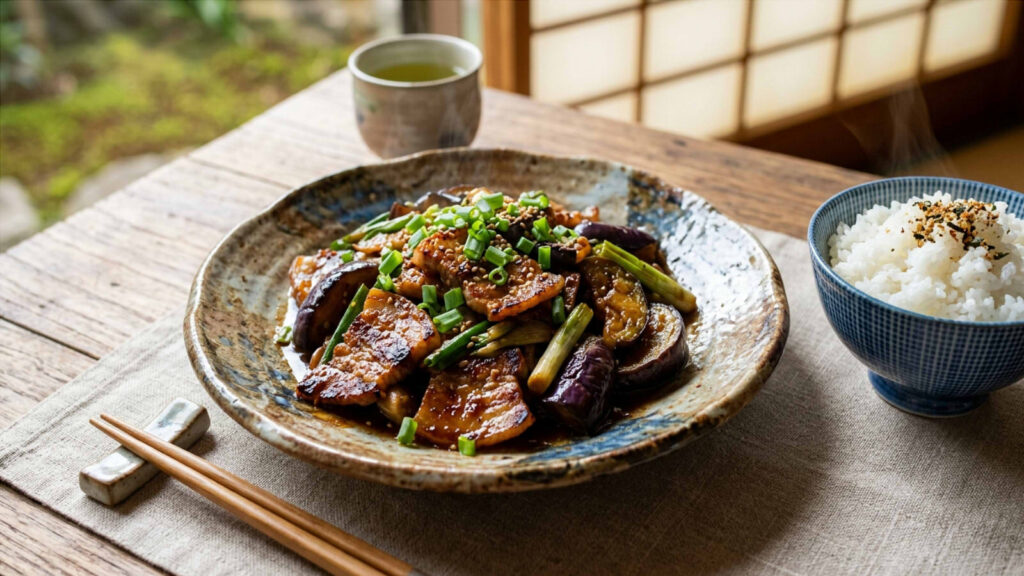
Example Dish: Pork & Eggplant Miso Stir‑Fry (豚なす味噌炒め)
This is one of the simplest and most satisfying ways to use the miso sauce.
It’s quick, comforting, and pairs beautifully with rice.
Ingredient tips (important for readers outside Japan)
In Japan, supermarkets sell super‑thin sliced pork belly (豚バラ薄切り). Outside Japan, this cut is often unavailable.
So I recommend:
- using pork belly block
- slicing it into 4–5mm thickness
- cutting pieces into 3–4cm size
This thickness gives:
- enough fat to render properly
- enough surface area to brown
- enough structure to hold miso sauce well
This is a small detail, but it makes a big difference.
Optional but powerful technique: Pre‑boiling pork belly for tenderness
If you want restaurant‑level tenderness, you can pre‑boil the pork belly block before slicing.
How to pre‑boil (optional)
Simmer the pork belly 90 minutes on the lowest heat in water seasoned lightly with:
- a small amount of shoyu
- a splash of sake
This makes the meat incredibly soft. When you slice it into 5mm pieces and use it for stir‑fry okazu, the dish becomes salable quality — the kind of tenderness you expect from a good Japanese diner.
This step is optional, but if you enjoy deeper Japanese cooking, it’s worth trying.
Ingredients
- pork belly (thin sliced, or 4–5mm thick pieces)
- eggplant
- scallion (optional but recommended)
- oil (only if your pork belly is very lean)
- the miso seasoning sauce
Method (with deeper cook’s perspective)
1. Render pork fat first
If you use pork belly, fat will naturally render out. This pork oil is exactly what you want — it adds richness and helps eggplant absorb flavor.
Brown the pork lightly, then remove it from the pan. Leave the rendered fat in the pan.
2. Stir‑fry scallion in the pork fat
Add sliced scallion and stir‑fry until it becomes aromatic and slightly roasted.
This step adds depth and a gentle sweetness to the dish.
3. Add eggplant
Eggplant absorbs oil quickly, so let it soften and take in the pork fat.
This creates the signature “Japanese eggplant texture.”
4. Return pork to the pan
Combine everything and let the flavors come together.
5. Add the miso sauce
Pour in the miso seasoning sauce.
Coat evenly and let it caramelize slightly.
This caramelization is the key to miso stir‑fry flavor.
6. Serve with rice
This dish is designed for rice.
The saltiness and umami balance perfectly when eaten together.
Why this dish works so well with rice
Eggplant absorbs miso beautifully. Pork adds richness. Scallion adds aroma. The sauce ties everything together.
And when eaten with rice, the flavor becomes balanced and gentle — exactly how Japanese okazu are meant to be enjoyed.
This is the everyday side of miso seasoning. Simple, warm, and easy.
This post completes the “practical everyday” part of miso seasoning
Now you have:
- one convenient miso sauce
- one example okazu
- a practical way to use miso as seasoning on busy days
This is the casual side of miso seasoning — the part you can use anytime without preparation.
Leave a Reply