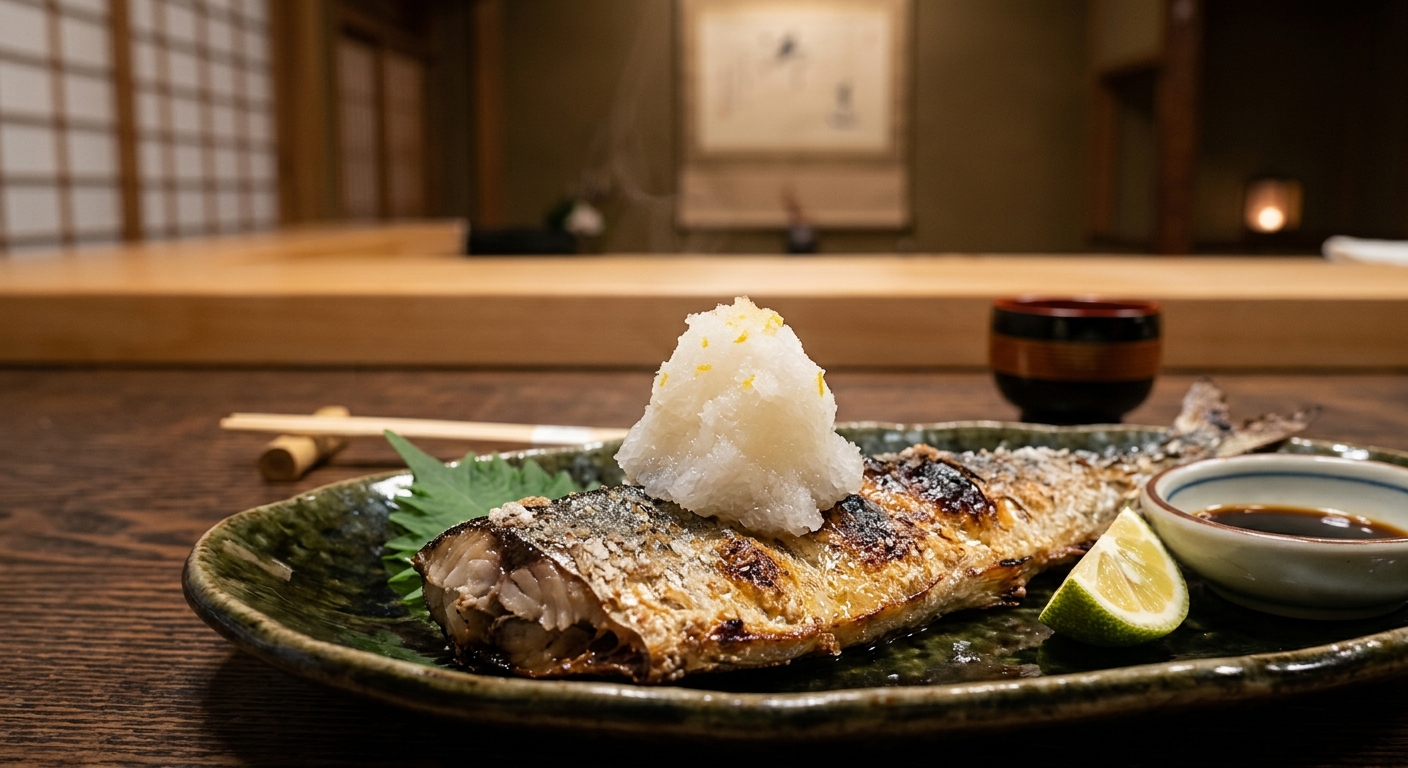
If you have eaten at a traditional Japanese restaurant, you’ve likely seen a modest mound of wet, white grated radish sitting quietly beside grilled fish, tempura, or sashimi.
To most diners, Daikon-Oroshi (大根おろし) looks like a simple palate cleanser or a light garnish. But when we look closer at plant biology, this humble side component reveals something remarkable: the act of grating daikon is a precise culinary chemical reaction that activates one of the body’s most powerful internal anti-aging defense systems.
Once you understand the cellular benefits behind this simple radish, learning how to prepare and pair it effectively isn’t just about preserving traditional technique—it becomes one of the most valuable, zero-oil biohacks you can add to your daily home cooking repertoire.
The Commercial Blindspot: Why Isn’t This a Best-Selling Supplement?
If Daikon Oroshi is such a potent Nrf2 activator, why haven’t Western supplement companies packaged it into a pill?
The answer lies in simple physics: Isothiocyanates are highly unstable.
Unlike stable vitamins, the enzymatic reaction that creates ITC begins only when the plant cells are crushed, and the active compounds begin to degrade within 15 to 20 minutes. They cannot be easily synthesized, dried, or shelf-stabilized into a capsule without destroying the delicate enzyme myrosinase.
Because big pharma and wellness brands cannot easily monetize or patent this process, it has remained a commercial blindspot in the West. You don’t need a $60 bottle of biohacking supplements. A fresh daikon radish from your local store and a standard grater give you a potent, farm-to-table longevity protocol for less than two dollars.
Cellular Defense & Longevity: The Molecular Science
While daikon provides a good dose of raw Vitamin C, its true power lies in how fresh grating unlocks cellular protection.
| DAIKON-OROSHI CELLULAR ENGINE | ||
| Active Compound | Biological Pathway | Health & Cellular Impact |
| Isothiocyanate(ITC) | Nrf2 Genetic Switch | Triggers native antioxidant enzymes (Glutathione, SOD) |
| Hormetic Phytochemicals | Cellular Adaptation (Hormesis) | “Trains” cells to resist oxidative & metabolic stress |
| Diastase & Lipase Enzymes | Blood Sugar & Lipid Breakdown | Flattens glucose spikes; helps prevent AGEs (glycation) |
Turning On the Body’s “Nrf2” Switch
Most direct antioxidants (like Vitamin C or polyphenols) extinguish a single free radical molecule and are then depleted.
The Isothiocyanate (ITC) created when grating daikon works differently: it activates Nrf2, the genetic master switch controlling your body’s internal antioxidant production. Instead of supplying temporary antioxidants, Nrf2 signals your cells to mass-produce your own native antioxidant defenses.
Hormesis: Beneficial Phytochemical Stress
Similar to sulforaphane found in broccoli sprouts, the sharp compounds in fresh daikon act as a mild, beneficial stressor (hormesis). Exposing the body to this subtle plant compound prompts your cells to upgrade their own resilience against chronic low-grade inflammation (inflammaging) and tissue degradation.
Preventing Glycation (AGEs) & Blood Sugar Spikes
Daikon-Oroshi is rich in heat-sensitive digestive enzymes like diastase (amylase) and lipase. Consuming it raw alongside rich starches or fatty proteins helps flatten post-meal blood sugar spikes, directly limiting the formation of Advanced Glycation End-products (AGEs)—the compounds responsible for stiffening blood vessels and aging skin.
The Mechanics of Grating: Cell Disruption is Key
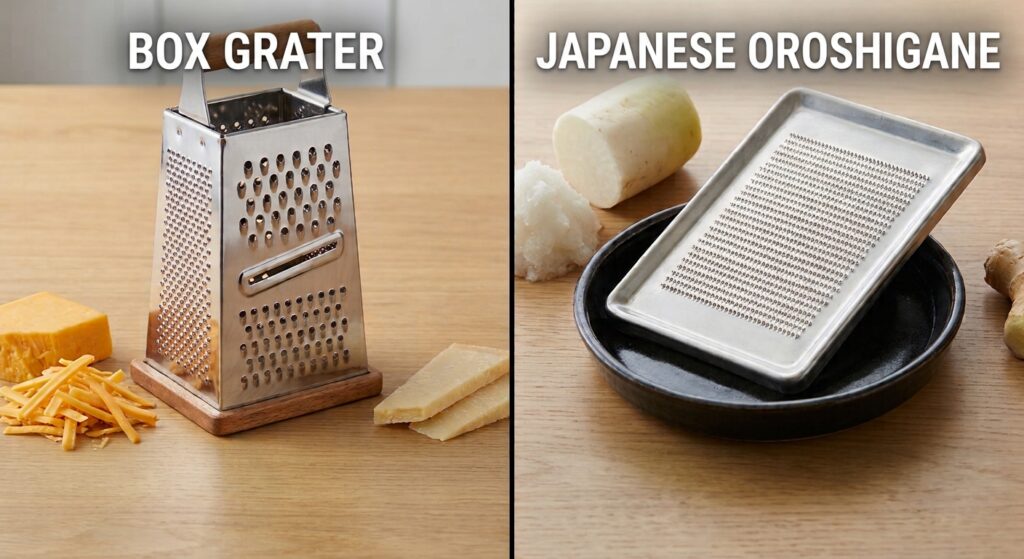
Simply slicing or chewing raw daikon won’t deliver these full benefits. The mechanical act of grating is what creates the active compound.
Inside an intact daikon cell, the precursor compound (glucosinolate) and the enzyme (myrosinase) are stored in separate micro-compartments:
- The Mechanical Trigger: Grating crushes the plant cell walls, bringing the precursor and enzyme into direct contact.
- The Reaction: This instant chemical reaction synthesizes fresh Isothiocyanate on the spot.
WESTERN BOX GRATER
Shreds & Tears Fibers
- Separates juice/pulp
- Creates harsh chunks
JAPANESE OROSHI-GANE
Micro-shears Cell Walls
- Holds juice in suspension
- Velvety micro-sponge
- Western Shredding (Box Grater): Standard shredders tear coarse strips, causing juice to pool away while leaving behind dry, fibrous chunks.
- Japanese Micro-Shearing (Oroshi-gane / Ceramic Plate): Micro-spikes cleanly shear cell walls. This creates a homogeneous, velvety micro-sponge where active enzymes and juice remain suspended inside the paste.
3. The Anatomical Split: Choosing Your Section
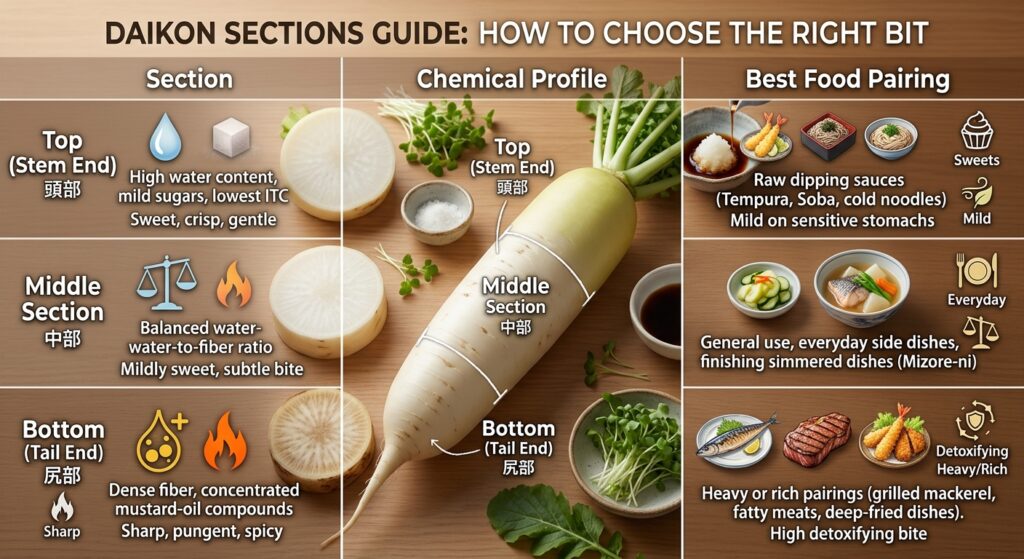
A single daikon root varies in sweetness, water content, and pungency from top to bottom. Selecting the right section ensures you get the exact flavor balance you want.
| Section | Chemical Profile | Flavor | Best Food Pairing |
|---|---|---|---|
| Top (Stem End) | High water content, mild sugars, lowest ITC. | Sweet, crisp, gentle. | Raw dipping sauces (Tempura, Soba, cold noodles). Mild on sensitive stomachs. |
| Middle Section | Balanced water-to-fiber ratio, gentle heat. | Mildly sweet, subtle bite. | General use, everyday side dishes, finishing simmered dishes (Mizore-ni). |
| Bottom (Tail End) | Dense fiber, concentrated mustard-oil compounds. | Sharp, pungent, spicy. | Heavy or rich pairings (grilled mackerel, fatty meats, deep-fried dishes). High detoxifying bite. |
4. How to Optimize Your Daikon-Oroshi Protocol
To enjoy the maximum culinary and wellness benefits in your everyday meals, keep three simple rules in mind:
- Serve It Fresh (The 15-Minute Window): Isothiocyanates are volatile. Peak potency and flavor occur immediately after grating and begin to dissipate after 15 to 20 minutes. Grate right before serving.
- Keep It Raw: High heat deactivates myrosinase and digestive enzymes. Enjoy it cold or gently folded into warm broth at the very last second.
- Preserve the Natural Juice: The liquid released during grating contains high concentrations of water-soluble enzymes and Vitamin C. Press gently so the paste retains enough moisture to hold a soft dome shape, rather than squeezing it completely dry.
Bonus Tip: The Ancient Remedy — Don’t Throw Away the Juice!
In traditional Japanese home medicine, drinking the extracted juice of grated daikon (Daikon-jiru) has long been used as a natural remedy for sore throats, hangovers, and indigestion.
Modern science fully validates this ancient wisdom. Isothiocyanates, water-soluble digestive enzymes (like diastase), and Vitamin C heavily leach into the liquid during the grating process. Discarding the juice means throwing away more than half of its bioactive compounds.
- How to consume it: If the raw juice is too pungent or bitter to drink straight, mix it with a spoonful of raw honey and a splash of warm water. This traditional “Daikon-Honey Elixir” neutralizes the harsh bite while creating a potent, anti-inflammatory tonic for your gut and cellular defense.
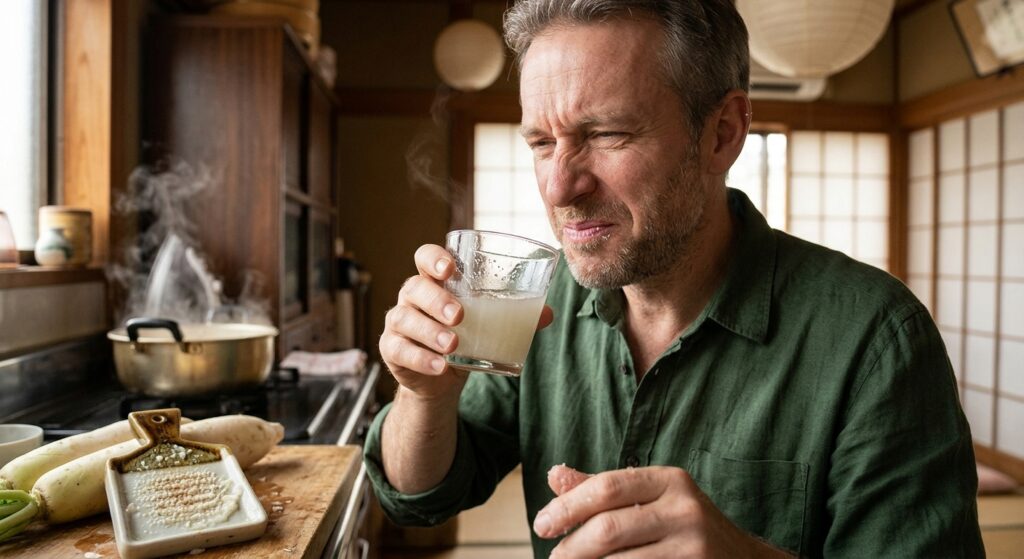
“The taste? Let’s just say… you’ll know when you know.”
Bringing It to Your Kitchen
Daikon-Oroshi proves that healthy cooking doesn’t require complex ingredients or added fats. By pairing rich, fried, or protein-dense dishes with a side of freshly grated daikon, you enjoy a lighter, more refreshing meal while supporting your body’s natural cellular balance.
Leave a Reply