In my previous post on Mizutaki and zero-oil dining, I made a bold claim: prepping fresh negi (green onions) is non-negotiable.
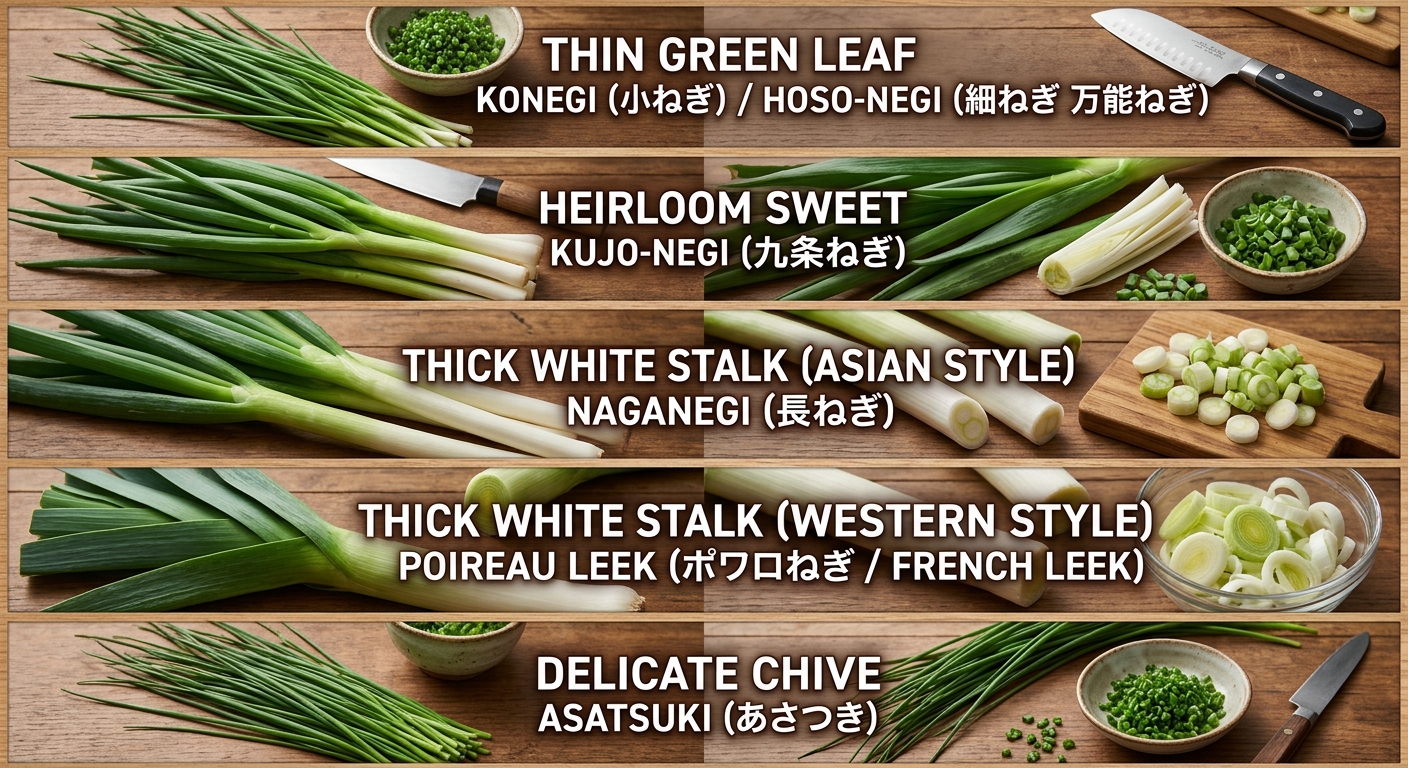
If you walk into an international supermarket in Singapore, the US, or Europe, you’ll see terms like scallion, green onion, spring onion, shallot, and leek thrown around haphazardly. Buying the wrong type—or prepping it incorrectly—can turn an otherwise perfect dipping sauce bitter and watery.
Today, we are going deep into the mechanics of Japanese scallions: professional terminology, the primary structural varieties (including Western leeks), global supermarket mapping, and the practitioner prep technique to achieve restaurant quality at home.
1. Deciphering Chef Terms: Yakumi (薬味) vs. Uchimono (打ち物)
Before picking up a knife, it helps to understand how professional Japanese cooks categorize these ingredients:
- Yakumi (薬味) — The Functional Category: Refers to the entire family of aromatics, spices, and fragrant vegetables added to enhance flavor, cut through rich notes, and stimulate appetite. This includes finely sliced green onions, grated wasabi, fresh ginger, daikon-oroshi, shichimi, shiso leaves, myoga, and citrus juices. Whether grated, sliced, or powdered, if it accents the dish, it is Yakumi.
- Uchimono (打ち物) — The Knife Technique & Craft: A specialized kitchen term used by Japanese chefs. It refers strictly to aromatics and vegetables that have been finely, thinly sliced with precision knife technique. Examples include ultra-thin green onion rounds (koguchi-giri), julienned radish strands for sashimi (tsuma), or micro-shredded shiso.
2. The Primary Scallion Varieties
Depending on the region in Japan and the specific dish, we choose completely different scallions:
1. Ao-negi (青ねぎ / Thin Green Leaf Onions) — The Universal Standard
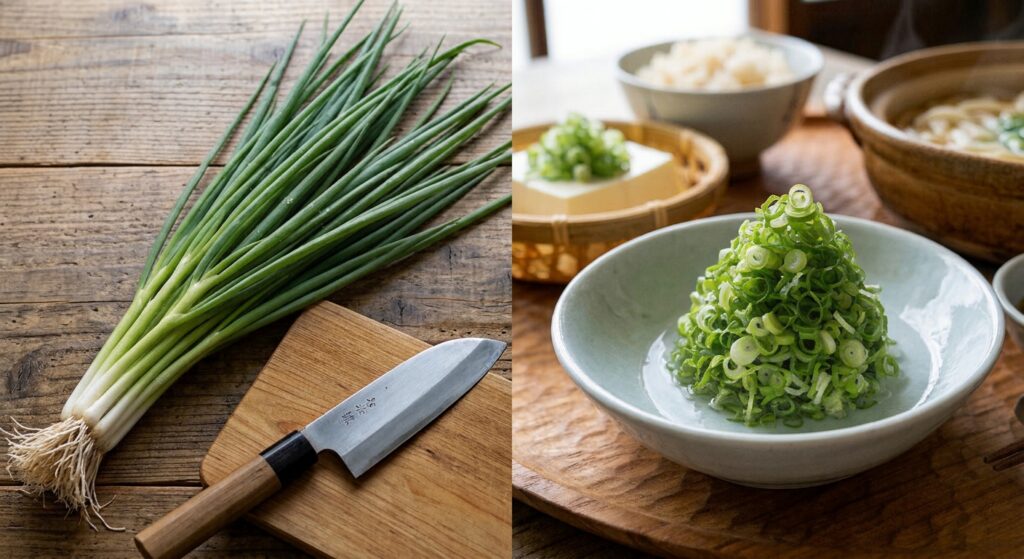
These thin green varieties are sliced crosswise into micro-rounds using the Koguchi-giri (小口切り) technique.
- Konegi (小ねぎ) / Hoso-negi (細ねぎ): Slender green onions sold commercially under brand names like Ban’no-negi. They offer a crisp, mild sharpness that accents dipping sauces without overpowering the palate.
- Kujo-negi (九条ねぎ): An heirloom variety from Kyoto. Incredibly soft, aromatic, and naturally sweet, making it the supreme historical standard for floating inside hot noodle soups (Udon/Soba) or topping cold tofu (Hiya-yakko).
2. Naganegi / Shiro-negi (長ねぎ / White Long Onions) — Strong Umami & Punch
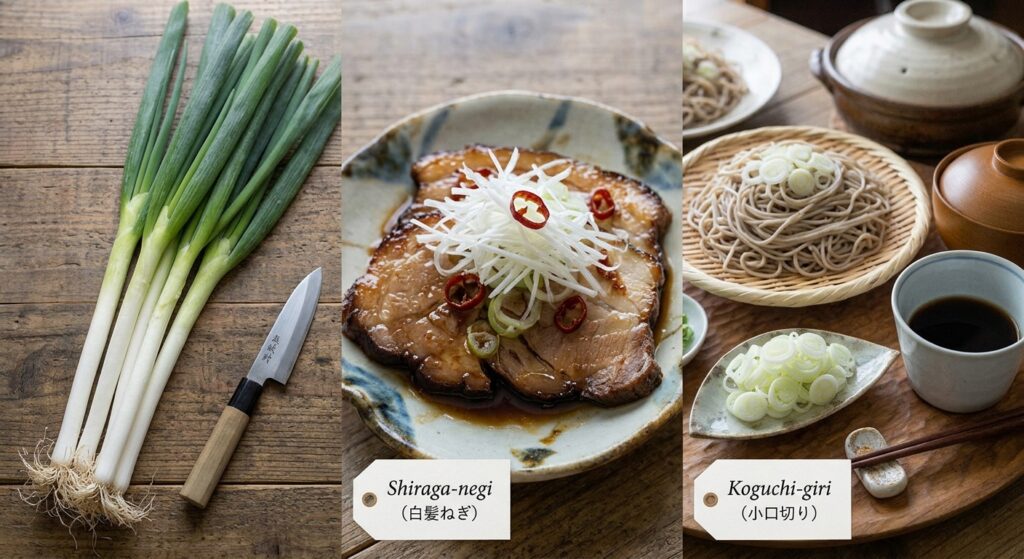
A thick, long leek-scallion hybrid with a prominent white stalk. While frequently cooked in hot pots, its white stem is prized raw for heavy garnishes:
- Shiraga-negi (白髪ねぎ): Translates to “white-hair scallions.” The outer white layers are julienned into micro-fine threads and piled on ramen, braised pork (Kakuni), or sashimi.
- Mijin-giri (みじん切り): Finely minced white Naganegi mixed into dipping sauces to add a sharp, structural bite.
3. Asatsuki (あさつき) — The Fine Specialty
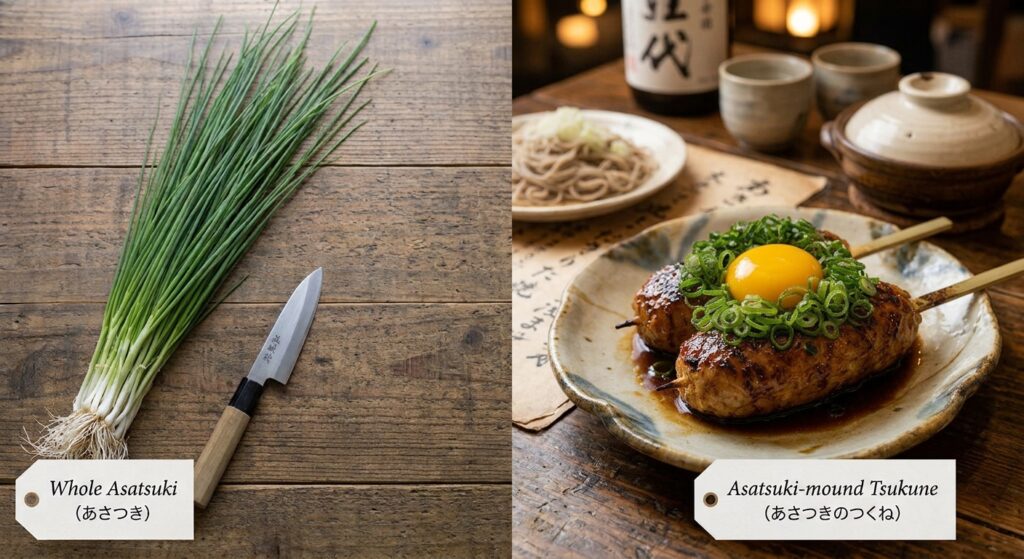
Technically a variation of wild chives (Allium schoenoprasum), Asatsuki is the thinnest of all Japanese green onions. It offers a refined, pungent kick and delicate appearance—traditionally the top choice for high-end white-fish sashimi (like Pufferfish/Fugu) and delicate clear soups.
3. Global Selection & Supermarket Mapping Guide
If you’re shopping outside Japan, use this practical cheat sheet to match what’s on local store shelves to authentic Japanese culinary applications:
| Scallion Category | Japanese Variety | Global Supermarket Name (US / SG / Int’l) | Traditional Cut Style | Best Practitioner Purpose (Yakumi vs Uchimono) | Key Profile & Culinary Note |
|---|---|---|---|---|---|
| Thin Green Leaf | Konegi (小ねぎ) / Hoso-negi (細ねぎ) | Standard Green Onions / Scallions | Standard Green Onions / Scallions | Koguchi-giri (Thin rounds) | Key Profile & Culinary Note |
| Heirloom Sweet | Kujo-negi (九条ねぎ) | Tender Spring Onions / Sweet Scallions | Koguchi-giri / Naname-giri (Diagonal) | Soup Uchimono: Kansai Udon, Soba, hot broth floating garnish | Extremely soft, sweet, aromatic; low sharpness. |
| Thick White Stalk (Asian Style) | Naganegi (長ねぎ *most common) | Japanese Leek / Large Asian Scallion | Koguchi-giri / Shiraga-negi (Threads) / Mijin-giri (Mince) | Heavy Garnish: Ramen, Braised Pork (Kakuni), spicy sauces | High-sulfur bite; tender enough to eat raw when julienned into Shiraga-negi. |
| Thick White Stalk (Western Style) | Poireau Leek (ポワロねぎ / French Leek) | Western Leek / Poireau / Large European Leek | Shiraga-negi (Micro-fine threads) or Cooked | Cooked Pot Ingredient or Soaked Garnish: Hot pot broth base, soup simmer | Much denser, fibrous, and tougher than Naganegi. Practitioner Note: If using raw as Yakumi, slice ultra-fine and soak in ice water for 10+ mins to soften rigid cellulose. Best when simmered. |
| Delicate Chive | Asatsuki (あさつき) | Fine Asian Chives / Micro-scallions | Ultra-thin micro-rounds | High-End Yakumi: White fish sashimi, Ponzu dipping, fine Dashi | Sharp, highly refined kick without bulk. |
4. The Practitioner Pro-Tip: Cold Water Rinse, Soak & Squeeze (Koguchi-giri)
When scallions are sliced into thin rounds (Koguchi-giri), their cell walls rupture and release a sticky, sulfurous mucilage (sap). If left unwashed and un-soaked, this sap turns slimy and intensely bitter, rapidly dulling delicate Ponzu or cold dashi.
Having worked in professional kitchens, I can tell you that casual restaurants often skip this step—serving stale, un-soaked scallions that ruin your dipping bowl. Here is how to fix it at home:
- Slice: Slice your green onions as thin as possible crosswise using the Koguchi-giri technique.
- Rinse: Submerge the sliced green onions in a bowl of cold water, gently swirling them with your fingers to wash away the harsh, sticky surface sap.
- Soak (Approx. 10 Minutes): Leave the scallions submerged in cold ice water for about 10 minutes. This crucial soaking period draws out the harsh sulfur compounds that cause sharp bitterness, while plumping up the cell structure so the rounds become extraordinarily crisp and sweet.
- Squeeze: Transfer the soaked scallions into a tightly woven kitchen cloth or paper towel and squeeze firmly to wring out all excess water.
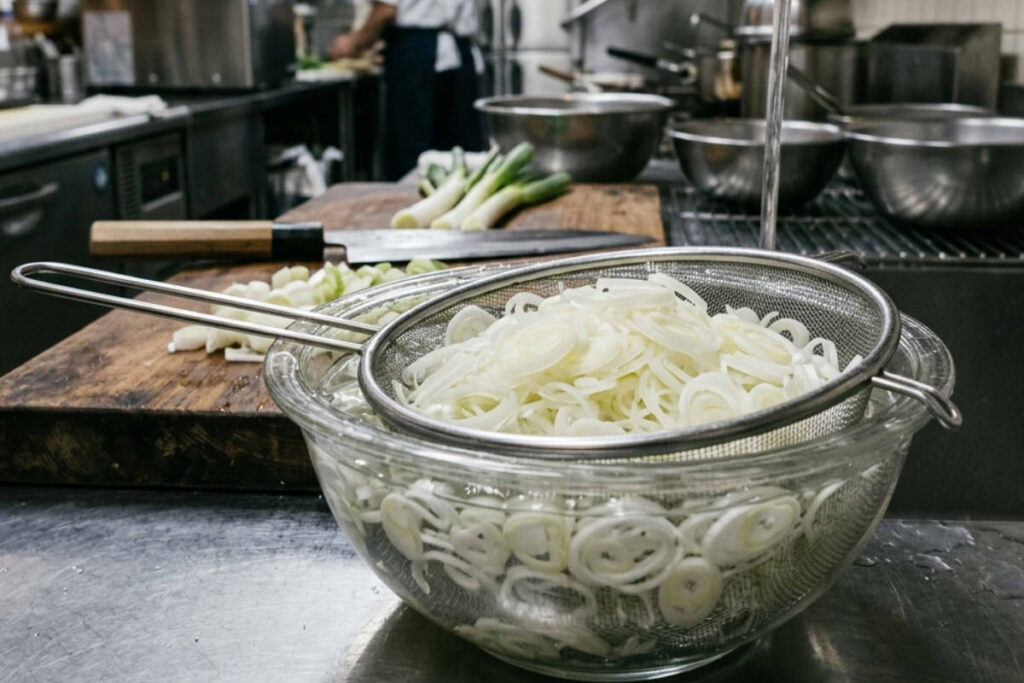
What you are left with is a mound of fluffy, crisp, perfectly separated green onion rounds that release pure, sweet aroma without adding bitter mucilage or unwanted moisture to your sauce.
5. My Culinary Observation: Negi as the Hidden “Body” of Japanese Cooking
If you look at French culinary traditions, onions form the foundational backbone of almost every dish—sweated in butter to build mirepoix, simmered down for stocks, or caramelized to build the essential body of a sauce.
In Japanese cooking, negi plays that exact same structural role. The fascinating difference, however, is where it appears.
In Japanese cuisine, negi is frequently brought to the table raw as Yakumi. Because it is served in small condiment bowls, it is easy to view it as merely optional—a decorative garnish to add if you happen to like green onions. But from a cook’s perspective, skipping or mismanaging negi is like making a French sauce without its aromatic base. It provides the essential sharpness, sweetness, and digestive balance that turns a simple poached ingredient into a complete meal.
Because this role is so often treated as “optional,” it frequently goes unexplained to international cooks. Understanding how to handle negi—selecting the right variety and mastering the rinse-soak-squeeze technique—gives you a practical, native perspective that will elevate your Japanese cooking experience far beyond standard home recipes.
Summary & Next Steps
Understanding the distinction between Yakumi and Uchimono—and taking a few minutes to properly soak and squeeze your freshly prepped scallions—is the secret to bridging the gap between basic home cooking and true Japanese restaurant quality.
Pair your freshly prepped negi with our [Mizutaki & Zero-Oil Ponzu Guide], and stay tuned for our next masterclass: How to Make Homemade Creamy Goma-dare (Sesame Dipping Sauce) from Scratch!
Leave a Reply