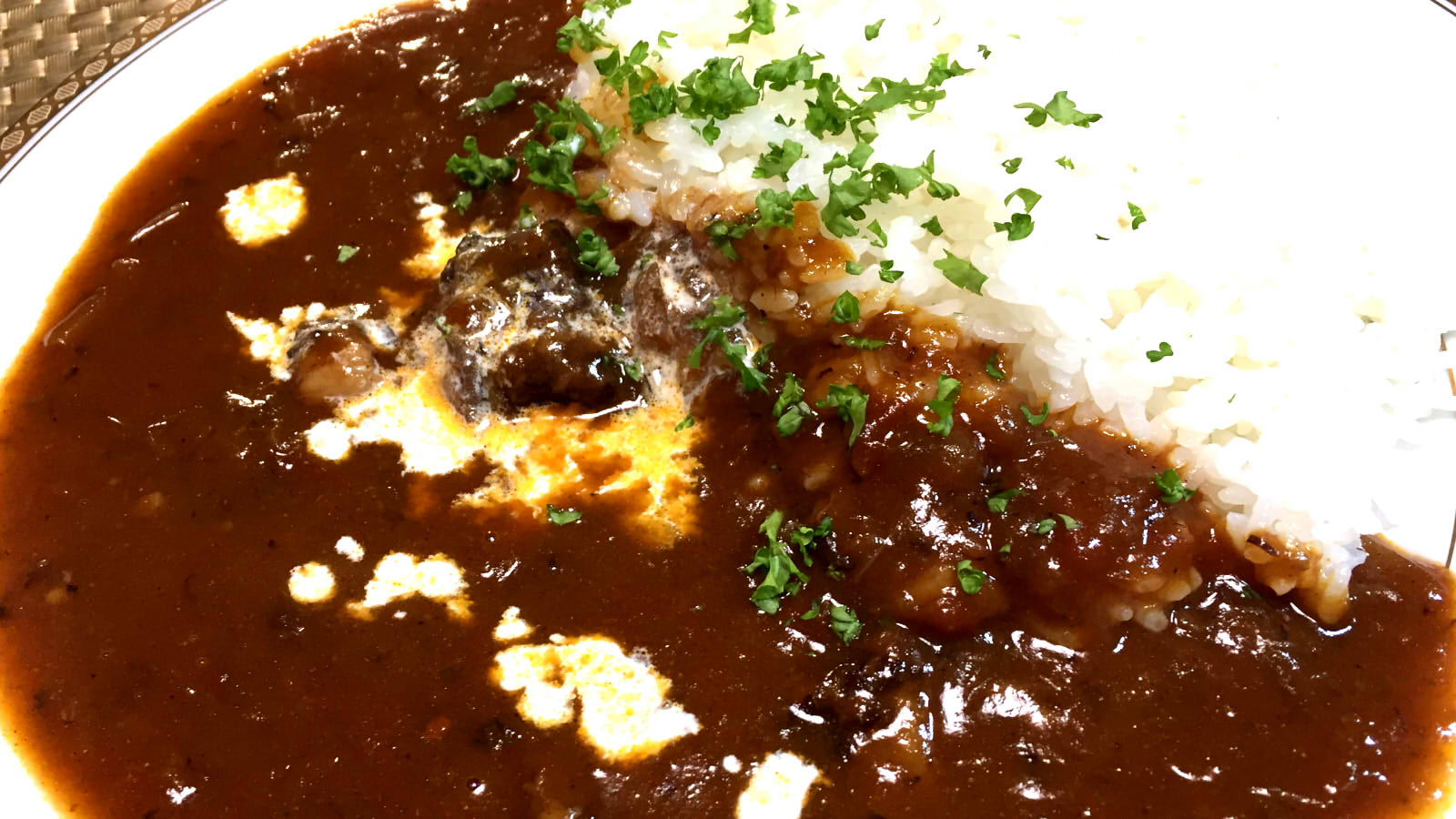
Japanese Curry Rice (カレーライス – Karē Raisu) is one of Japan’s ultimate national comfort foods. While millions of home cooks rely on convenient boxed roux blocks like Golden Curry, standard household recipes often lack the rich, velvety depth and complex umami found in professional Japanese curry houses and Izakayas.
Most homemade recipes instruct you to slowly sweat onions on low heat for an hour, followed by long boiling times. In this high-efficiency masterclass, Jei reveals a practitioner time-saving secret: using high-heat scraping technique to caramelize onions, grated carrots, garlic, ginger, and tomato directly in a pan at twice the speed without burning, creating an intensely concentrated Roux Base Paste before ever adding the box roux.
1. The Native Culinary Logic: Why Boxed Curry Lacks Pro Depth (And How to Fix It)
If you simply boil water, vegetables, meat, and drop in a roux block, you get a light, sweet, and somewhat flat stew. Professional curry houses build a deeply aromatic base before adding water.
The Three Golden Efficiency Principles:
- The High-Heat Scraping Technique (Pan vs. Pot Physics): Water in a stewing pot cannot exceed 100°C (212°F). However, a pan surface on high heat reaches over 200°C. By using high heat and constantly scraping the pan with a flat wooden spoon, you instantly lift the caramelized vegetable sugars (fond) sticking to the pan without burning them. This cuts caramelization time down drastically.
- Grated Base Vegetables (Flavor Harmony): Instead of cutting carrots into large chunks that take forever to cook, grate the carrots, garlic, and ginger. Grated vegetables dissolve completely into the roux base paste, adding natural sweetness and texture harmony without leaving raw vegetable lumps.
- The Layered Flavor Matrix: Upgrading Golden Curry requires balancing acidity, savory depth, and bitterness. By deglazing the base with red wine, simmering with chicken consommé/soup base, and finishing with Worcestershire sauce, demiglace, a knob of butter, and a hint of coffee, you create a rich, multi-dimensional sauce.
2. Sourcing Ingredients & The Pro Flavor Upgrades
- The Protein: Beef slices or chunks (seared first to render flavorful fats).
- The Aromatic Base: 1 massive onion (paper-thin slices), mushrooms, garlic (grated), ginger (grated), 1 carrot (grated), and 1 whole tomato (squashed).
- The Liquid Deglazers: Red wine, chicken soup base/consommé, and hot water.
- The Boxed Base: S&B Golden Curry Roux blocks (sliced or chopped for fast melting).
- Secret Flavor Enhancers: Worcestershire sauce, pre-made demiglace sauce, salted butter (20g at start, 20g at finish), and a tiny drop of coffee.
- Finishing Touches: Minced fresh parsley over rice, optional drizzle of fresh cream.
3. Watch the Step-by-Step Video Guide
See the high-heat wooden spoon scraping technique and roux base paste creation in real-time:
4. Step-by-Step Cooking Sequence
Step 1: High-Heat Onion Caramelization & Base Paste
- Slice one large onion paper-thin. Grate the carrot, garlic, and ginger, and squash the tomato.
- Heat 20g of butter in a pan over high heat. Add the sliced onions.
- Using a flat wooden spoon, continuously scrape the bottom of the pan to lift browned vegetable sugars. Add small splashes of water or chicken soup if it starts to dry out.
- Once the onions turn a rich brown (within minutes), add the grated garlic and ginger.
- Add the grated carrot and squashed tomato. Deglaze with red wine and continue stir-frying over high heat until all liquids reduce into a thick, deeply caramelized paste.
Step 2: Sear Beef & Mushrooms
- In a separate heavy stewing pot, heat a splash of oil and sear the sliced beef until browned.
- Add mushrooms and stir-fry briefly to render their aroma.
- Deglaze the pot with red wine, scraping the bottom of the pot with your wooden spoon.
Step 3: Combine & Stew
- Transfer the caramelized vegetable paste from the pan into the stewing pot.
- Add hot water and chicken soup base until ingredients are submerged.
- Bring to a boil over high heat and skim off the surface scum (be careful not to skim off rendered beef oil).
- Lower the heat to low, cover with a lid, and let it gently simmer for 90 minutes.
Step 4: Seasoning & Dissolving the Roux
- After 90 minutes, taste the deep brown base broth.
- Add Worcestershire sauce, pre-made demiglace, and a subtle drop of coffee for adult bitterness.
- Chop the Golden Curry roux blocks finely and melt them into the pot in batches to control saltiness.
- Finish by stirring in the remaining 20g of butter until glossy.
Step 5: Plating & Overnight Tip
- Serve over hot Japanese short-grain rice topped with chopped fresh parsley and a drizzle of fresh cream.
- Pro Overnight Tip: Japanese curry tastes exponentially better the next day! Store in the refrigerator overnight. When reheating, use low heat and a splash of water to prevent scorching.
5. Summary: Elevate Your Golden Curry
You don’t need a 5-hour slow cook to achieve restaurant-quality Japanese curry. By harnessing high-heat pan mechanics, grated aromatics, and precise flavor layering, you can transform everyday Golden Curry blocks into an unforgettable masterclass dish.
Leave a Reply