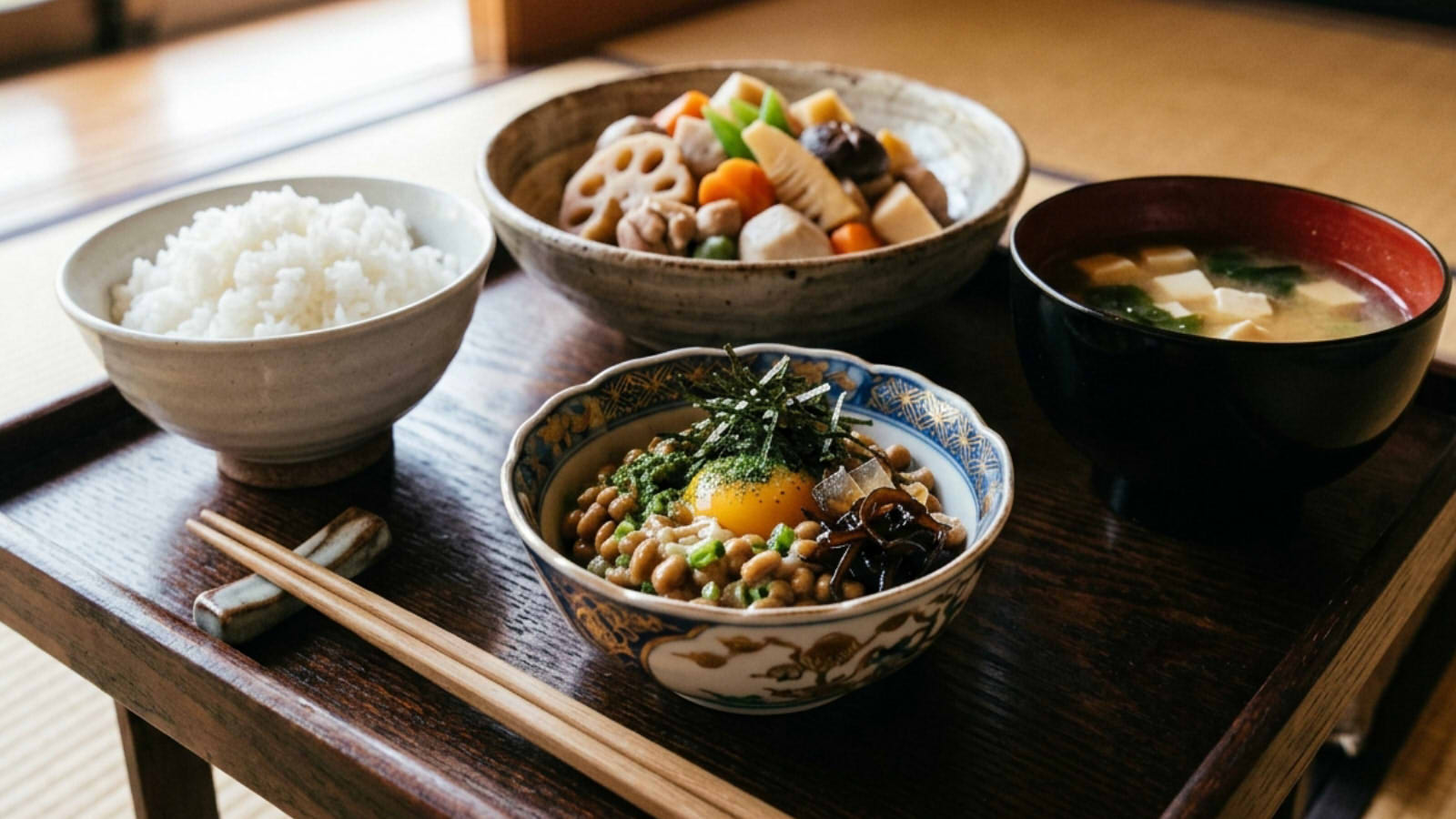
Whenever I see Western health articles raving about Natto, the advice is almost always the same: “It’s a probiotic superfood! Just stir the pack and pour it over rice!”
As a native Japanese former Izakaya cook who used to completely hate Natto, let me give you an honest reality check: if you eat plain Natto straight out of the pack over white rice on your first try, you are almost guaranteed to hate it.
The Prerequisite: You Don’t “Eat Natto,” You Eat White Rice with Natto
In native Japanese dining, there is a fundamental mindset shift that most beginners miss. You don’t “eat Natto.” You eat plain white rice with Natto.
Hot, fluffy Japanese white rice acts as a clean canvas. A punchy side dish (Okazu) provides the bold accent. The traditional way of eating—Sankaku Tabe (triangular eating)—relies on taking a small, measured bite of a rich Okazu, immediately following it with a mouthful of plain rice, and letting the natural sweetness of the starch balance the flavor in your mouth.
If you don’t already understand how to navigate the flavor ratio between white rice and a small side dish, jumping straight to a strong fermented food like Natto will overwhelm your palate instantly.
You might want to check this out:
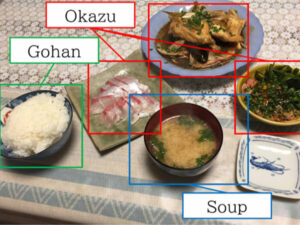
Natto’s True Identity: A Humble Kobachi (Small Side Dish)
When trying an unfamiliar food for the first time, native logic dictates treating it as a small side dish (Kobachi) sitting in the corner of your tray next to your favorite main meal—like chicken karaage or grilled salmon.
You don’t start with high expectations or treat Natto as the center of your universe. You take tiny, experimental bites paired with hot rice while enjoying your primary meal. Only after your palate gradually gets comfortable does Natto “graduate” in your mind to a main feature you actively crave.
My Honest Assessment: Why Natto Straight out of the Pack Fails
If I evaluate a standard pack of Natto with just its included liquid sauce packet, my honest chef assessment is straightforward:
- The Flavor: Too harsh and aggressive without fat or acid to round it out.
- The Aroma: Pungent and overpowering.
- The Seasoning: Factory sauce severely lacks sweetness and deep “body” (koku).
- The Texture: Monotonous and soft, badly needing a crisp, physical counterpoint.
Native Japanese home cooking isn’t about enduring these flaws—it’s about fixing them with traditional condiments (Yakumi).
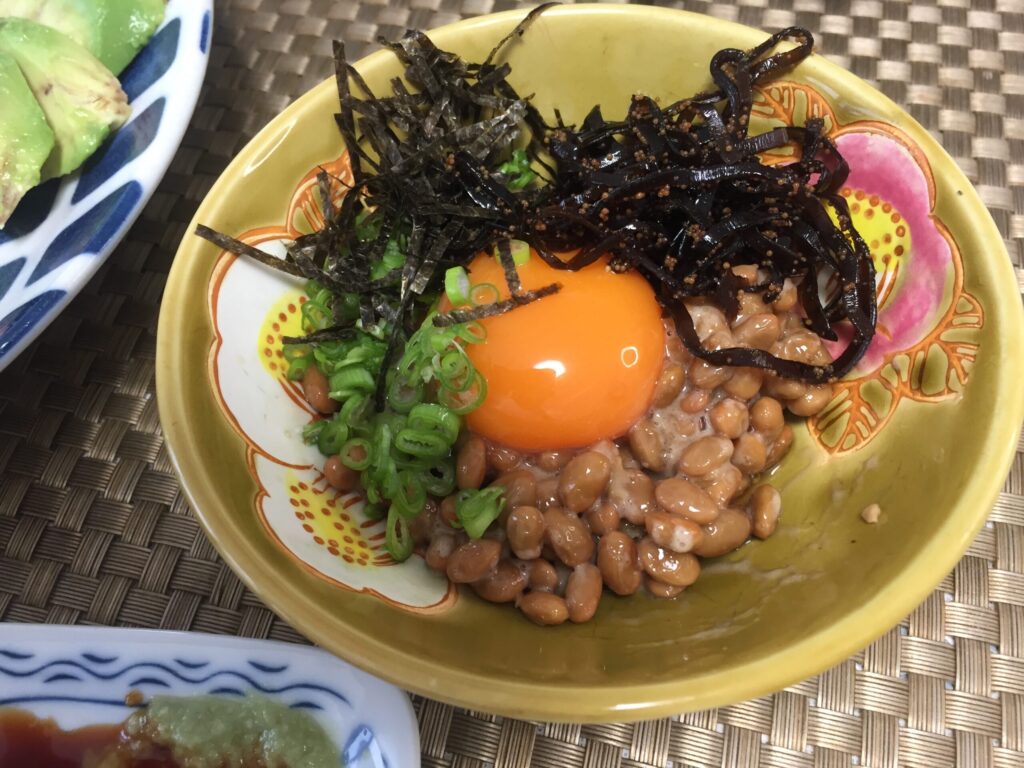
My Proclaimed “Ultimate” Natto Formula
Through years of trial and error to overcome my own dislike of Natto, I developed my personal benchmark combination. Every single ingredient serves a specific culinary function:
- Egg Yolk Only (Egg White Removed): The rich fat coats the soybeans, instantly softening the harsh fermented smell and turning the sticky texture into a smooth, silky cream.
- Uchi-negi (Finely Sliced Green Onion): The absolute most essential element. The sharp, clean crunch (shaki-shaki) cuts through the softness of the beans and refreshes your palate.
- Nori & Aonori (Dried Seaweed & Green Laver): Creates a fragrant aromatic shield over the fermented smell while giving the sticky beans physical grip so they are easy to lift with chopsticks.
- Kombu-nimono / Tsukudani (Simmered Seasoned Kelp): The secret culinary bridge. Factory Natto sauce is flat and lacks real depth. Kombu-nimono is simmered with mirin, introducing a gentle, rounded sweetness and deep Dashi umami that Natto desperately lacks on its own. (Professional tip: If Kombu-nimono isn’t available, I use the jellied glaze—Nikogori—from a braised fish like Tai-nitsuke as an alternative and slightly increase the green onion).
A Benchmark to Aim For (And How We’ll Get There)
I know that finding specific items like Kombu-nimono or Uchimi-negi can be challenging depending on where you live in the world. But if you ever travel to Japan, these ingredients are readily available in every single supermarket and convenience store across the country. I strongly encourage you to try this exact, fully balanced combination at least once—this is the level of sophistication that allows me to recommend Natto with true pride as a former cook.
To be completely transparent and humble: even this “ultimate” combination might still feel intimidating if you have zero prior experience with Natto. No single recipe is a magic trick that erases an unfamiliar fermented profile overnight—it still takes time to get used to Natto as an Okazu. I firmly believe this combination represents the peak taste potential of Natto once your palate becomes accustomed to it, but you don’t have to force yourself to start at the top of the mountain.
That is why in the next article of this series, we will take a step back and look at gentle, gradual gateway combinations—using accessible ingredients to ease your palate into getting used to the aroma, texture, and sliminess step-by-step.
Leave a Reply