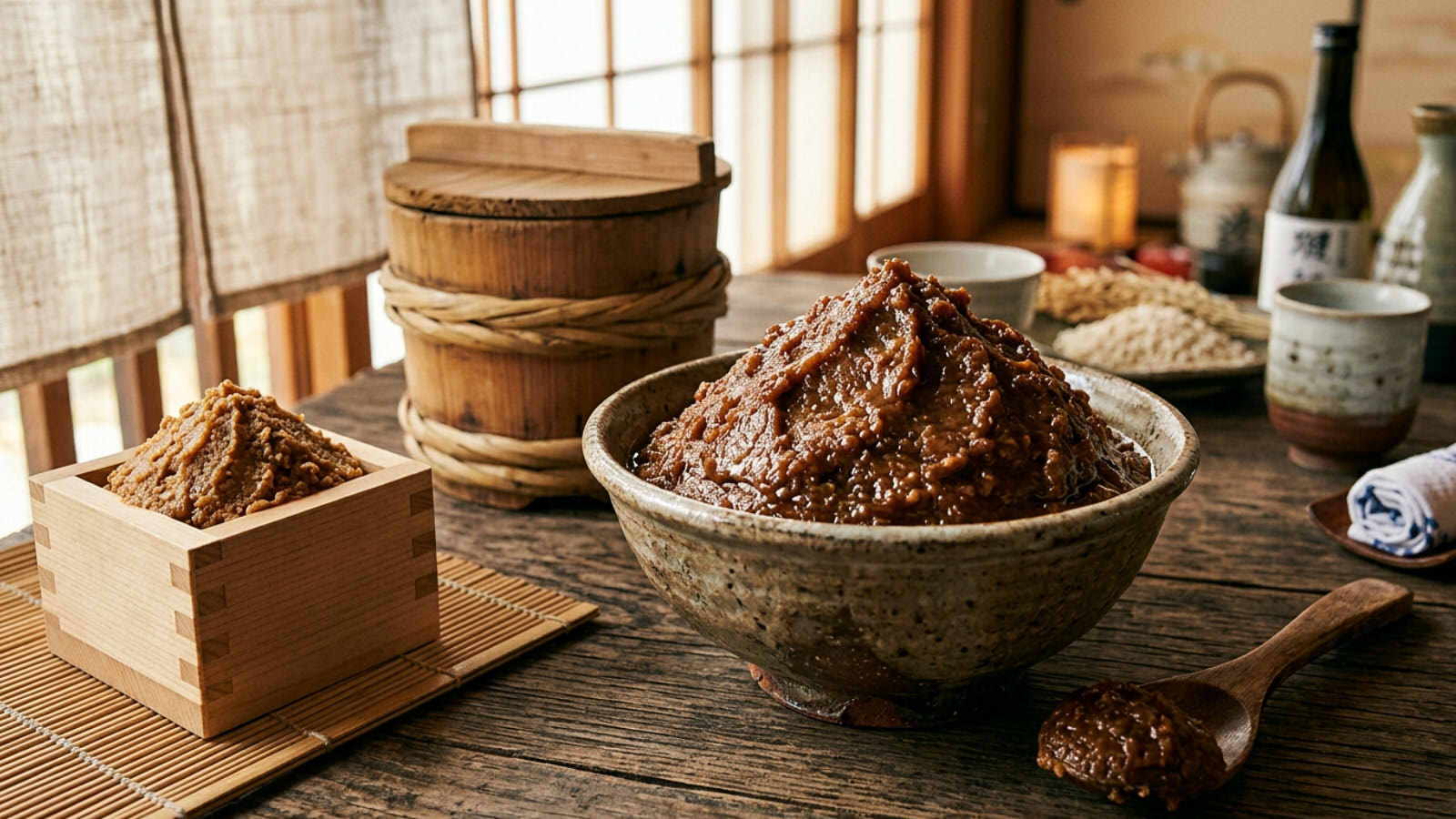
Introduction: A small journey into miso, from my point of view
This article is the first step in a small series meant to make your experience with miso a little deeper, a little more exciting, and hopefully more enjoyable. Everything I write here comes from my own background and personal taste as someone who grew up with Japanese food. It’s not the “correct” way — just one native perspective you can use as a reference.
If you already enjoy miso in your own style, that’s wonderful. If you’re curious about how Japanese people naturally experience it, this series may give you a new angle.
Miso, in my experience, shines most inside a Japanese meal set
Outside Japan, miso is often treated as a universal seasoning. But in my experience, miso feels most natural when it’s part of a Japanese-style meal set, especially the classic ichiju‑sansai rhythm.
This is not a rule — just something I’ve noticed over the years.
When miso is paired with gohan (white rice), the whole meal becomes calmer and more balanced. Not because rice is “plain,” but because Japanese condiments were historically created to support rice.
For me, miso is one of the clearest examples of this relationship.
A gentle insight: miso is easier to enjoy when you’re used to Japanese-style eating
Here is the idea I personally keep in mind:
Miso tastes different when you eat it inside a Japanese meal rhythm.
If you’re not used to eating a bowl of rice, a bowl of soup, and a few okazu together, miso can feel:
- too salty
- too strong
- too heavy
- too unfamiliar
But when miso is part of a Japanese-style meal, it becomes:
- softer
- calmer
- balanced
- comforting
This is simply how I’ve experienced it.
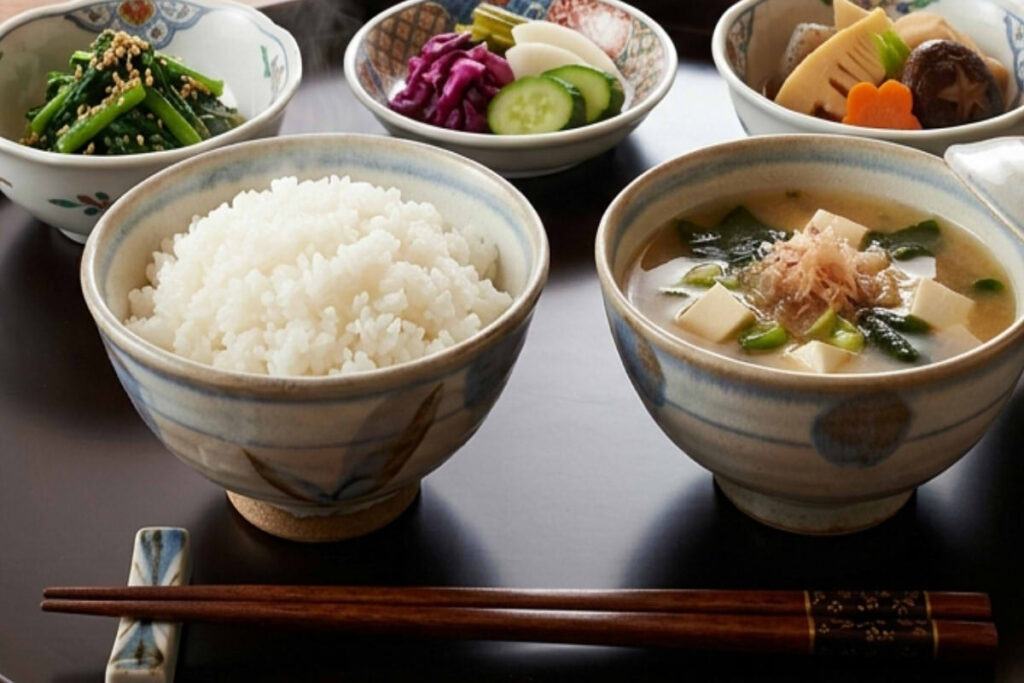
To understand the basic Japanese meal rhythm that supports miso, you may enjoy this article:
How Japanese People View Meals – Deep Dive into Food Culture
Why miso can feel “too strong” outside Japanese meal structure
Many people tell me:
- “Miso tastes sharp.”
- “Miso soup feels thin.”
- “Miso marinade is too intense.”
I don’t think they’re wrong. I just think miso behaves differently depending on the context.
Without rice:
- saltiness stands out
- umami becomes heavy
- fermentation aroma feels unfamiliar
Rice, in my opinion, acts like a stabilizer. It gives miso a place to land.
Again, this is not a rule — just a pattern I’ve seen.
Closing
Miso is not just a seasoning.
It’s part of a meal rhythm, a cultural habit, and a gentle balance that has shaped Japanese food for centuries.
How you enjoy it is entirely up to you — this series simply shares one native perspective that might make your experience a little richer.
Leave a Reply