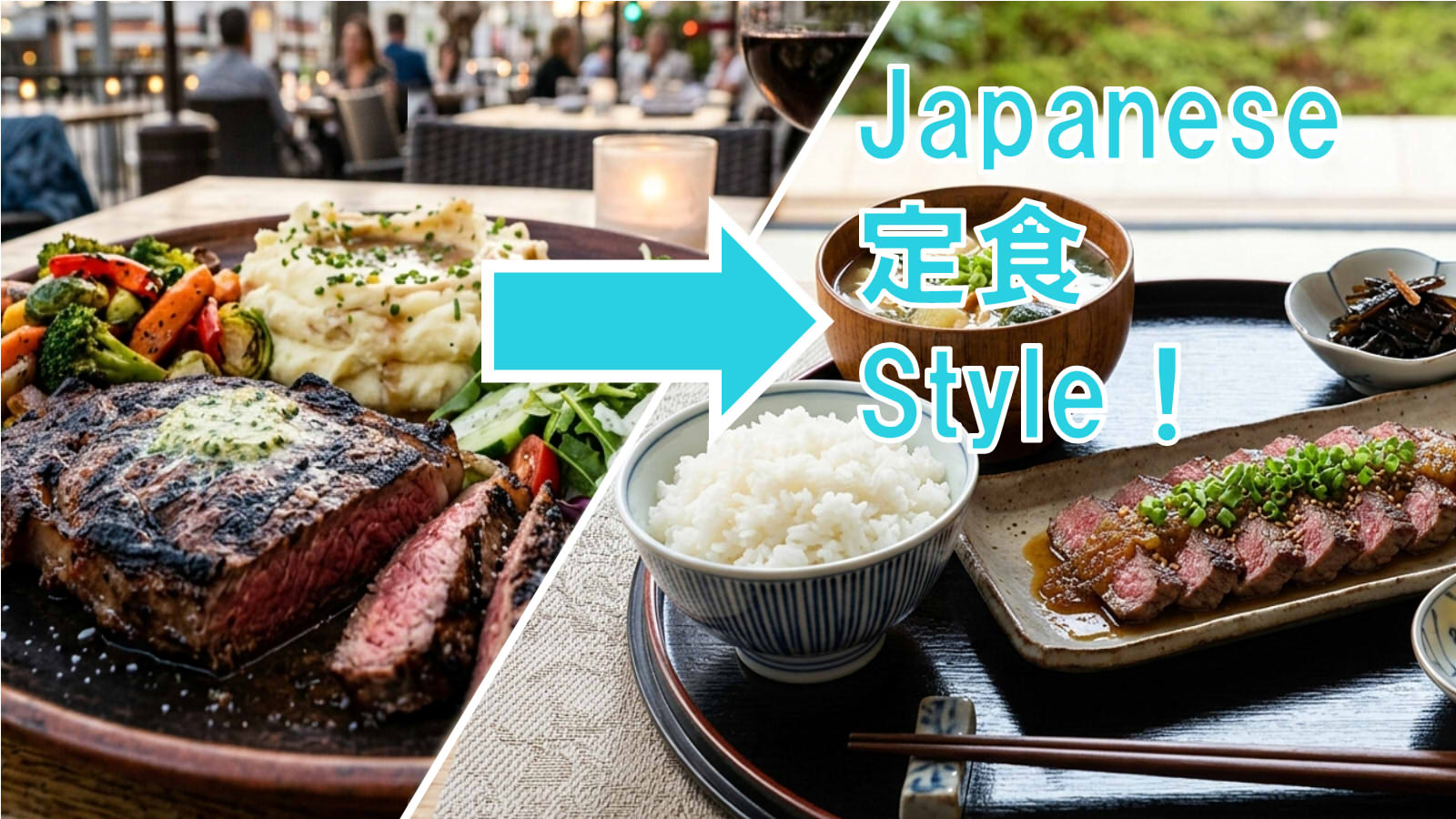
In this part of the series, I’d like to show how the overall feeling of a meal can change when we shift the structure from a typical steak dinner to a Japanese teishoku format.
Rather than explaining too much, I want you to simply see the contrast.
Japanese Teishoku‑Style Reinterpretation
First, let’s look at a popular steak dinner and see how it can be converted into a Japanese teishoku format.
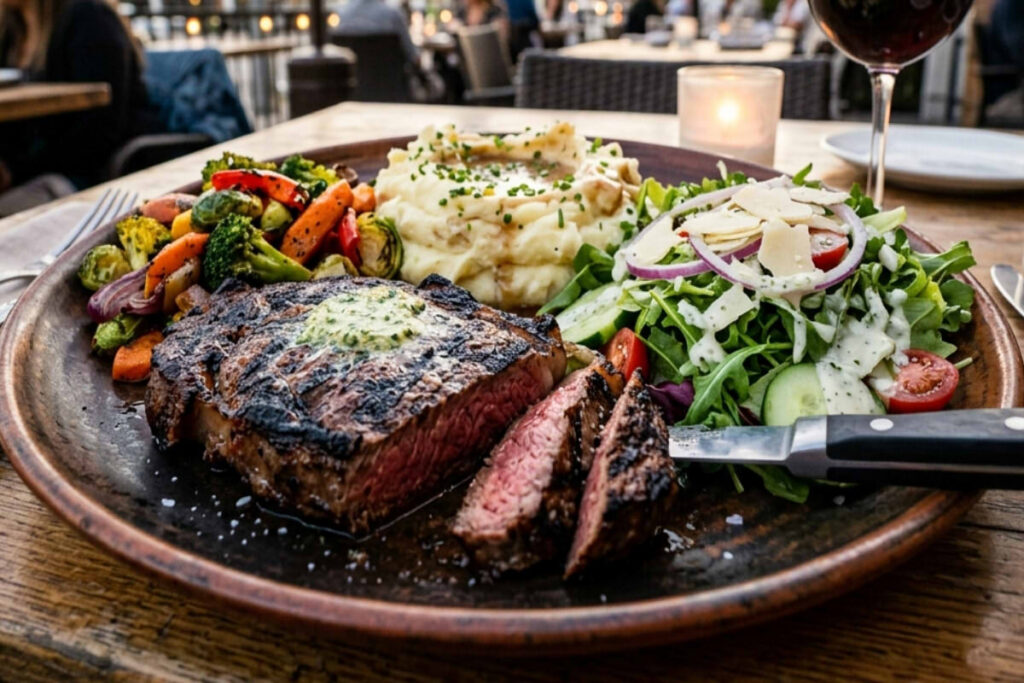
Typical Steak Dinner (example):
- beef steak 300g
- potatoes or fries 200g
- small salad 80g
- roasted vegetables 100g
In this meal, the potatoes act as the main starch. They fill the stomach, but they do so with fat‑based richness (butter, oil, cream), which creates a heavier type of satiety.
Japanese Teishoku Version:
For a cultural deep dive into how Japanese people actually eat meals, see: How Japanese People View Meals – Deep Dive into Food Culture
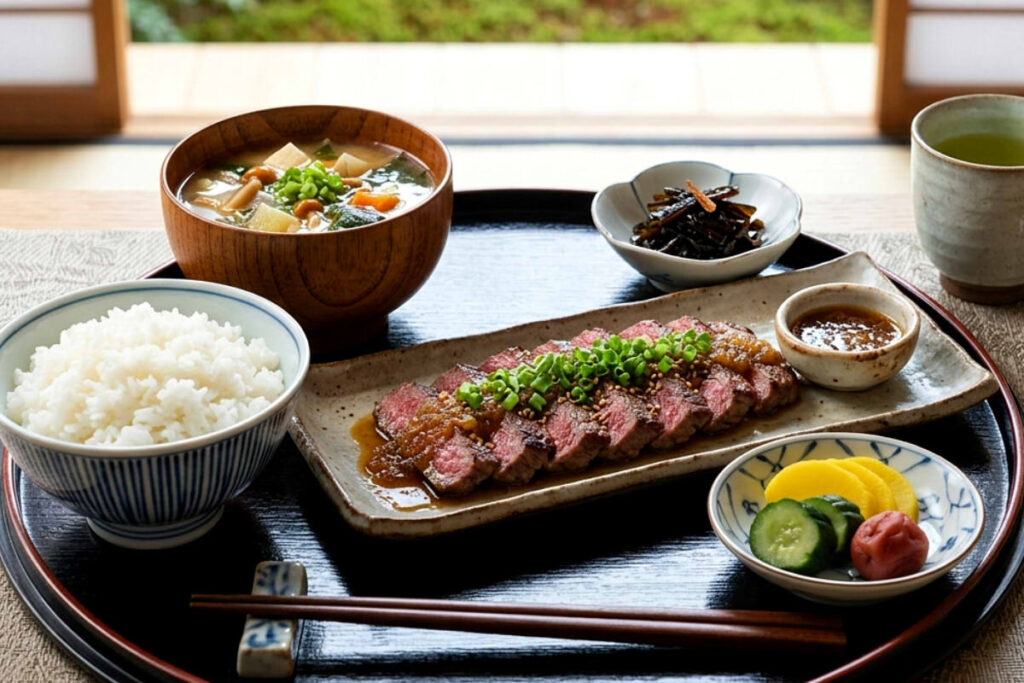
Please notice how each item changes when the meal is reshaped into a teishoku structure.
- beef steak 200g (served with a light shoyu‑based steak sauce)
- white rice 250g
- Tsukemono 40g
- kombu tsukudani 50g
- miso soup 250g
- with 100g of vegetables (daikon, carrot, wakame, tofu i.e.)
In this version, the rice becomes the main stomach‑filling element, working as the starch. Rice provides a steady, neutral fullness without relying on oil or dairy. It lets the okazu (steak, and Kombu in this case) play a lighter, more balanced role. Also, the vegetables are now inside the miso soup. Because they are simmered, they become soft, warm, and easy to digest.
For a deeper explanation of how rice shapes Japanese meals, see:
Recommended Japanese Steak Sauce (“ステーキ醤油”)
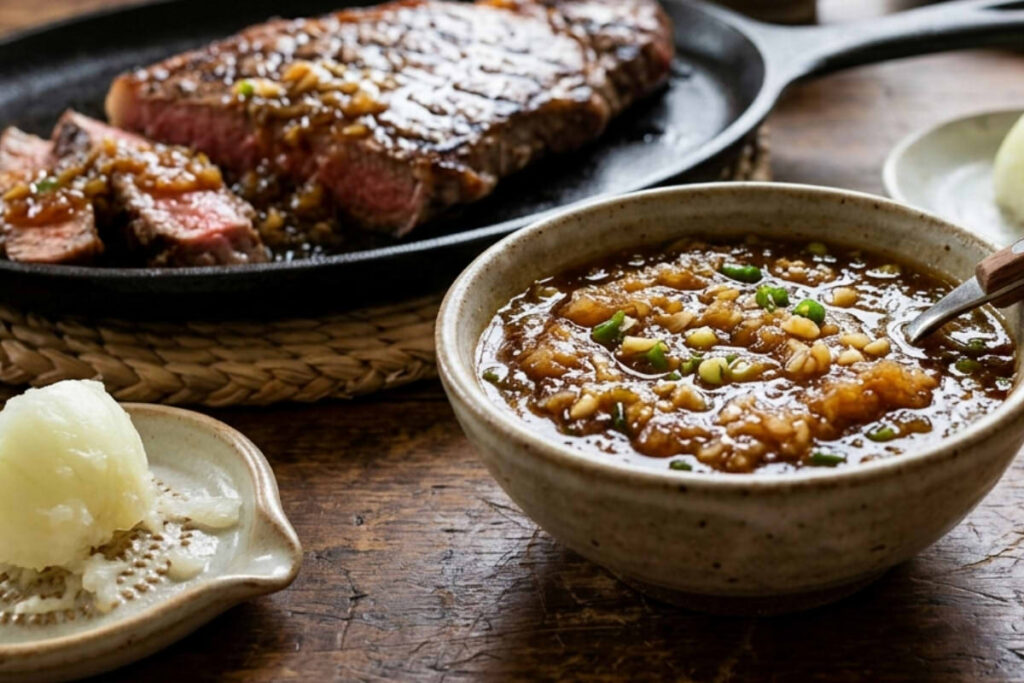
Pro-Level Homemade Japanese Steak Sauce (Steak Shoyu)
The secret to this recipe is a 2-layered onion technique. By dividing the grated onion and adding it at two different stages, you get both the deep, caramelized sweetness of cooked onion and the fresh, sharp kick of raw onion. This simple trick elevates the sauce to a pro-level flavor that tastes far better than any store-bought bottle.
Ingredients
- Grated onion (Divided into two halves)
- Minced garlic
- Shoyu (Japanese soy sauce)
- Sake
- Mirin
- Balsamic vinegar (Crucial for a rich, fruity sourness)
- Lemon juice (For a bright, fruity finish)
- Butter (Adds rich depth)
- Green onion (Finely chopped, for the final touch)
Step-by-Step Instructions
Step 1: Sauté the First Layer of Onion & Garlic Grate your onion and set it aside, keeping it divided into two equal portions. Heat a tiny splash of oil in a small saucepan over low-medium heat. Add the minced garlic and the first half of the grated onion. Pan-fry them gently together until they become aromatic and slightly golden.
Step 2: Add the Liquid Base (2:1:1 Ratio) Pour in your Shoyu, Sake, and Mirin using a 2:1:1 ratio (two parts soy sauce to one part sake and one part mirin). Bring the mixture to a gentle simmer for 1 to 2 minutes to cook off the alcohol.
Step 3: Taste and Adjust for Saltiness Pause here and test the sauce. Check the saltiness of the base. Since we aren’t using strict gram measurements, this is your chance to make sure the savory foundation is exactly where you want it before adding the tangy elements.
Step 4: Layer the Fruity Sourness Stir in a splash of balsamic vinegar and a squeeze of fresh lemon juice.
- Note for readers: Do not substitute these with regular white or grain vinegar! The specific goal here is to introduce sourness derived from fruits, which pairs beautifully with beef and adds an elegant depth.
Step 5: Finish with Butter Add a small pat of butter to the pan, stirring gently until it melts completely into the liquid to give the sauce a rich, glossy finish. Once the butter is melted, turn off the heat.
Step 6: The Pro-Trick (The Second Onion Layer) With the heat completely off, mix in the remaining half of the raw grated onion. This step is crucial. Combining the cooked, caramelized onion from Step 1 with this fresh, raw onion creates an incredible depth of flavor and texture that sets this sauce apart.
Step 7: Garnish and Serve Pour the warm sauce directly over your cooked steak, or serve it in a small bowl on the side. Right before serving, generously top with chopped green onions for a vibrant burst of color and freshness.
🔁 The Okawari System
In teishoku meals, if your rice becomes empty before you finish your okazu (steak or kombu tsukudani), you can simply ask for a second serving of rice — usually around 100g. This helps maintain balance and lets you enjoy the okazu comfortably.
If you are a big eater, knowing that okawari is available is important. It’s a practical part of teishoku culture that keeps the meal satisfying without increasing oil or heaviness.
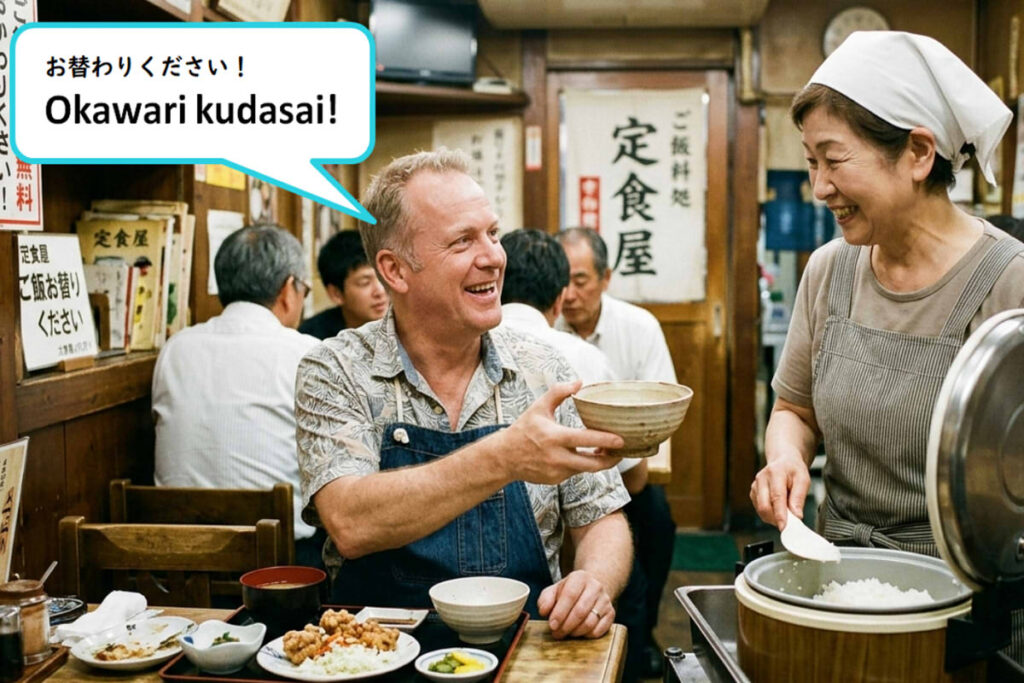
In my opinion, the most typical pattern in Japan is this: the restaurant serves about 250g of white rice first, and if you need more, you simply ask for okawari — usually a half portion, around 100–150g. This small refill helps you finish your okazu comfortably without overeating the main dish.
So please don’t hesitate to say: “Okawari kudasai.” (It means: Please give me a refill of rice, about half a bowl.)
Final Thoughts
What I hope you take away from this comparison is not that one meal is “better” than the other, but that the structure of a meal can change the entire experience. A steak dinner becomes something completely different when it shifts into a teishoku format: lighter, steadier, and more balanced, yet still fully satisfying.
Rice, miso soup, and small okazu create a rhythm that supports simple cooking. Once you get used to this style, even a modest portion of steak feels complete, and the meal finishes with a clean, comfortable fullness rather than heaviness.
If this teishoku version speaks to you, I encourage you to explore it further — switching the okazu to saba shioyaki, grilled chicken, or other simple dishes. The framework stays the same, and the satisfaction grows naturally.
This post is simply an invitation to enjoy that shift at your own pace.
Leave a Reply